• Hello MLAers! We've re-enabled auto-approval for accounts. If you are still waiting on account approval, please check this thread for more information.

Macintosh SE/30 M5119 - Restoration

Got everything hooked up correctly, and still no Terminal access, got the CR+LF and Echo working properly, could see the commands given, but am not getting any response from the SE/30 board.

This would mean the CPU, the Serial controller, or the Glue chip is not working correctly. Going to start looking for VCC and Reset lines on those chips.
 
Got everything hooked up correctly, and still no Terminal access, got the CR+LF and Echo working properly, could see the commands given, but am not getting any response from the SE/30 board.

This would mean the CPU, the Serial controller, or the Glue chip is not working correctly. Going to start looking for VCC and Reset lines on those chips.

Do you have another working mac to test with? Just to test your Setup to make sure cabling, terminal, etc setup right.

I think I remember you restoring a mac SE?
 
Do you have another working mac to test with? Just to test your Setup to make sure cabling, terminal, etc setup right.

I think I remember you restoring a mac SE?
I do have that SE, it's like new, but don't have the straight 8-pin cable.

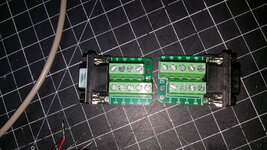
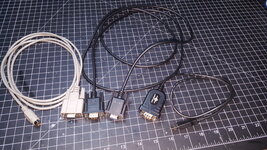
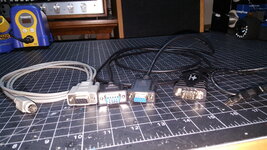
But the cables I have should work, have the 8-pin to DB9 on the left, DB9 Null modem cable just in case the Rx Tx isn't crossed, and then this USB COM port, that was used in the past with Cisco RJ-45 COM ports.
20250311_184522.jpg
20250311_184547.jpg

In the comment section of this video:

Adrian mentions this to someone unable to get an answer from their SE/30 board:
...So you do need the CPU to be working along with the serial controller and associated circuitry. The PLA equivalent needs to be working which is the GLUE chip on the SE/30. Apple basically gave direct access to the various tests that the system runs when it first powers up.

My board still doesn't make a sound, through the audio jack either - 'click-pop' is all that's heard. I have a serious condition apparently, so that may be why I have no terminal access too. If the Glue chip, or the Serial chip are not working, the SE/30 won't answer.

Going to try soaking this board in 100% IPA, for hours, and then use air pressure to force anything out from under the chips, that I can't see.

Then get serious about the scope and dmm, no other way forward at this point.

Getting my money's worth out of this SE/30 so far, fixing them is the fun part.
 
I do have that SE, it's like new, but don't have the straight 8-pin cable.

I meant connect the SE to your modern computer, to confirm sending commands over serial works on the SE. Not to use the SE as a terminal for the SE/30. Just to make sure cables/adapters/modern terminal setup right. I agree probably a long shot, but then you can at least try out the commands and see what is expected - its pretty cool to be a human techstep.

Getting my money's worth out of this SE/30 so far, fixing them is the fun part.

I agree; I am always disappointed when they work, because then I don't have the opportunity to learn anything and hone my troubleshooting skills. Luckily Commodores are less reliable so I've had a lot of experience over there :) I think I also saw you over on lemon64.com working on a C128 restoration!
 
I meant connect the SE to your modern computer, to confirm sending commands over serial works on the SE. Not to use the SE as a terminal for the SE/30. Just to make sure cables/adapters/modern terminal setup right. I agree probably a long shot, but then you can at least try out the commands and see what is expected - its pretty cool to be a human techstep.


I agree; I am always disappointed when they work, because then I don't have the opportunity to learn anything and hone my troubleshooting skills. Luckily Commodores are less reliable so I've had a lot of experience over there :) I think I also saw you over on lemon64.com working on a C128 restoration!
That's a good idea, to check my current cabling with the working SE. Might as well do that, just to be certain the cables work, will do.

I did recently complete the restoration of a C128/1571 drive over at lemon64; I got bit by the Commodore bug again when a generous and really cool older friend from work gave me his SX64 to repair and keep. These Commodore are more like Lego's though, you just keep replacing chips in it until it works again. Not like an SE/30 that spews corrosive vapors everywhere and self destructs :)
 
Not all DIN-8 to DB9 adapters are created equal; some contain the minimal pins and logic to print to a dot matrix printer and don't handle other hardware. Had this issue years back trying to get a hardware dongle to work.
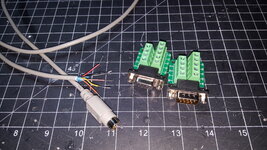
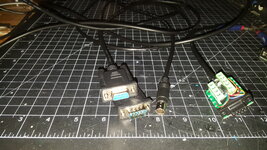
This is exactly what the problem was, this is a 5-wire cable with 8-pin and DB9 connectors.
20250322_215421.jpg


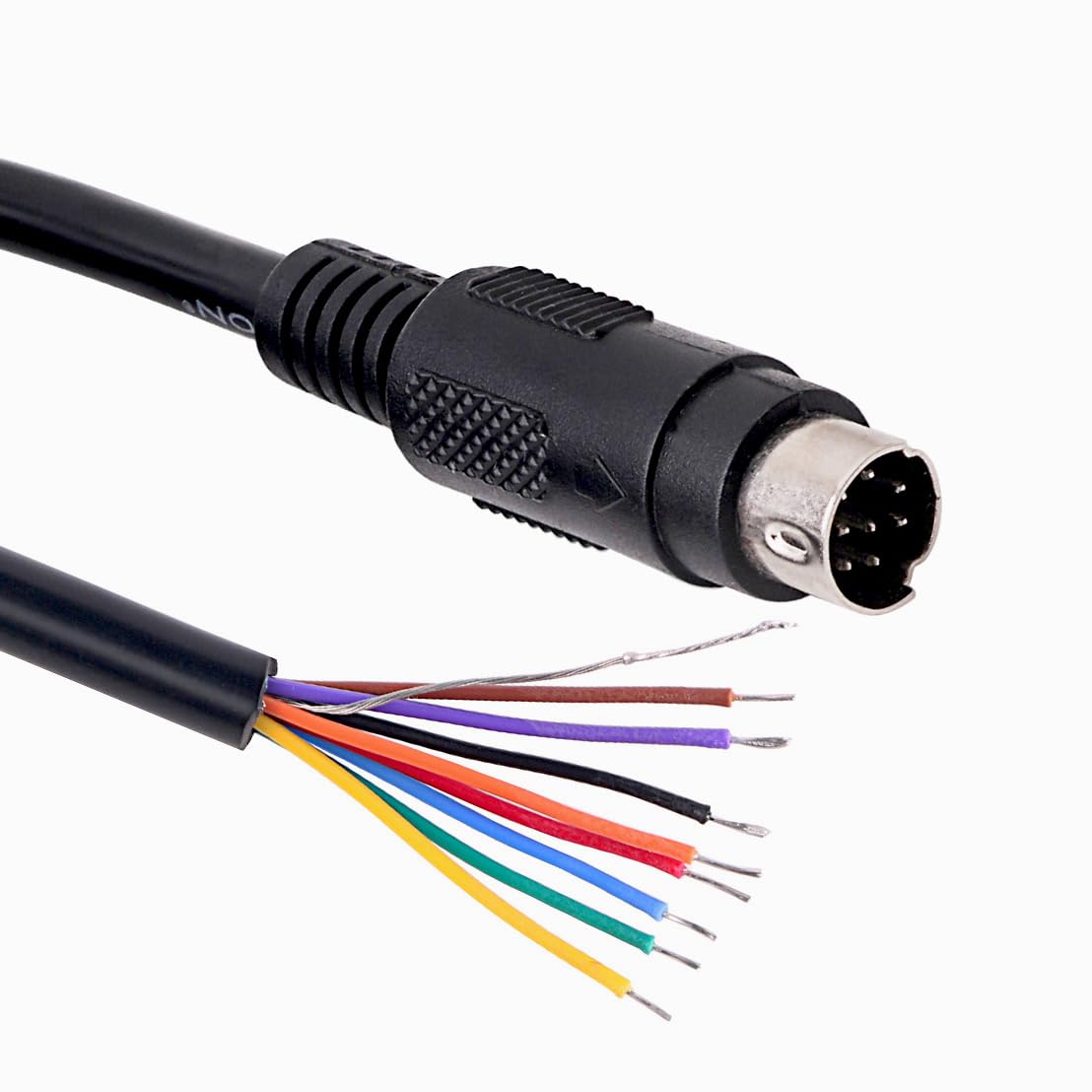
Ordered an 8-wire cable this time, should be here tomorrow.
https://www.amazon.com/gp/product/B0D415MLGV
51uGZKLzntL._SL1108_.jpg
 
Since my home made IIGS ADTPro cable works on my SE/30 as a tech step cable, I suspect the pre-made ADTPro null modem cable for the IIGS would work as a compact Mac tech step cable. The ADTPro website has them for sale:

 
Thanks for that, but they want $14 shipping, or about $40 total for that cable - that I may use this one time only.

But I should be able to make any RS-232 COM cable I need now, with all of those adapters and ends I've bought, thinking my cable had all of the wires inside.

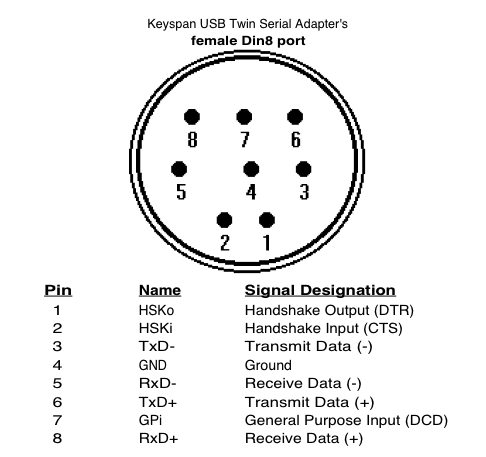
The 8-wire cable will be here sometime today, and then I'll work on the pinout for both ends. The DE9/DB9 is the easy part, finding the correct Mac based 8-pin Serial pinout may be a challenge, I'm finding conflicting info on that for some reason.
20250322_215431.jpg


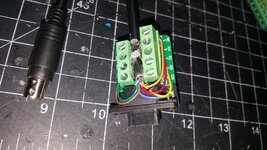
Will wire it like this on the DE9 side.
din8serial2.gif
 
Last edited:
Amazon delivered me an open-envelope today, that was empty, my DIN 8-pin cable is floating around in the back of an Amazon truck - somewhere.

The replacement cable will be here tomorrow, was hoping to get this going today.
 
That DIN-8 diagram looks like the same one I used to use; I recall that there was a diagram floating around with TX and RX flipped for some reason; I think it was meant to be for wiring up a null modem cable, and someone got confused. But I haven't messed with that in around 27 years; best to test with a multimeter.

The reason that the labels are different for pins 6-8 is that their function changes depending on the protocol being used.
 
Making this Tech Step cable has not been easy, still not getting a connection from either the SE or SE/30.

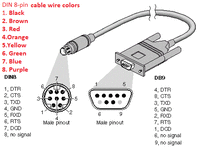
din8.db9.gif
As verified with a continuity test.

DB9 = Din-8 pin color
4. DTR = 1. Black
8. CTS = 2. Brown
3. TXD = 3. Red
5. GND = 4. Orange
2. RXD = 5. Yellow
7. RTS = 6. Green
1. DCD = 7. Blue
6. NC
9. NC


Figured I'd wire it without the Null Modem, and then use a Null Modem DB9toDB9 if it was necessary.
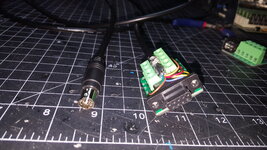
20250327_101134.jpg

Null Modem cable.
20250327_101228.jpg

Hot glue to keep it together, will clean it up, if it ever works correctly.
20250327_101142.jpg

Will experiment with some null modem pinouts located at the DB9 connector, and remove the Null Modem cable as a variable. Enjoying the complexity, but need a breakthrough to happen soon.
 
If the ROM is not running at all or not to the point start communicating through serial port, then you'll not get anything. My previous experiences using Techstep and fixing many SE/30 logic board, typically you'll hear at least a death chime. I read through this post briefly and I don't see any evidence that the ROM is actually running or now. (Walking the bus if you can measure the address lines on ROM SIMM slot, but it seems you don't have a scope/LA yet.>
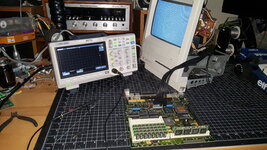
 
I have a working SE, that is also not answering to the commands shown in the video.

*A - for ASCII mode
*5 - to run the test
*R -

No response from the SE or SE/30.


I'm now wondering if my DB9 was wired backwards, because I'm using a female connector, and the diagram shows the male pinout. The COM port is male for the PC.
 
If the ROM is not running at all or not to the point start communicating through serial port, then you'll not get anything. My previous experiences using Techstep and fixing many SE/30 logic board, typically you'll hear at least a death chime. I read through this post briefly and I don't see any evidence that the ROM is actually running or now. (Walking the bus if you can measure the address lines on ROM SIMM slot, but it seems you don't have a scope/LA yet.>
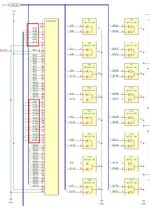
Which address lines are you suggesting I should measure? Thanks.
20250327_110747.jpg
 
Remove the ROM, and pick any address line. It's easiest to probe at the PDS slot. You should see a square wave if the CPU is basically sane and is trying to run code. Anything else generally indicates a stuck data line, held reset line, or other fundamental issues.
 
This is the diagram I used to construct my working tech step cable I made for my SE/30 - using similar green DE9 breakout connector like you are using:

I cut the end off an extra imagewriter II cable I had and put the DE9 breakout on. Try using a multimeter to confirm continuity for pinout described below?


1743124346106.png

I got the above instructions from https://adtpro.com/connectionsserial.html
 
Back
Top