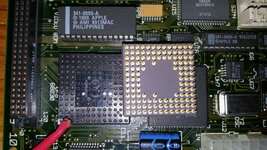
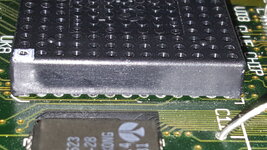
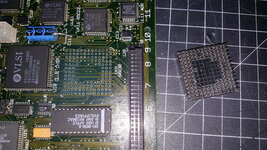
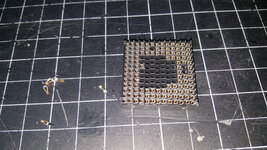
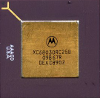
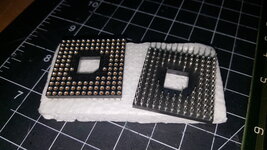
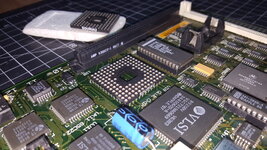
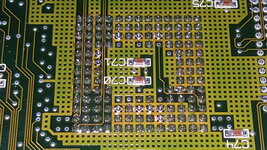
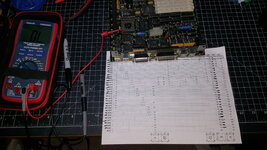
The original sockets are better. With the type you’ve ordered it’s really hard to insert and remove the CPU. I would try and clean up the original - maybe see if any pins are N/C and move them around.Went ahead and got the 128 pin FPGA socket from ebay:
https://www.ebay.com/itm/276784142022
Mil-Max wants $30 before shipping.
It’s possible, just annoying, I even found a technique that doesn’t butcher the socket!Thanks for the replies. I'm hoping to never have to remove the CPU again, if it goes in once, and all the pins have continuity, I'm happy. Are you guys saying that won't be possible with the ebay socket?
I searched here earlier and others said the ebay socket worked for them.It’s possible, just annoying, I even found a technique that doesn’t butcher the socket!
Got to thinking about when you said "technique", is that for the cheap ebay socket, to make it fit?It’s possible, just annoying, I even found a technique that doesn’t butcher the socket!
I think it's simply the nature of the connection; you're pressing a pin into a machined socket. There are tight tolerances involved.Since I've not seen the problem yet with inserting a 68030 in to a cheap ebay socket: is the issue because of the alignment of the pins, or the diameter of the pin sockets, that causes issues?
I haven't tried them all, but anecdotally, all the aftermarket PGA sockets of this style are pretty much the same in practice.Would this problem be for all aftermarket PGA sockets, including the Aries, or Mil-Max? What sets these apart, besides the cost?
I bought mine from exxos store in the UK, but it looks the same as the various machined sockets you can get new.Got to thinking about when you said "technique", is that for the cheap ebay socket, to make it fit?