
-
 Hello Guest! We're hosting a challenge to welcome vintage Intel macs to the MLA during the month of July! See this thread for more information.
 -
We've made some quality of life improvements to the Trading Post. More info here.
You are using an out of date browser. It may not display this or other websites correctly.
You should upgrade or use an alternative browser.
You should upgrade or use an alternative browser.
Anyone up for some IIcx troubleshooting assistance? We have clocks but no activity...
- Thread starter Sideburn
- Start date

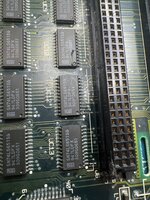


There’s enough gap to need some wireIf there isn't actually a break, all you need to do is tin them to add some material and protect them.
Oh yes you mean the iffy ones. Yes I’ll scrape then clean and coat with solder and UV mask them.There’s enough gap to need some wire
I use the probes too like that. But some are so bad they need careful scraping.What @Phipli said. I just scrape the dark parts with the meter probe, and tin over - using an x-acto feels a bit aggro. Wire only goes over confirmed breaks. UV mask is a thing I usually skip as I find it usually just makes things uglier (it's only really needed in certain things).
I also have a fiberglass pen. Those work great too.I use the probes too like that. But some are so bad they need careful scraping.
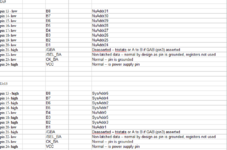
Check pin 3 on those same ICs. However something's odd. All address lines generated by NuChip are quiet, but you're telling me those coming from the system side are asserted, or at least something is forcing them on.
Check UDs as well, feel free to check both A and B sides. I have a suspicion this might be close to the issue, especially considering how bad traces around that area look.
Check UDs as well, feel free to check both A and B sides. I have a suspicion this might be close to the issue, especially considering how bad traces around that area look.
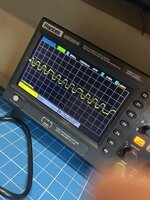
Uf13Pin 32 of what, exactly?
Ah that's far off from where we're looking. It's SCC B transmit clock. 4MHz-ish sounds right.Uf13
Yeah I figured after checking schematicsAh that's far off from where we're looking. It's SCC B transmit clock. 4MHz-ish sounds right.
Uc9 pin 3 - highCheck pin 3 on those same ICs. However something's odd. All address lines generated by NuChip are quiet, but you're telling me those coming from the system side are asserted, or at least something is forcing them on.
Check UDs as well, feel free to check both A and B sides. I have a suspicion this might be close to the issue, especially considering how bad traces around that area look.
View attachment 58924
Uc13 pin 3 - low
No, it doesn't mean anything - somewhere earlier I mentioned broken silicon may still act in ways that seem sensible. While reset is asserted, the system is in undefined state. What reset does is clear the slate and get it all into a known default state the machine can start running from. That would include throwing the CPU at its reset vector, what on the m68kis called an IISR, which makes it go to the bottom of the address space (0x00000000) and then start executing from 0x04. As you can imagine, that location is physically pointed at by an all-low address lines combined.On it. So when I hit reset, the address lines on the roms go high and then back to low. Does this mean the CPU is not “dead” ?
A broken CPU in an otherwise functioning machine way well jumble the lines upon having reset asserted, and then beautifully clear them once reset deasserts, but never go from there. A broken CPU may have broken address line drivers. Something could short one of those address lines and force them to do weird things. It goes on.

Earlier production IIcx boards have socketed CPUs, later ones do not. Same for the SE/30.I seemed to recall those being socketed.
Similar threads

- Replies
- 6
- Views
- 424

- Replies
- 2
- Views
- 1K

- Replies
- 8
- Views
- 2K
- Replies
- 22
- Views
- 2K