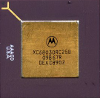
I have a theory that compact Macs, along with all computers, can continue to work no matter what, even if they fail. What I'm saying is, no matter how many vital chips cease to be available, they can still be obtained.
Here's the base of my theory: what has been made by mankind can be repaired and/or made again by mankind. Discontinued dates mean nothing. It was made once; it can be made again. As people master brand-new technology, as they become so familiar with it that they can work it in their sleep, then not only is mastering 20-year-old technology possible, but it's included in the package! All new technology is the old technology, just with more added onto it. But we can agree that whether right off the assembly line or 25 years old, all computers have a CPU (or to expand on that, a motherboard); they have a hard drive (or some sort of system disk); they have an operating system; and they have capacitors and chips that make up their 'brain.'
So the question is: what does this have to do with obtaining parts that are no longer available? What has been made by mankind can be repaired and/or made again by mankind. Yes, I mean that we can quite literally make the chips, capacitors, or anything else that is needed. Because now, with all this advancement in computers, it should be positively easy to make a processor that was introduced 20 years ago. You'll need the knowledge on what you need to make one, as I'm sure that some sort of special equipment is needed, but with all of this new technology and all these new developments, how hard can it be to make a chip that is relatively 'simpler' than what is made today? And, of course, if companies deleted the designs for these chips, what better solution than to simply open it up, carefully examine it, and make a copy? If a company has discontinued something, it doesn't at all mean that all hope to get it is lost. And I have no doubt that some people in this forum have the knowledge on these chips and processors, about how they're made and what is needed to make them.
Of course, I can't test this theory, nor will I be able to until a malfunctioning part is really and truly unavailable for replacement. Because then it wouldn't be a theory, it would be fact. And that instance won't happen for a while, since not only do Macs last, but most parts are still available for replacement from companies and websites here and there, such as capacitors or RAM.
But we all know that it won't always be that way, and that even now there are parts in a compact Mac that are really hard, if not impossible, to come by. And when that happens, it'll be time to see whether or not this theory was well-founded.
-Apostrophe
Here's the base of my theory: what has been made by mankind can be repaired and/or made again by mankind. Discontinued dates mean nothing. It was made once; it can be made again. As people master brand-new technology, as they become so familiar with it that they can work it in their sleep, then not only is mastering 20-year-old technology possible, but it's included in the package! All new technology is the old technology, just with more added onto it. But we can agree that whether right off the assembly line or 25 years old, all computers have a CPU (or to expand on that, a motherboard); they have a hard drive (or some sort of system disk); they have an operating system; and they have capacitors and chips that make up their 'brain.'
So the question is: what does this have to do with obtaining parts that are no longer available? What has been made by mankind can be repaired and/or made again by mankind. Yes, I mean that we can quite literally make the chips, capacitors, or anything else that is needed. Because now, with all this advancement in computers, it should be positively easy to make a processor that was introduced 20 years ago. You'll need the knowledge on what you need to make one, as I'm sure that some sort of special equipment is needed, but with all of this new technology and all these new developments, how hard can it be to make a chip that is relatively 'simpler' than what is made today? And, of course, if companies deleted the designs for these chips, what better solution than to simply open it up, carefully examine it, and make a copy? If a company has discontinued something, it doesn't at all mean that all hope to get it is lost. And I have no doubt that some people in this forum have the knowledge on these chips and processors, about how they're made and what is needed to make them.
Of course, I can't test this theory, nor will I be able to until a malfunctioning part is really and truly unavailable for replacement. Because then it wouldn't be a theory, it would be fact. And that instance won't happen for a while, since not only do Macs last, but most parts are still available for replacement from companies and websites here and there, such as capacitors or RAM.
But we all know that it won't always be that way, and that even now there are parts in a compact Mac that are really hard, if not impossible, to come by. And when that happens, it'll be time to see whether or not this theory was well-founded.
-Apostrophe