SpecInt92 and SpecFP92 (as well as Spec89) were measured against the VAX 11/780 which was defined to have a performance of 1 MIP (though in fact it was less than that). And for those not familiar, the VAX 11/780 was an early 32-bit Super-minicomputer developed at the end of the 1970s, around the same time as the Motorola 68000. Both of them are descendants of the pdp-11, except that the M68000 is more of a literal descendant with similar kinds of 16-bit instruction formats and sets of 8-registers; whereas the VAX 11/780 is more like a mutant 32-bit x64 design based on a string of 8-bit opcodes.
The lack of graphics benchmarks in SpecMark92 reflects the pre-workstation era so supplementing these kinds of tests with demanding graphics tests makes sense. We would find though that testing an entire system allows for far more variability. Consider systems that have a lower bus clock, but can support blitting and line drawing in hardware? Or even flat, Gouraud and Phong polygon filling? This describes early SGI computers; the Commodore Amiga (to some extent) and some PCs supported by an early GPU (though I forget the name of early GPUs that could do that).
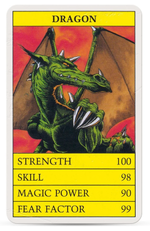
That makes for some fun Top Trumps style comparisons!
View attachment 88292
And that can be fun.
However, if I was to propose a retro-scale and make it less, er, tribal, I would pick an ARMv2 at 8MHz as the baseline and an Archimedes as a system baseline. That's because almost certainly it counts as a "best-in-class" CPU, delivering far more performance per transistor or per watt than anything else I can think of from that period. And the associated chipset provided memory management, audio and video.
Early ARM CPUs (which were cacheless) had about 35K transistors making them about 50% bigger than an 8086 or nearly half the size of a 68000. They were not universally comparable to 8086 nor 68000 either, because they were extremely poor at handling 16-bit data and 16-bit aligned data (only 8-bit and 32-bit data was supported). If we like, we could skip ahead to ARMv3 which did support those data sizes.
Furthermore, the lineage of Macs converges on ARM with the appearance of Apple Silicon and ARM itself only became viable thanks to Apple. You can play with an emulator live here, it runs at the actual speed of an early ARM computer:

archi.medes.live
You can write assembly code directly in BBC BASIC (there's a 2-pass macro assembler built-in).