Our resident chemist confirmed this information:
That link about ABS Slurry is good advice about everything but the chemistry. I forget the exact percentages, but you if you use something on the order of five parts MEK to one part Acetone you'll be much closer to the makeup of commercial ABS Cements. Methyl Ethyl Ketone is the active ingredient of both ABS and PVC cements for chemical welding. It's a more aggressive solvent than Acetone, but Acetone has a lower flash point, IIRC? The combination is obviously better than either alone as that's how both are made for plumbing cements that can be used to make piping for compressed air or liquid at up to 400PSI.
ISTR getting the percentages from the can, MSDS (Safety Sheet) of Oatey brand or from their website?
https://www.oatey.com/126494/Category/Oatey-ABS-Cements You want to be careful about sourcing pure MEK, not a substitute. Apparently it's used for nefarious purposes of some sort? Lowes had Mek Substitute and Home Depot had the real deal the last time I bought it. I'll have to check on what they used to contaminate pure MEK in that substitute if that might be how thy came up with it? Now I'm wondering if it might be Acetone? That'd be just too good to be true. :

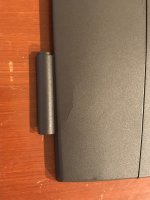
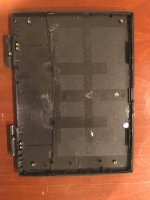
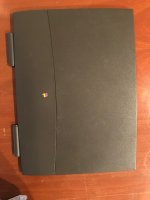
I've used dried modeling clay as a negative mold with Olive Oil Spray as the release agent to lay up a really ugly quarter panel of a CRT front bezel with MEK/ABS slurry. Haven't gotten around to experimenting with the Acetone in the mix as yet. Hoping to build a shallow CRT/LCD case or larger parts one day using that method with fiberglass cloth reinforcement as jack leg engineered ABS FRP. Now that I think of it, I should try using that trick one of my several cracked 1400 lids from my stack.
How to hold the "puffed out" plastics in place is a great question. I've got a solution in mind, but it's in the Rube Goldberg class for now. I'll pull out a lid or two and give it some thought.