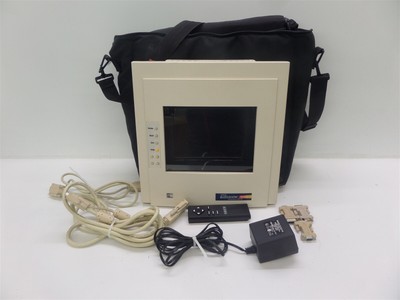
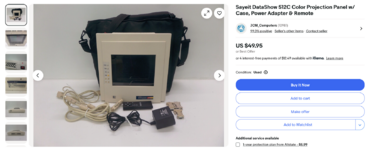
Or I could have just simply looked here. LOL
Anyways, the data can be captured and double-buffered into either a single SRAM IC thats large enough for 2 frames, or two independent SRAM ICs. Draw a frame, swap the buffer and while the portable is drawing into 1 RAM IC, your reading out the other in a different "way" to drive a different type of display. Sure your going to lag 1 frame behind but I doubt youll notice it. The refresh rate would remain the same. as on each V-Sync Period, both scans would need to finish and the buffers "swap". This is if you want to drive a different type of LCD panel that is configured differently.
Otherwise,
You could drive a VGA CRT with this using the same exact concepts as the SE/30 does. using an LS166 serializer. CL1 is your horizontal sync, FLM is your vertical sync. CL2 is your latch clock for the LS166, and your shift clock is the CL2 * 8, which should approximately be the same as the 16Mhz video clock. (like the SE/30). Unless you pull a clock line out of the portable, you will need a PLL/VCO with div8 in the loop feedback to obtain the shift clock.
Anyways, the data can be captured and double-buffered into either a single SRAM IC thats large enough for 2 frames, or two independent SRAM ICs. Draw a frame, swap the buffer and while the portable is drawing into 1 RAM IC, your reading out the other in a different "way" to drive a different type of display. Sure your going to lag 1 frame behind but I doubt youll notice it. The refresh rate would remain the same. as on each V-Sync Period, both scans would need to finish and the buffers "swap". This is if you want to drive a different type of LCD panel that is configured differently.
Otherwise,
You could drive a VGA CRT with this using the same exact concepts as the SE/30 does. using an LS166 serializer. CL1 is your horizontal sync, FLM is your vertical sync. CL2 is your latch clock for the LS166, and your shift clock is the CL2 * 8, which should approximately be the same as the 16Mhz video clock. (like the SE/30). Unless you pull a clock line out of the portable, you will need a PLL/VCO with div8 in the loop feedback to obtain the shift clock.
Last edited by a moderator: