• Hello Guest! We're hosting a challenge to welcome vintage Intel macs to the MLA during the month of July! See this thread for more information.
  • We've made some quality of life improvements to the Trading Post. More info here.

Daniël's PowerPC BGA chip swaps

I wonder if that might play a role in the CPU card compatibility?
Yes it does. Some cards only work within the „simpler“ Tanzania L2 Slot as they can boot directly from there because of the differences in slot design you have outlined above. For Gazelle and Alchemy, a card needs to have a CPLD to do some bus magic to take over the CPU bus after initialization by a Mac OS init. Earlier cards could only do either or. Later ones were combined design. The company I worked for only commercialized the Tanzania one - first of all because we also sold Tanzania clones and that market was bigger than Alchemy/Gazelle thanks to all the Moto clones. And honestly, we never were able to get the Alchemy version to a point, where is was stable enough in all boards (Power Computing, Umax/Supermac, Apple Alchemy/Gazelle). We had no complete schematics those days and had to probe pins and do trial and error. It was too time consuming and higher priority developments needed work, too.

 
Did you get this board from last year working well? Those chips have a later date code than the ones I've tried. How high do they clock?

I haven't installed the QFP cache chips yet, it's on the eternal backburner at the moment.

Yes it does. Some cards only work within the „simpler“ Tanzania L2 Slot as they can boot directly from there because of the differences in slot design you have outlined above. For Gazelle and Alchemy, a card needs to have a CPLD to do some bus magic to take over the CPU bus after initialization by a Mac OS init. Earlier cards could only do either or. Later ones were combined design. The company I worked for only commercialized the Tanzania one - first of all because we also sold Tanzania clones and that market was bigger than Alchemy/Gazelle thanks to all the Moto clones. And honestly, we never were able to get the Alchemy version to a point, where is was stable enough in all boards (Power Computing, Umax/Supermac, Apple Alchemy/Gazelle). We had no complete schematics those days and had to probe pins and do trial and error. It was too time consuming and higher priority developments needed work, too.


This does tempt me to try and rewire an Alchemy or Gazelle board to have the missing/different signals patched back in, just to see what happens.
It's a bit above my paygrade, trying to figure out if it's just the way things are wired up that makes it work, or if firmware specific tweaks are also present in Tanzania, vs. Alchemy/Gazelle.
 
Both NuPowr 500/167 and 183 have Xilinx chips - I wonder what they’re doing.

Think I figured it out. That Xilinx chip (CPLD or FPGA) is there to enable multipliers above 4x to work, i.e. to be to use a processor at above 133MHz. It’s the only reason I can think of why the 100 and 117 PPC cards don’t have this but the 167 and 183 do.

The PowerBook 1400 Series has the same firmware limitation and Apple solved it with a new ROM for the 166MHz model.

If you look at the NewerTech 183MHz upgrade for a PB1400 Series, it also has a Xilinx chip. That must be how it’s able to work in the slower 1400 Series models.

1778015683195.jpeg
 
Last edited:
It's TSOP instead of BGA, but I figured this still fits here :-)

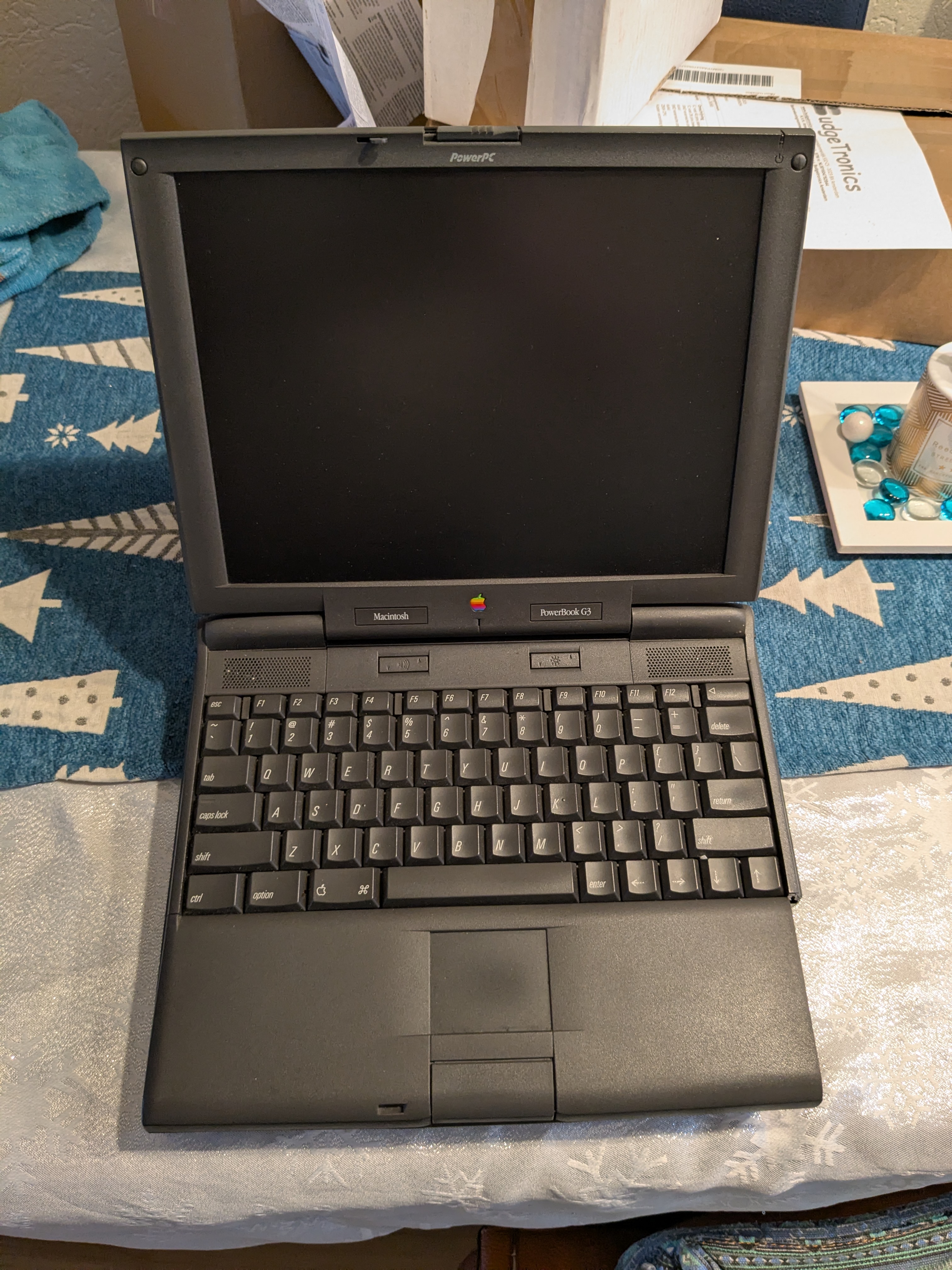
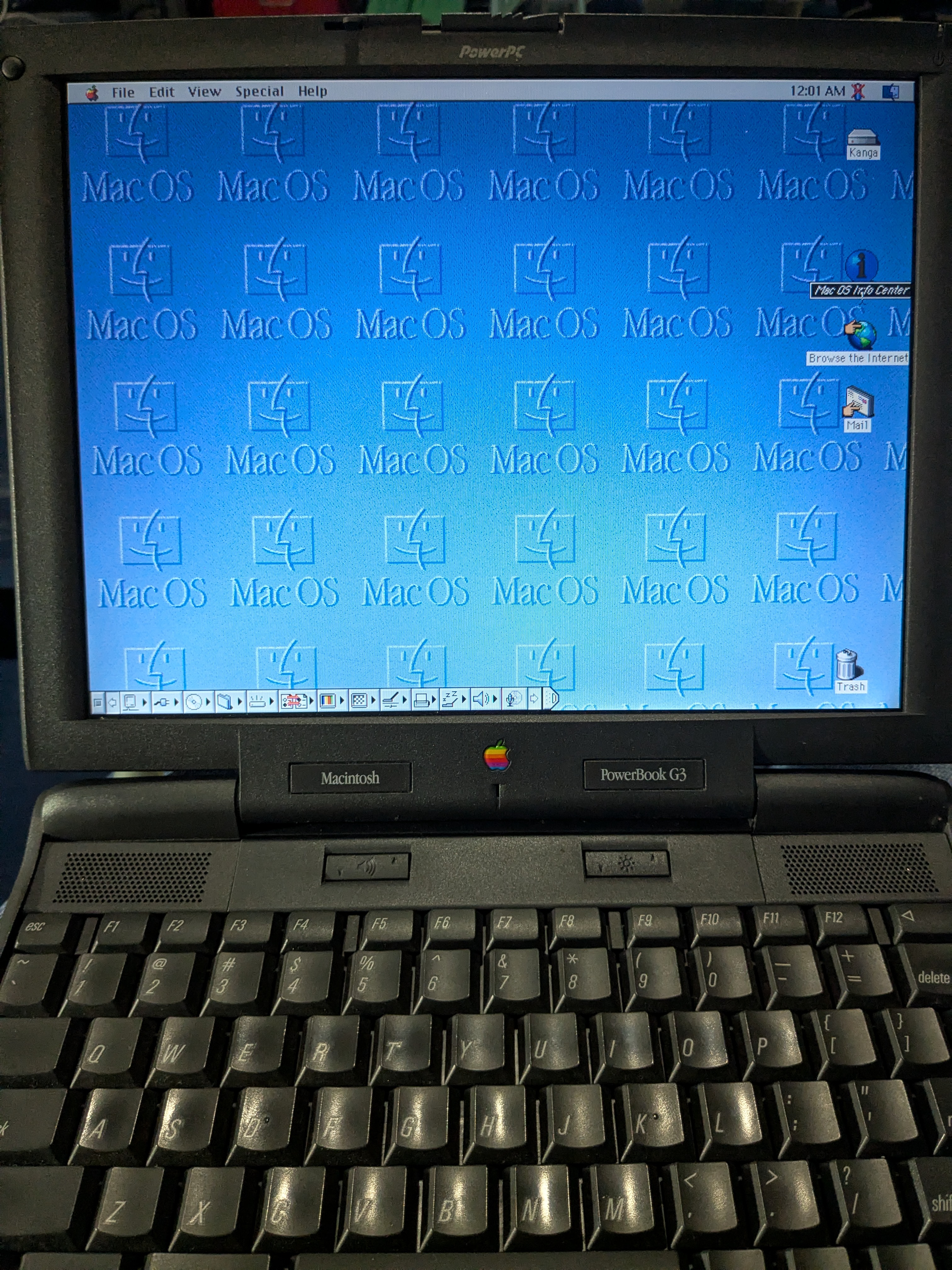
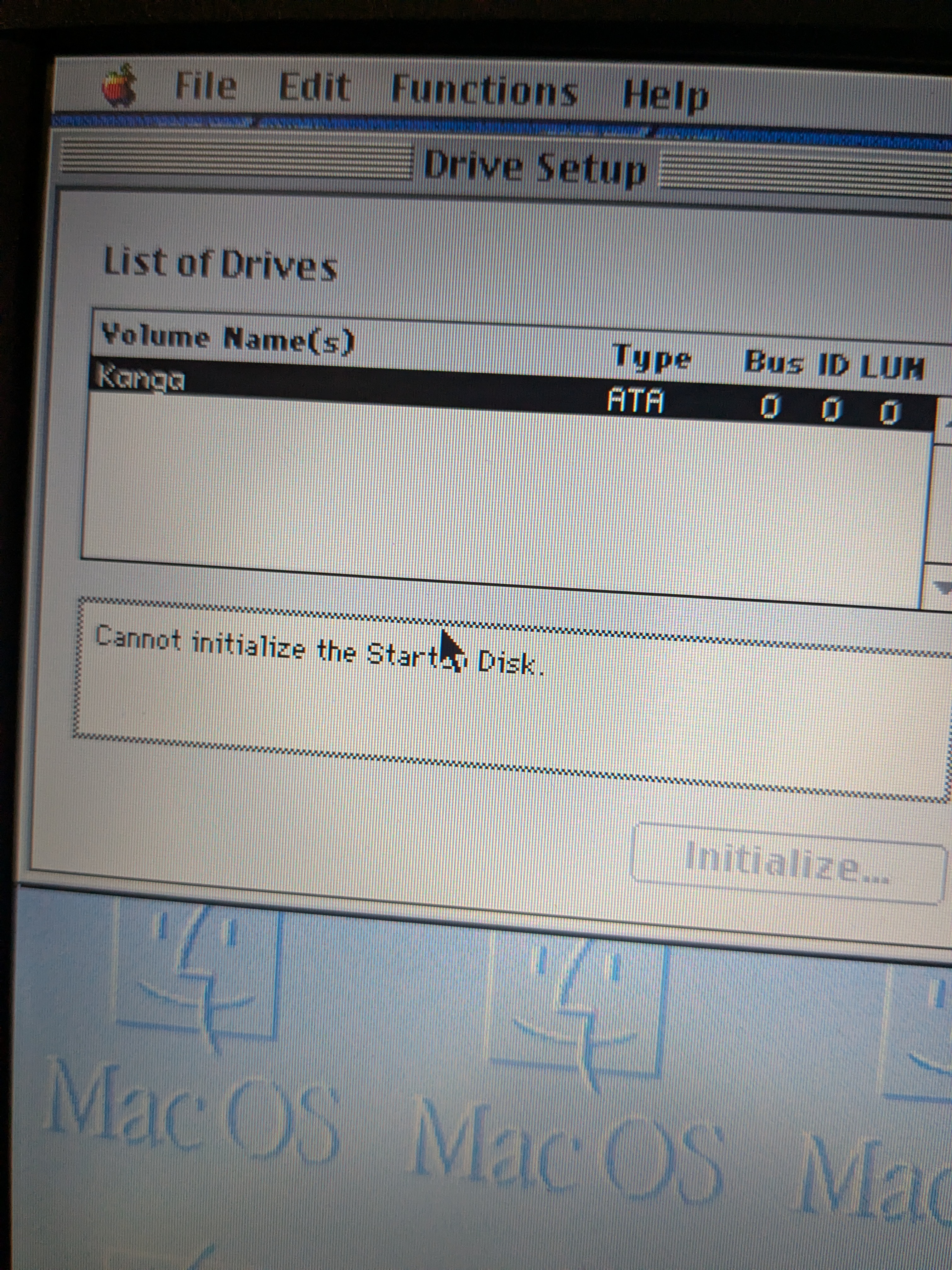
Back in 2025, I bought a sold-as-broken PowerBook G3 Kanga locally for pretty cheap.
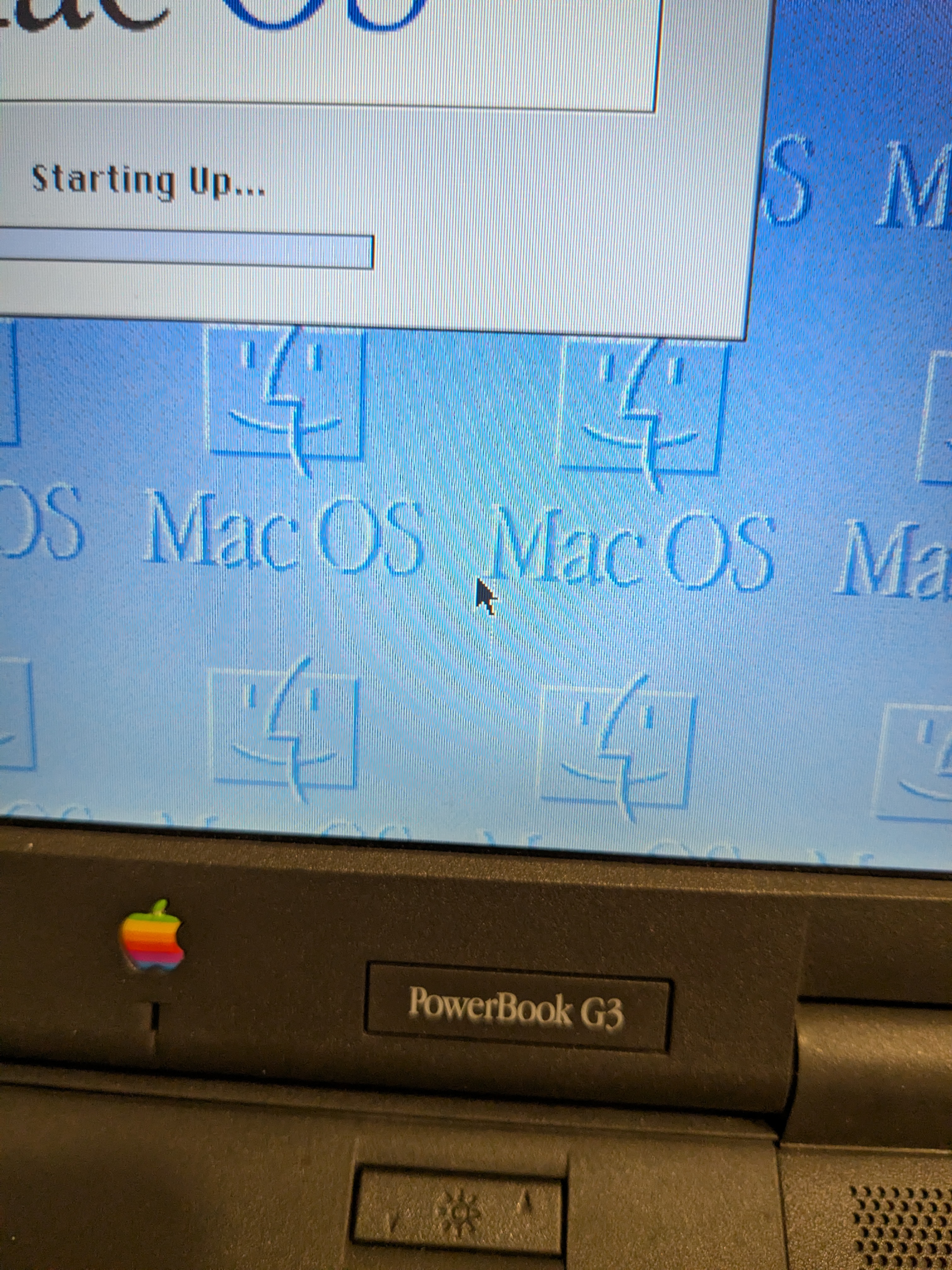
After pulling the leaky, dead PRAM battery, it worked, but showed some serious graphical corruptions on the cursor (faint line of pixels on the right), and highlighted text selections.

PXL_20250125_124846784.jpg

PXL_20250125_133602060.jpg

PXL_20250125_140025057.MP.jpg


I had ordered the replacement VRAM chips for this a while back, as I suspected one or more of those having gone bad, as no battery leakage got to the logic board.
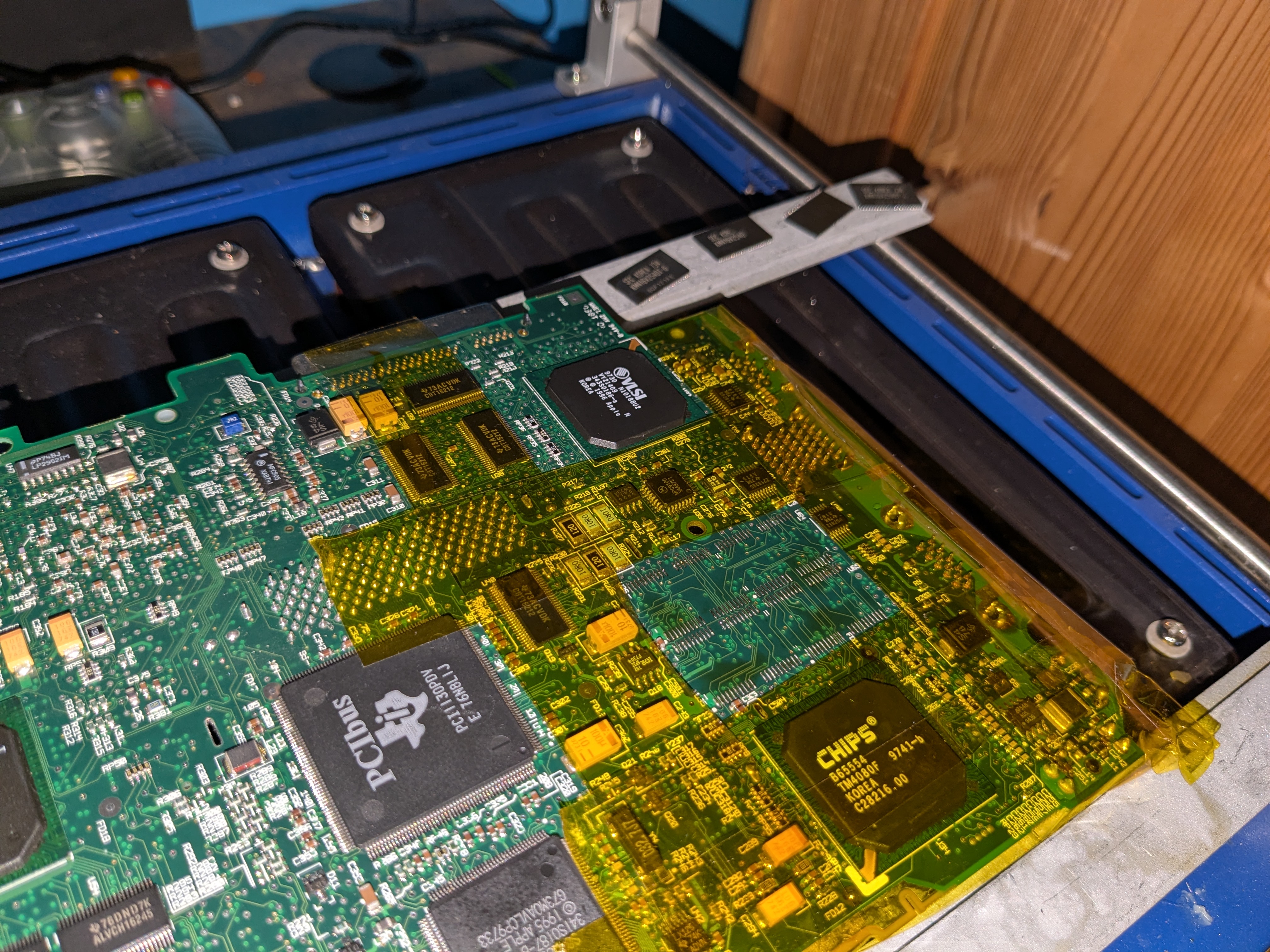
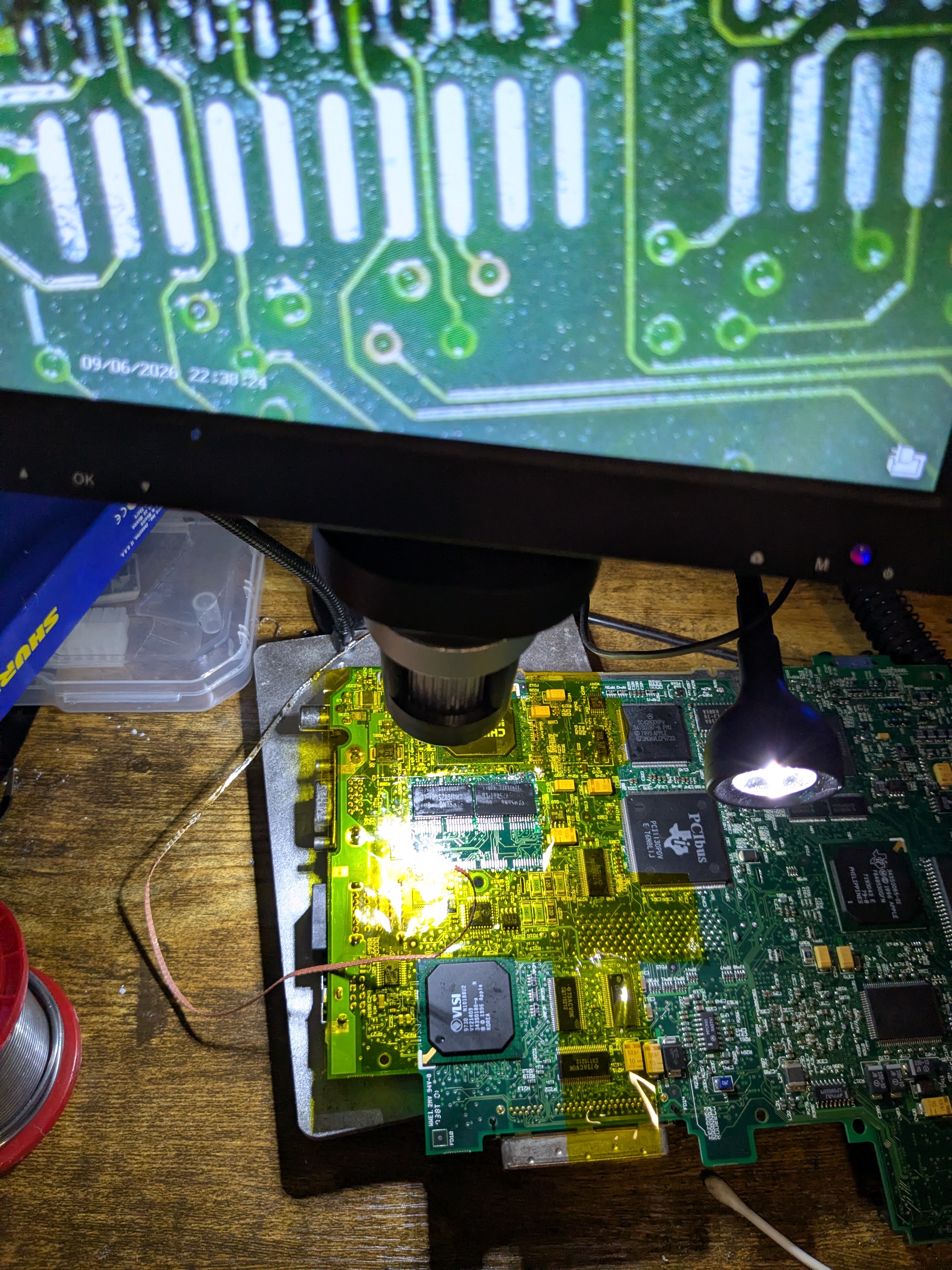
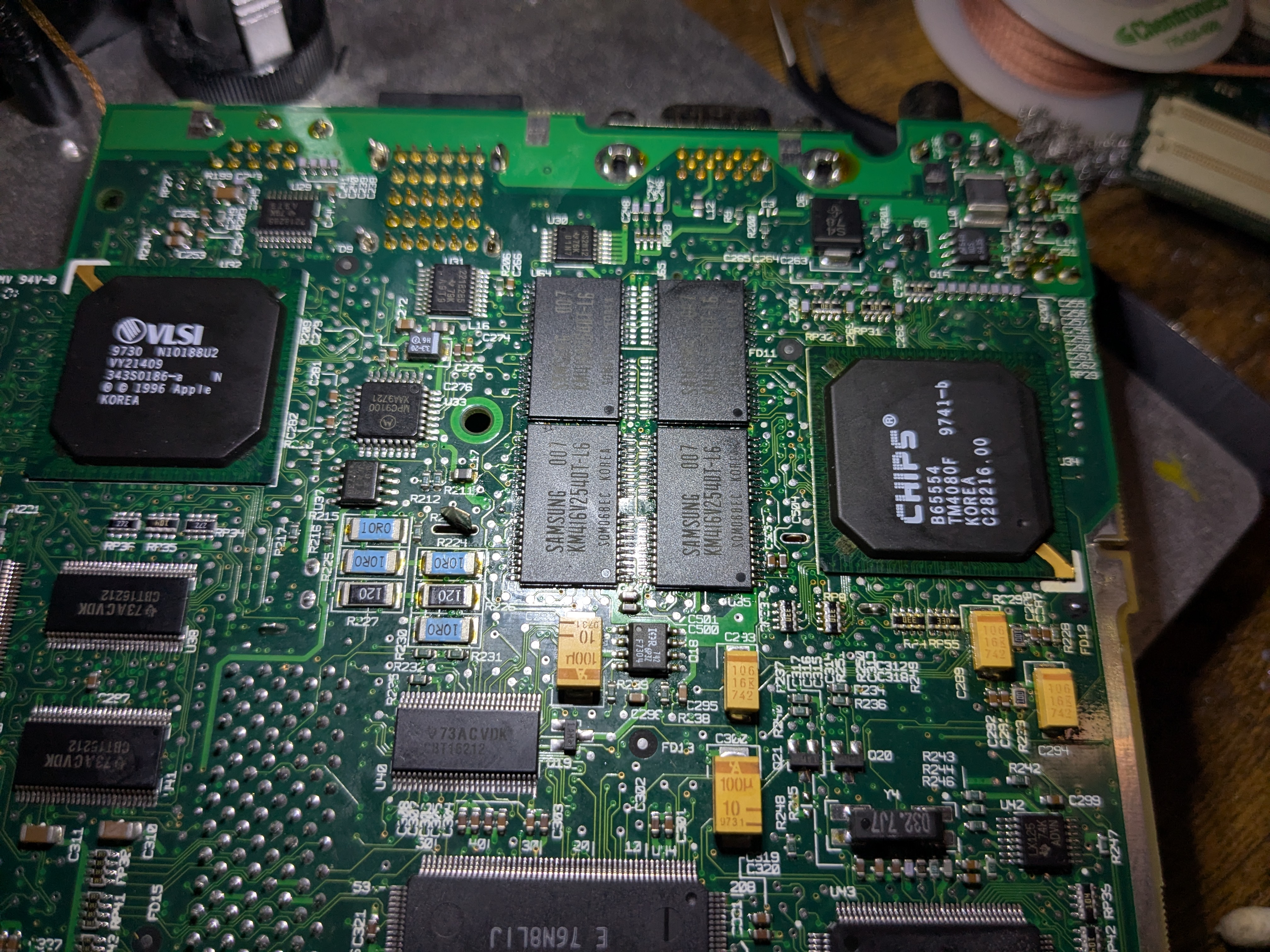
Tonight, I finally took the opportunity to tear down the PowerBook, get the logic board out and do a VRAM chip swap.

PXL_20260609_182120533.jpg

PXL_20260609_195221052.jpg

PXL_20260609_202404050.jpg


The great news, not only does the PowerBook still work afterwards, the graphics corruptions are gone!

PXL_20260609_205831985.jpg

PXL_20260609_210950745.jpg
 
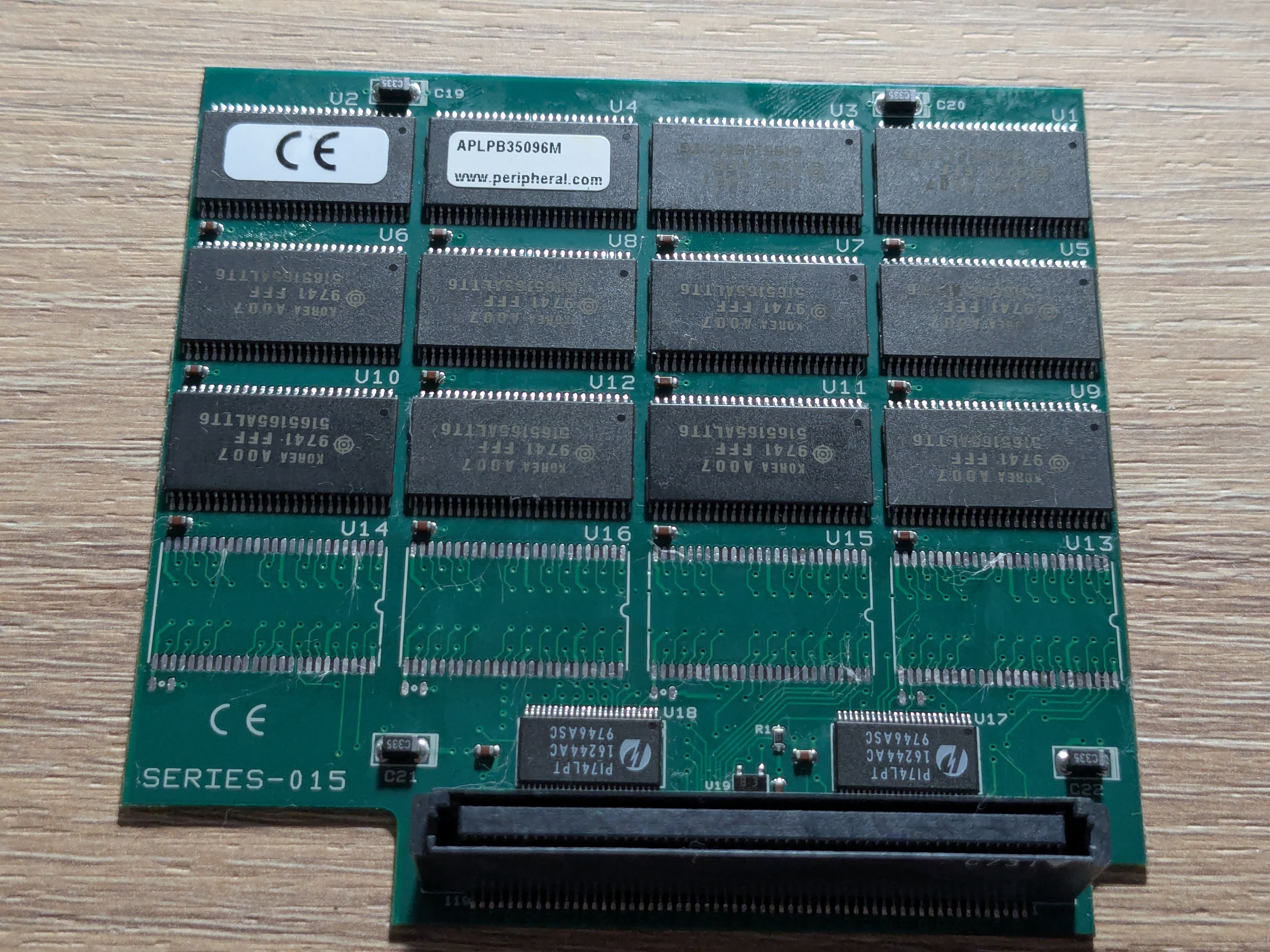
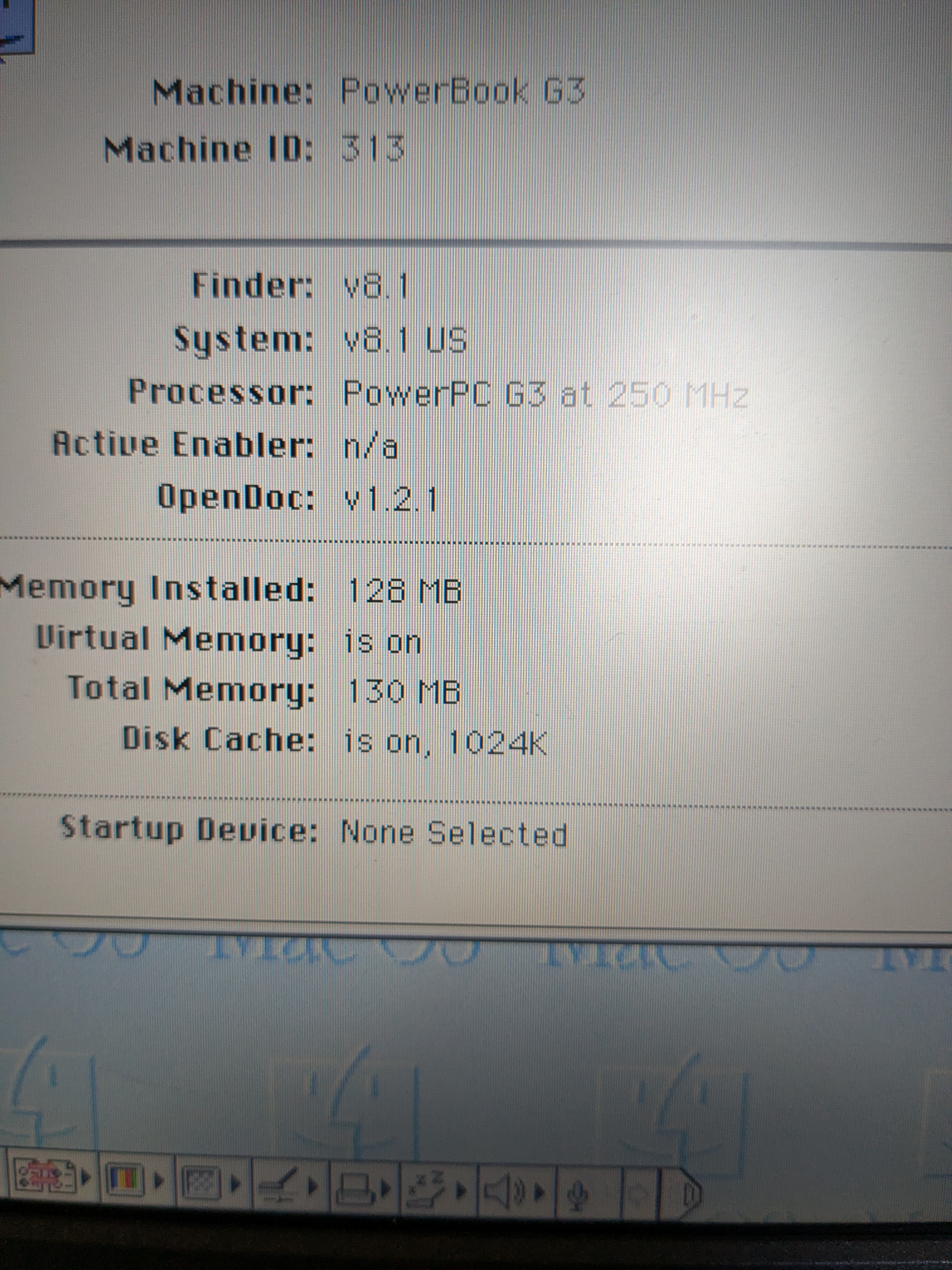
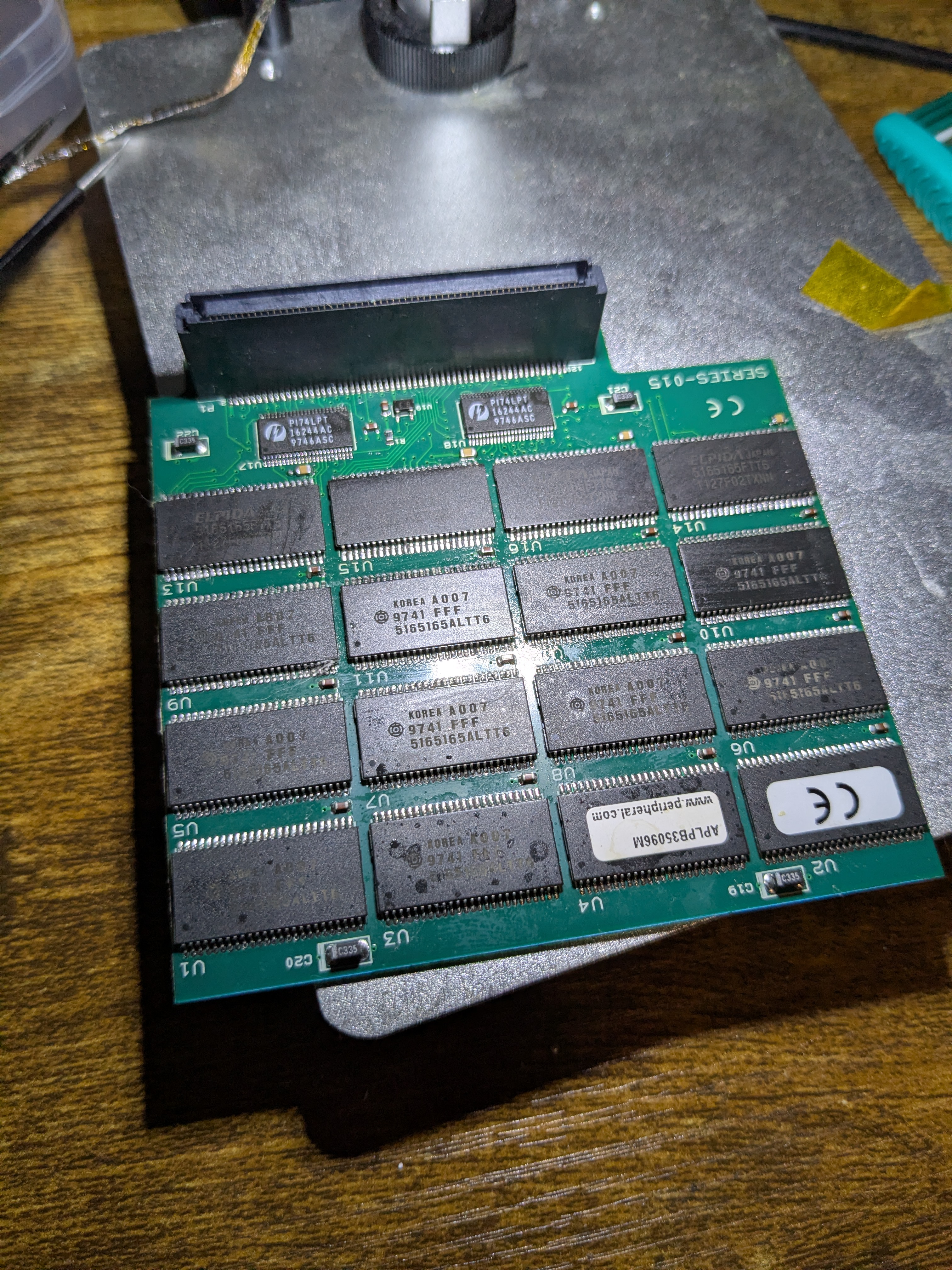
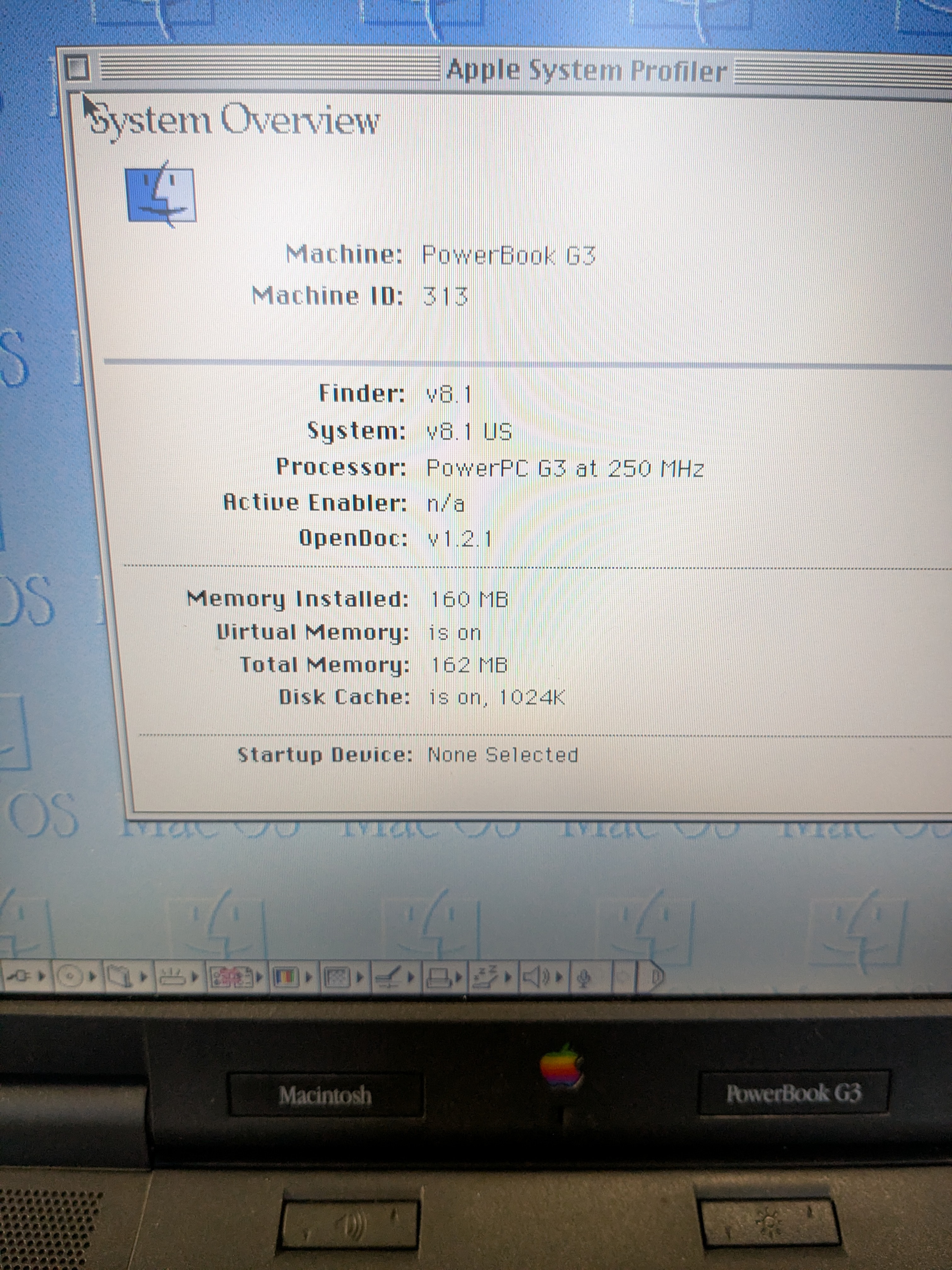
And as an add-on, I also went ahead and took the 96MB card I had for the Kanga up to 128MB to max out the system at 160MB.
Not the greatest solder work (the connector makes it awkward), and it required a re-flux and reflow with hot air, but looks like that did the trick:

PXL_20260609_210346736.jpg

PXL_20260610_172523674.jpg

PXL_20260610_191951375.jpg

PXL_20260610_191843597.jpg


This mod didn't require anything other than adding the RAM chips and bypass capacitors, no resistor straps or anything like that on here.
 
Awesome stuff with the Video repair, and espically the RAM card upgrade, I am quite curious if it is known how RAM sizing detection is done on the 3400 and Kanga? I know the 3400 and Kanga RAM cards are slightly different, if I shove my Kanga 64MB card into one of my 3400's it shows up only as 32MB


I would love to get full 128MB cards for both my 3400's and my kanga (I also wonder thinking bout it, if the onboard RAM of a 3400 can be upgraded to a full 32MB)


of course also I have always wanted to see a Kanga CPU upgraded too :) a G4 of course would be fun to shoehorn Leopard onto one (ditto a 2400 G3 card with a G4)

but even just putting a higher clocked G3 on would be fun, something like a 500Mhz PPC750L pulled from a G4 upgraded Pismo or the such like, and I wonder how L2 cache sizing is done the Kanga, because would be fun to see that upgraded of course :)

just a shame Kanga's are so scarse, I have one, but I dont really wanna mess with it!
 
wasn't sure whether to expand in this topic or start my own new topic but mm anyway..

does the IBM 740 indeed not even know how to use L2 in any way so for a BGA swap on 6x00 boards the cache slot is quite meaningless aka "just deadweight" right?

even then although only a 6400/180 or 9600/200 are shown (I wonder what number something like perhaps a 6500/300 would had showed?) in the benchmark screenshot I nevertheless had to wonder about this modified 4400 here tho
(re that I suspect a slower 740 may be difficult to differ from the 603e/300 but on the other hand I still imagine that a 740/400 may nevertheless quite trounce it, I don't have any cite for this tho mind you)
 
not happy with a bit of my spelling and more but thats what I get for a half-sleepy night, especially writing here shortly after having gone through some long reads elsewhere. oh well I'll leave my post above alone for the prosperity of it still!

thanks croissantking for clearing that up, looks like a 512KB or even 1MB cache 'is on the card' to go with such rework
 
<snip> does the IBM 740 indeed not even know how to use L2 in any way so for a BGA swap on 6x00 boards <snip>
PPC 601s, 603(e)s, 604(e)s don't know about L2 at all. The Logic board chipset manages the L2 tags, data and bus cycles. These chips just think they're accessing main memory and the cache logic provides L2 cache data if available or stalls the CPU until DRAM is available.

(re that I suspect a slower 740 may be difficult to differ from the 603e/300 but on the other hand I still imagine that a 740/400 may nevertheless quite trounce it, I don't have any cite for this tho mind you)
A 740/MHz is almost exactly the same speed as a PPC 604(e)/MHz:

According to: https://www.cpushack.com/CIC/announce/1997/IBMPowerPC.html .
  • PPC 750/266 (est.) 12.4 SPECint95 and 8.4 SPECfp95 (1)
  • PPC 740/266 (est.) 11.5 SPECint95 and 6.9 SPECfp95 (1)
  • PPC 604e/350: 14.6 SPECint95 and 9.0 SPECfp95 (2)
  • [implies PowerPC 604e/266: 11.1 SPECInt95, 6.9 SpecFP95.
  • PPC 603e/300 7.4 SPECint95, 6.1 SPECfp95.
So, a 740/266 would be slightly faster than a PPC 604e (though maybe not since a 266MHz PPC604e will be faster than a direct scaling).

The 2x larger L1 cache, dynamic branch prediction and 2x ALUs make a serious difference over 603e performance. If we're able to drop-in a 740 it'd be amazing, like suddenly having a 604(e) Mac.
 
Back
Top