• Hello MLAers! We've re-enabled auto-approval for accounts. If you are still waiting on account approval, please check this thread for more information.

C10 on the Mac Classic and electrolyte damage

Hey there, doing my first Mac repair with a classic that had pretty bad electrolyte leakage, eating away the legs of capacitor C10 on the logic board, among other things. Bomarc schematics say 3.3uF/16V -- should this be a tantalum cap? It looks like there's a polarized marking on the motherboard. The markings on the cap are gone, I assume eaten away by the corrosion. I tried to mark the positive side before I removed it with hot air -- the capacitance checks right, but the marking for the positive side is now gone -- I assume the hot air just faded the marker I used and I'm not longer sure which side is which. D'oh.

As far as cleaning things up, I am using 99% IPA and a toothbrush -- should I really use Dawn and distilled water like the videos recommend? Everything sounds crazy about this to me, but I agree that it looks like IPA doesn't do much on these crusty green vias.
 
Last edited:
Hi, and welcome. C10 is indeed a tantalum. The positive marker is really faint, you can sometimes shine a light on it and see the shadow of the old marking. If not, I’d replace it with a new cap of the same value… it will pop explosively if installed backwards.

Yes, dawn and distilled water will work well, even tap water is probably ok unless your water supply is hard. Just rinse the board with IPA after to drive out the water, and dry it thoroughly (I use a heated board dryer, but a blow dryer works too, or just let it sit in a warm, dry spot for 48 hours.)

Sometimes the solder itself is damaged by capacitor leakage and even soap won’t help. In that case, I like to remove the bad solder and reflow it with fresh stuff. It’s tedious but often necessary. Solder wick, flux, and a dental pick are your friends. :)
 
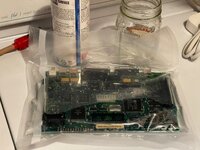
I've become a fan of using vinegar to help clean up capacitor corrosion. The corrosion is alkaline, so a mild acid like vinegar helps neutralize and clean. Food-grade vacuum seal bags are stellar for this purpose as they won't leak from the corners like most Ziploc bags tend to. I keep vinegar in a mason jar and most of the jar will fill up the bag enough to submerge the entire motherboard. Fold the bag up and support the opening vertical so nothing will leak out and set it somewhere safe to soak for an hour or so.

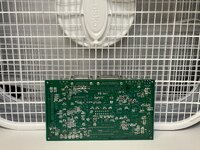
When it's done soaking, I'll do a visual inspection, rinse it off under the faucet for a bit, then use an electric air blower to blow most of the water out from under chips and connectors. I'll then rinse it with some distilled water to help displace the tap water, blow dry it some more, then squirt some isopropyl alcohol all over the board, allowing it to soak under the chips and then run off to help fully displace the rest of the water. One more thorough blow-dry, and then I'll set it in front of a box fan, propped up with the component side facing the fan, to fully-fully dry.

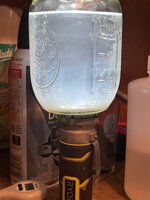
The vinegar goes back in the mason jar where contaminants like flux and other debris will settle to the bottom in a slightly milky-white haze (flashlight pic for extra visibility). Next time I want to use the vinegar, I'll pour enough of the vinegar into the bag until the settled haze starts to mix with the vinegar, then I'll stop pouring from the jar and top off the bag with however much fresh vinegar I think I'll need. The waste vinegar in the jar gets tossed down the sink. Rinse the jar with water and let it sit until it's time to dump the bag's contents back in the jar to eventually reuse again. I think I cleaned up four Classic motherboards back to back with about one and a half mason jar worth of vinegar, with most of the entire jar left over to be reused.

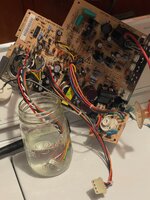
Bonus tip: the jar is great for soaking the analog board's main connector since corrosion tends to wick its way up into its pins!
 

Attachments

  • IMG_6600.jpeg
    IMG_6600.jpeg
    2.7 MB · Views: 12
  • IMG_6598.jpeg
    IMG_6598.jpeg
    1.6 MB · Views: 10
  • IMG_6591.jpeg
    IMG_6591.jpeg
    2.7 MB · Views: 11
  • IMG_7145.jpeg
    IMG_7145.jpeg
    2.6 MB · Views: 12
+1 on a vinegar soak! I was able to restore a horribly battery-bombed Lisa 2/5 by starting with a 2-day soak of the back plane. Connectors were fuzzy green on the way in, but bright and shiny on the way out.
 
Thanks for the replies, everyone! I ended up washing the board with soap and water because I did it before the vinegar tip. Cleaned up pretty nicely but I think my recap may have caused more problems, as I wrote in my other thread about it no longer booting :(
 
Back
Top