
Part numbers on the ROM usually only reflect the circuit board revision and tell you nothing about what contents the chips contain (the actual ROM code). The only relationship is the accident of history that certain revision of the ROM code coincided with certain versions of the ROM circuit board. But you find more than one revision of the ROM code on the same model circuit board in different instances.Huh, the part number of the board ended in a -B but the part number of the ROM ends in a -A. Isn't the Zip drive a slave device though...?
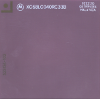
The way to identify the ROMs properly is to look at the part number on the actual ROM chips. These are usually something like 341S0402 (Rev. A, Beige ROM) or some such and usually the ROM chips (two in the case of the Beige G3) will have part numbers in sequence.
If the ROM is installed in a working machine go to Apple System Profiler and read out the ROM Revision. That will correspond to, but be different from, the part number on the ROM chips. So, for example, on the PCI Macs (before the Beige) the $77D.28F2 corresponds to ROM chips with the numbers 341S0169 through 341S0172. The $77D.34F2 ROM in System Profiler corresponds to chips labeled 341S0280 through 341S0283.
I used to know the ROM Revision and chip part numbers for the Beige G3 A, B and C revisions from memory, but I don't remember them any more.
Only the ROM revision controls whether your Beige G3's buiit-in IDE has slave support. The logic board revision has no effect on this. Rev. A lacks slave support. Rev. B and C have slave support.
I don't know if you can get them all to work, but SIIG made three models of cards with USB 2, Firewire and either 10/100 ethernet (1 model) or gigabit ethernet (2 models). The chipsets used are all supported by Apple drivers, but the chipsets are all behind a PCI-PCI bridge (converts one PCI slot into the appearance of three) and while PCI-PCI bridges are a proper part of the PCI specification, Apple did not support them properly.
Last edited by a moderator:


