• Hello MLAers! We've re-enabled auto-approval for accounts. If you are still waiting on account approval, please check this thread for more information.

50mhz Daystar Powercache SE/30

It's a different one. 

I have 3 SE/30 boards: 1 soldered and 2 socketed. 

The soldered one works fine and always has since I had it recapped.

The 1st socketed one came with the SE/30 I bought for 10€. It worked fine before. 

The 2nd socketed one was in a box with the powercache installed. The caps have been changed and UE8 replaced by a working one. Uniserver told me it worked when it left his workshop. It doesn't anymore now.

I guess you're right, I'll have to test it once more with its original CPU. I'll report on my progress tomorrow.

 
Did you check voltage with PowerCache on? PowerCache is very heavy load for PSU.If PSU went weak,It might be good for MB only but not enough for MB with PowerCache.When I got SE/30 with PowerChache,caps in PSU are leaking.

hope everything go well.

 
Okay.

I tested the "known working" board with the Powercache in the recapped PSU unit. Same results.

Then I tried that same board but this time with its original CPU and it works. Sorta. I mean it doesn't give me a floppy when I start it up, it gives me nothing. Then after a minute or so the floppy appears, then the question mark but it is like in slow motion. It blinks but it's really slooooww. It started doing this since I broke the floppy drive in it. Don't worry though, I will mend that floppy drive in the near future. I still don't think that board is faulty. I did this test with no floppy or HD installed as well.

So it must be powercache-related... or back to my initial theory: wrong RAM?

 
Then after a minute or so the floppy appears, then the question mark but it is like in slow motion
Not unusual, is this quite slow compared with the soldered CPU one ?

The Powercache will probably be harder to troubleshoot, those are really thin on the ground.

 
Last edited by a moderator:
yeah quite slower. takes about 30 seconds to get the floppy and another 10 for the question mark and it blinks every 7 seconds or so. It didn't do so before the floppy incident.

About the Powercache:

There is hope: Some other people on Applefritter have the same problem with their Powercaches. They seem to get the vertical artefacts only at cold boot and with the IIfx ROM. My ROM is a proper SE/30 ROM... I will try swapping the ROM anyway. But the SE/30 board is really mysterious: these artefacts are supposed to be early symptoms of SimasiMac. 

I know the caps on that board are toasted but the system still works without the Powercache. One of the guys there has a recapped board. And he still got the artefacts with the Powercache and no artefacts without it.

It seems that the SimasiMac and the Powercache are closely related. But how? Damn there was a thread about the vertical stripes here at 68kmla but it disappeared when the site went down.

JDW suggested trying a wrong RAM-setup deliberately. His system responded differently with the Powercache: there was no error code or sad mac. I might try that later on.

---------- ONE MORE THING I HAVE TO TRY

IIRC, some people had the vertical bars at cold boot but got rid of them as the computer booted up.

When I tested that board I had taken the floppy and the HD out for testing, remember? So I did not try to boot the computer up. I only tried turning it on... 

Maybe it will boot up if a floppy is inserted? Who knows? I have to find out.

 
If your caps are toast, some of them a shorted out with a resistance - making the PSU struggle to maintain 5V as 12V. Thus you will have a lower voltage output from the PSU by the caps hoarding the voltage, and the PowerCache will never get the proper voltage until power to run it. So you need to get that board recapped.

Likewise if your PSU is flakey or weak and barely puts out the proper voltage, any load on it will drop the voltage. The larger the load, the larger the drop. As-is the PowerCache uses up a lot of power and is a larger load. So you will need your PSU recapped as well.

The Mac SE\30 uses 120 - 70 ns (nano-second) RAM. For use with an accelerator like the PowerCache, you should use 100 or 80 ns RAM. I use 80ns RAM in my IIci with my DayStar 040 Turbo Card and have no problems with it.

The Slowness of the PowerCache in operation is that it is not getting the proper voltages because of both leaky caps on the logic board and in the PSU. Get both recapped. Post a (large high resolution) picture of the PowerCache. It might need recapping too. Only way to find out is to see what caps it has.

 
I really need to test the Output on that board. I was about to recap it anyway. I had one recapped by Uniserver but it doesn't display any video at all.

The PSU as I said above is brand-Uniserver-new.  :)

I have to look up that RAM, I know it's really "underpowered" but I didn't check the speed.

The computer is slow without the Powercache. With it it won't display anything apart from the vertical stripes, regardless of which PSU I was using or RAM or even ROM.

My Powercache is one of the early ones, it works with socketed boards, so it doesn't have the damn cylindrical caps. I do not think it has to be recapped.

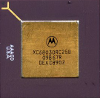
Here is a picture of it, courtesy of JDW.

https://c2.staticflickr.com/4/3810/9105522159_39c2b4a75c_b.jpg

https://c2.staticflickr.com/6/5521/9105520047_295be2b1a7_b.jpg

 
I really need to test the Output on that board. I was about to recap it anyway. I had one recapped by Uniserver but it doesn't display any video at all.

The PSU as I said above is brand-Uniserver-new.  :)
If the recap failed that he did, you need to talk to him about it. To me it sounds like Cap-Goo Crap under a couple of chips causing problems or a pin solder joint on the AB harness on the logic board broke.

I have to look up that RAM, I know it's really "underpowered" but I didn't check the speed.

The computer is slow without the Powercache. With it it won't display anything apart from the vertical stripes, regardless of which PSU I was using or RAM or even ROM.
That is a sign of not enough power to run the board, usually from bad leaking caps on the PSU, Logic board or both.

My Powercache is one of the early ones, it works with socketed boards, so it doesn't have the damn cylindrical caps. I do not think it has to be recapped.

Here is a picture of it, courtesy of JDW.

https://c2.staticflickr.com/4/3810/9105522159_39c2b4a75c_b.jpg

https://c2.staticflickr.com/6/5521/9105520047_295be2b1a7_b.jpg
This is good to know. From the looks of it, it will not be needing a recapping job but solid state caps do fail due to age and it will need to be recapped years from now. Another 10 - 15 years from now, I'm guessing.

 
Last edited by a moderator:
Actually Uni changed UE8 because it did not display video when he got it. He took UE8 out, turned out it was rotten but only underneath. You couldn't see it from the outside. I think some other chip went bad since then...

It is true that the failing caps on that logic board can cause power problems so since the powercache requires more of it, it won't work but the stock CPU still works with those caps because it needs less power. 

Biblit I will keep your offer in mind. I just can't afford to send every single board to be recapped in the US. Some will have to be recapped here.

How much for a recap you'd say?

 
It is true that the failing caps on that logic board can cause power problems so since the powercache requires more of it, it won't work but the stock CPU still works with those caps because it needs less power. 
Correct. I do have a IIcx which the bong is slow and long, and it takes forever for it to get a flashing disk icon which it will flash slowly once it gets there. It does need a recapping. The same with a with a LC III 33MHz that I have recapped and I traced that down to a bad PSU as it behaves normally with a good PSU. This bad PSU gives other issues with the LC III as well:

https://68kmla.org/forums/index.php?/topic/27019-symptom-runaway-lc-fan-bong-nothing-else/

The "UE8 Issue" on the SE\30 can be something else. This was discussed and the answer was found elsewhere when UE8 was suspected. But to me it sounds like Cap Goo rotting out a trace just past UE8 and not UE8 or to the VRAM. I forget where that other chip is at but it is one of the chips that display the video.

And that Harness connector does go bad and need resoldering. When I find a cracked solder joint on the analog board, I resolder the harness connectors both the analog and logic boards.

 
Okay. 

I took the CPU out of my SE/30's LB. Installed Powercache. Crossed my fingers. And there was light, but no floppy icon...

Here is the actual picture it gave me:

attachicon.gif
IMG_2838-min.JPG
I have tried a Daystar Digital Turbo 040 (33Mhz) on my SE/30 with the TwinSpark SE/30 adapter and got the same screen image as you did. Tried it on 2 different SE/30s, one recapped by Uniserver, another recapped by the previous owner (iw. wire running from a UE8 leg to a nearby chip), but I got the same image both times. One of those SE/30s had a video issue when I chucked in an Asante NIC Adapter (https://68kmla.org/forums/index.php?/topic/26506-asante-maccon-se30-affecting-video/). That one was supposed to have a 'as new' replacement power supply (no scratches, seems to have never been installed elsewhere before, and no cracks on the connectors) but still gets issues with Asante and now Daystar cards.  I am therefore leaning towards this being a power supply issue. 

Can someone recommend me a Multimeter from Amazon - too many to chose from - so that I can test it on the molex to see if these are all power related issues. 

 
Last edited by a moderator:
Can someone recommend me a Multimeter from Amazon - too many to chose from - so that I can test it on the molex to see if these are all power related issues
Even a basic unit will do the trick.

 
Last edited by a moderator:
I have two SE/30s as well. Tried on both, same results. 

One has a recapped PSU and the other hasn't.

One board was recapped but it doesn't work at all. The other one is NOT RECAPPED.

The analog boards are NOT RECAPPED

I think I should have the analog board recapped as well because both have tiny problems: one makes the display wavy at cold boot. The other one has a brightness problem when I turn the knob (flickery screen). 

I haven't suspected the AB before but it can also be the problem here.

BTW, when you check the voltage on the floppy port, can it show good values with a bad AB and LB?

Edit: My multimeter is even older than my macs, made in 1981! ;)

 
Last edited by a moderator:
I have tried a Daystar Digital Turbo 040 (33Mhz) on my SE/30 with the TwinSpark SE/30 adapter and got the same screen image as you did. Tried it on 2 different SE/30s, one recapped by Uniserver, another recapped by the previous owner (iw. wire running from a UE8 leg to a nearby chip), but I got the same image both times. One of those SE/30s had a video issue when I chucked in an Asante NIC Adapter (https://68kmla.org/forums/index.php?/topic/26506-asante-maccon-se30-affecting-video/). That one was supposed to have a 'as new' replacement power supply (no scratches, seems to have never been installed elsewhere before, and no cracks on the connectors) but still gets issues with Asante and now Daystar cards.  I am therefore leaning towards this being a power supply issue. 
FINALLY! (j/k)

The SE & SE\30 PSU puts out between 75 and 90 watts. Note that these figure off the top of my head, so bare with me.

The Analog board and CRT takes up 20 to 30 watts.

The SE\30 Logic Board takes up 25 to 36 watts.

The Hard Drive takes up 10 Watts (newer drives takes up less power, the old  ones were power hogs)

The Floppy Drive takes up 5 Watts

The Keyboard takes up 3 Watts

The Mouse takes up 1 Watt.

Total power used: 85 Watts Maximum (64 Watts Minimum).

The PSU produces about 90 Watts Maximum (75 Watts Minimum)

Thats leaves you with 5 - 10 Watts for extra things like expansion boards. The issue here is Accelerators can take up about 15 Watts. You just exceed your PSU.

What to do?

Of course, strengthen your PSU with a reacap for one. Use higher voltage rating caps.

Use a newer low power Hard Drive. Go Solid State Drive if you can.

Recheck your board and recap as needed.

Use Lower Power RAM not necessarily Small RAM but RAM with Thin Chip instead of thick chips; the thinner RAM Chips use Less Power. And use Non-Parity RAM (Even numbered chips on the SIMM).

These four things will help out a lot.

 
Thanks Elfen, I'll give a few of those suggestions a go (note, am already using SCSI2SD rather than HDDs, and tried removing the FDD when I had the Asante issue, so possibly the PSU is right at the bottom mark. ) These have 64MB or 32MB, so might try dropping down to 16MB or 8MB.

Again, is there a suggested Amazon/eBay multimeter I should get to test PSU/MB power - what does everyone else use?

 
Last edited by a moderator:
Literally any multimeter will do, but if you want a good one to keep around for future use, the Victor VC9805 series is one that's been recommended to me for about US$50 give or take.

 
The recap will certainly help. As always. I think I'll have the LB recapped and if it's still no good, I'll attack the AB.

I am using NO HD or FDD. So it saves 15W max, as suggested Elfen. Without them the PSU "should" be able to handle the extra power needed to operate the accelerator, shouldn't it?

But apparently, it doesn't.

I know the AB was modified on Hyperdrive 512ks so it could power the HD. Maybe the AB (and not the PSU) isn't outputting enough power to the LB? 

IIRC, you could adjust R56 on early ABs. It is the last thing to do (because you're going to mess it up) but I really need to check the voltages on the floppy port. 

I think they're somewhat ok with a standard setup but they might be too low when the Powercache is connected.

 
Last edited by a moderator:
If you use 4MB SIMMs in Banks A & B, that would give you 32MB. That would be god for most things in the 68K Mac world.

The SD2SCSI would take up very little power, so that would save you a lot.

The problem now is what can be taking up a lot of power in your SE\30? If the logic board is recapped, it should be fine. If you had a Point and Shoot Digital Thermometer Gun, you could point it to areas in the SE\30 and see what is getting hot, and replace that part before it fails.

If you have an expensive multimeter with Capacitance Measuring, then you can test capacitors while on the board. I managed to get one on sale at HomeDepot (USA) for under $20USA. I do not know what you have where you live. Usually a multimeter with Capacitance Measuring is very expensive.

I would say that the problem is in the PSU.

 
Back
Top