• Hello MLAers! We've re-enabled auto-approval for accounts. If you are still waiting on account approval, please check this thread for more information.

Two SEs & Accessories - $300

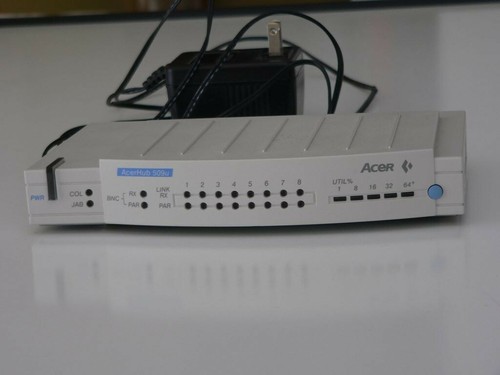
One of the easiest things to do, to get the network working with modern equipment, is to get a old hub with BNC, like this..
You'll also need a BNC cable..
Seems like a reasonable price. Out of curiosity, what kind of things can an old Mac do on the internet? I can't imagine browsing the web... but if you could FTP transfer .dsk files or something useful then I would be very interested.
 
Could this tear in the cable be the culprit??
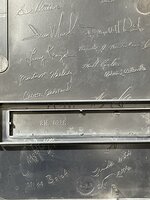
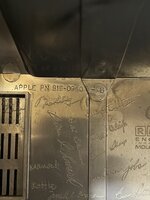
Looks intentional to me.

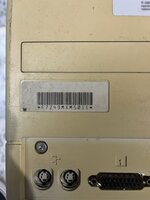
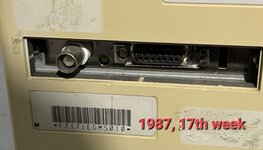
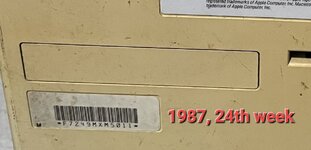
The one with the unusual fan is an early build. In the serial number, the two letters are the factory, the first number is the last digit of the year, the next two are the week in that year. I suspect yours is going to be from 87?
 
Seems like a reasonable price. Out of curiosity, what kind of things can an old Mac do on the internet? I can't imagine browsing the web... but if you could FTP transfer .dsk files or something useful then I would be very interested.
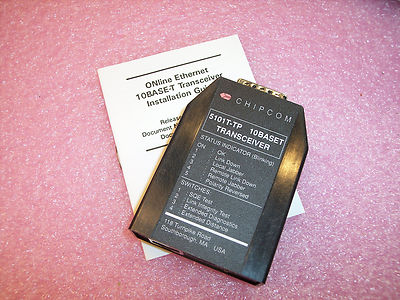
This might be a neater solution :


This is what the big "AUI" port is for, its sort of a universal network connection, that you plug a box on to get to the exact type of network you want. With this one simple trick... you can get straight to 10baseT.

People will tell you that modern networks don't recognise old network cards that don't negotiate speed... in my experience this was only true for a short period in the early 2000s, all my modern switches and routers happily assume 10baseT when confronted with my SE. They're got smarter.
 
The logic board with jail bars, the computer looks like it has been sat in an uncontrolled environment, so I'd start by giving the logic board a bath in IPA, and a
brush with a soft antistatic brush (cheap from amazon).

I'd also want to stop that rust on the chassis and PSU from getting worse, but that can be a bit of a challenge.
 
Looks intentional to me.

The one with the unusual fan is an early build. In the serial number, the two letters are the factory, the first number is the last digit of the year, the next two are the week in that year. I suspect yours is going to be from 87?
Do these images help identify that?

IMG_8347.JPEGIMG_8348.JPEG
 
The logic board with jail bars, the computer looks like it has been sat in an uncontrolled environment, so I'd start by giving the logic board a bath in IPA, and a
brush with a soft antistatic brush (cheap from amazon).

I'd also want to stop that rust on the chassis and PSU from getting worse, but that can be a bit of a challenge.
Okay, I can start with the brush and IPA solution. Would you use a soft steel wool pad or maybe a Dremel tool (soft brush) for the rust? I believe he kept both units in a barn which is generally affected by the elements.
 
Would you use a soft steel wool pad or maybe a Dremel tool (soft brush) for the rust?
Only if it was a very long way away from any circuitry. Don't get any metallic dust in the PSU or on the logic board, or on the analogue board, or monitor!
 
Gosh, I had no idea it would be this much work! Not complaining, at least one machine seems to boot OK. Still unsure if any of the floppy drives work, but hopefully I can get in with the BlueSCSI.
 
Gosh, I had no idea it would be this much work! Not complaining, at least one machine seems to boot OK. Still unsure if any of the floppy drives work, but hopefully I can get in with the BlueSCSI.
You should check for a "SCSI Rider" to put your BlueSCSI in vertically and you can even use a micro-sd extender to get the SD card without opening the Mac (I did it in mine, it's so easy).
 
Back
Top