It lives up in the clouds!
I plan to host it on my server. But it will also be open source, so anyone could run their own proxy.
I plan to host it on my server. But it will also be open source, so anyone could run their own proxy.


What kills me is that if the source code for bolo was public it would likely be pretty trivial to add a text box to enter your external IP address and embed that into the packets being sent rather than your macs internal IP address. The code would then also look for that external IP address rather than the internal one on received packets.

I’m not convinced of this. I think that trying to reverse engineer the protocol and ensuring that all possible permutations of Bolo packets are addressed, and then developing and making a proxy available is a pretty big undertaking. Inserting the correct address right at the source would be pretty straightforward as I’m guessing the IP just gets embedded in one or two places in each packet and being able to see how the packets are built in the C or Pascal code would make it pretty clear.Writing an offboard proxy will be a lot easier than trying to patch the code in the game itself, at a guess.
Inserting the correct address right at the source would be pretty straightforward as I’m guessing the IP just gets embedded in one or two places in each packet and being able to see how the packets are built in the C or Pascal code would make it pretty clear.
That being said I have looked and don’t see that the source was ever posted or leaked so it’s probably moot.
 This problem can be thought of as analogous to removing copy protection, for example.
Not necessarily - plenty of modifications to programs have been made without source code access
Inserting the correct address right at the source would be pretty straightforward as I’m guessing the IP just gets embedded in one or two places in each packet and being able to see how the packets are built in the C or Pascal code would make it pretty clear.
Right - that is my thinking as well. Either finding the code that constructs the packets, and overwriting the bytes there, or perhaps even simpler, finding the code that determines the local IP in the first place, and overwriting there, should result in a seamless solution.
Right - that is my thinking as well. Either finding the code that constructs the packets, and overwriting the bytes there, or perhaps even simpler, finding the code that determines the local IP in the first place, and overwriting there, should result in a seamless solution.
Please by all means feel free to do this modification, should you wish to.
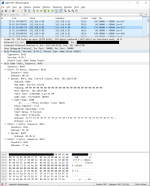
This is super cool!!!!! For wire shark do you just define how various packets look based on the Includes bytes and then it parses out the packets like this? I had no idea Wireshark could do this.