• Hello MLAers! We've re-enabled auto-approval for accounts. If you are still waiting on account approval, please check this thread for more information.

SE30: C9 capacitor (positive pole), i've lost its trace.

You'r right 8-o

i've have had a certain experience with apple 14 CRT monitors focus and geometry settings behind a mirror so in this evenience i was "just a little" more unprudent and less wise than i would have been. If you noticed i reached on off switch slowly but the use of extension cord for remote operation is a good rule to avoid injuries.

My best and sincere thanks to wally.

I wouldn't have addressed the situation if i hadn't had his help.

 
no, you cant plug a mac classic board into an se.
Why not? I've done it. All that's required is to remap the pinouts of the logicboard connectors, an easy thing to do with those molex connectors. There's a fair amount of voltage adjustment to follow if you're going to use it that way and you'll no longer have software control over brightness, but everything else will work. The Classic IS an SE. Apple hardly re-invented the wheel there, right down to the ROM.

After reading this repair tour-de-force, I would much rather tackle the logic board swap! LOL

 
The Classic IS an SE. Apple hardly re-invented the wheel there, right down to the ROM.
Does that mean that one could put the Classic ROM in an SE and gain the ROM-resident OS 6.0.3 in an SE?

 
Last edited by a moderator:
The Classic IS an SE. Apple hardly re-invented the wheel there, right down to the ROM.
Does that mean that one could put the Classic ROM in an SE and gain the ROM-resident OS 6.0.3 in an SE?
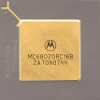
Not exactly. The Classic ROM is a single chip whereas the SE had two chips (like the Plus before it). In much the same way the Classic II had 2 chips on the early models and 4 chips on the later models. (Would be curious if those Classic II chips are swappable with an earlier Mac.) It almost seems like Apple intentionally varied the ROM configurations to prevent exactly this kind of thing.

I suppose it would be possible to swap ROMs with a custom socket re-map, but you'd need the pinouts of both the SE & and the Classic to adapt the Classic's 40 pin ROM to the SE's combined 56 pins. Likely more trouble than simply swapping the logicboard. The embeded System is nice but not really a practical addition to an SE if you're just trying to keep PDS expansion options. Also, there may be a custom IC on the Classic's logicboard which is required by the ROM to boot. i.e. it might hang on the SE waiting for confirmation of the chip, then again it may not. It is a minor variation of code I am told by the Mini vMac Classic emulator developer specifically to support the backlight CDEV like the Portable. But otherwise they are identical.

EDIT:

I have only read that there were Classic II 2 & 4 chip ROM boards, however, I have NEVER seen one or seen any official Apple documentation that references them. Anyone who can confirm the existence of the 2 chip ROM board would be appreciated. This posting from Apple is as close as I've come, but it's way off showing the 2 & 4 chip variations for the original Classic which had only one chip. http://docs.info.apple.com/article.html?artnum=11609

 
Not exactly. The Classic ROM is a single chip whereas the SE had two chips (like the Plus before it). In much the same way the Classic II had 2 chips on the early models and 4 chips on the later models. (Would be curious if those Classic II chips are swappable with an earlier Mac.) It almost seems like Apple intentionally varied the ROM configurations to prevent exactly this kind of thing.
Ah, we don't sweat two chip vs. four chip, nor one chip vs. two chip. :-) Those are hardware variations which do not affect the code and are easily worked around, in most cases.

It would probably be easy enough to take a ROM image from a Classic and span it across a pair of 8 bit wide chips of the type which will fit in the SE. Chip programmers typically have spanning as one of their software functions, so that ROM images can be divided amongst several chips.

It is a minor variation of code I am told by the Mini vMac Classic emulator developer specifically to support the backlight CDEV like the Portable. But otherwise they are identical.
Is the Mini vMac developer approachable about such questions?

The reason I ask is because of the Outbound Model 125. In addition to a Plus or SE ROM installed in the machine, it has a pair of EEPROMs on board which are programmed with Outbound specific code. I would love for someone to take a look at it for a couple of purposes. Primarily, I want to modify it to support other hard drives. As written the code in the EEPROM only supports three or four size of hard drive, and I suspect that it could be made to support other larger drives.

In the longer term, I'd love a primer on how to learn my way around the ROM. Does he read machine language, or use a disassembler, or even a decompiler?

 
In the longer term, I'd love a primer on how to learn my way around the ROM. Does he read machine language, or use a disassembler, or even a decompiler?
It is unlikely you'll get a response out of him for anything other than the immediate projects he's working on, which at present is developing a fully functioning Mac II emulator. Mostly he is not concerned with real-world hardware applications, which means the Outbound is not likely to fall onto the radar of his virtual implementation. There are a number of tools on the Sourceforge website to help you disassemble the 68000 ROMs from the 128K through the PowerBook 100, the Mac II and a few others. Those tools might be a good starting point for your primer. But I would not expect a personal tutorial from the developer.

Now, if you were to make generous contribution to the Mini vMac project ... ;-)

 
Thank you, Mac128. I have heard of Sourceforge before but am not familiar with it. Is that the home website for mini vMac?

Alas, learning to solve software/firmware problems is not near the top of my queue yet. I still have too many easy to implement hardware projects ahead of it.

Ultimately, if I want to do any of the really interesting stuff like build a working USB NuBus card, then software will be in my future, but not yet, and possibly not ever.

Still, it would be cool to modify the Outbound. Also, the thing is only compatible through OS 7.01 and not with 7.1. It would be great to figure out what they were patching and what broke it in 7.1.

Oh, and there's the E-Machines Futura II SX/DSP video card with ethernet daughter card. The stinker only works with classic networking and not with Open Transport. It would be nice to fix that little bug-a-boo too. It's cool to get decent video and ethernet into one NuBus slot.

And there's the PDS IDE card idea for 68K macs... So many other interesting projects which would require software development.


 
Back
Top