Follow along with the video below to see how to install our site as a web app on your home screen.
Note: This feature may not be available in some browsers.
Hello MLAers! We've re-enabled auto-approval for accounts. If you are still waiting on account approval, please check this thread for more information.
I was pretty sure it was a PIC that their code ran on, but if it's got the requisite protocol laid out, I could start from there and cook up something suitable...
Hmmmm, I don't think I've heard about a PIC one if so, only an AVR. Are you thinking of the ADB chip? That's a PIC on the original boards, and the code for that is definitely floating about.
Did anybody have success with making one? I got the code from here and compiled it with make and avr-gcc. As I don't have a special avr programmer, I loaded Arduino ISP on a Arduino Micro and connected it to the Attiny. Using avrdude -v -P /dev/cu.usbmodem1101 -p attiny85 -c avrisp -b 19200 -U flash:w:/somepath/MacPlusRTC.axf I was able to successfully flash it to the Attiny. However, it doesn't appear to work now as I cannot measure the 1Hz pulse and I can also flash it again which shouldn't be the the case if the reset pin was successfully disabled.
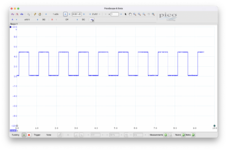
Update: I was able to get a 1Hz clock using another Attiny and by appending -U lfuse:w:0xE2:m -U hfuse:w:0x5F:m -U efuse:w:0xFF:m to the avrdude command. However, my SE/30 still refuses to boot with this RTC chip. The curious thing is that it boots fine using a RTC chip from a Macintosh Classic...
This site uses cookies to help personalise content, tailor your experience and to keep you logged in if you register.
By continuing to use this site, you are consenting to our use of cookies.