• Hello MLAers! We've re-enabled auto-approval for accounts. If you are still waiting on account approval, please check this thread for more information.

PPC740L G3 CPU Daughterboard For Blackbird Powerbooks

I think you're taking the 601/PCI out of the context of architectural development at Apple, 5300 was NuBus architecture, not just 68030 I/O bus architecture. Apple needed much more time to field a PCI architecture PowerBook. Apple released 68040 PB190 as the new low end model alongside the 603e 5300 flagship and 2300c in 8/95. The NuBus architecture 1400 was a CD capable stopgap machine introduced 10/96 with the flagship PCI architecture 3400c released 2/97, just 17 months after the 5300 sent the Blackbirds packing..

Apple discontinued 68040 Blackbirds the day the 5300 was released, so the high end went from the 33MHz 68040/NuBus w/68030 I/O there to 3400c/240MHz 603e/PCI I/O in just seventeen months.

NuBus architecture/68030 I/O at 33MHz was plenty good enough from the early 100MHz 'Books through even the 1400c @166MHz/cache released 7/97, 5 months after the faster PCI 3400c. Nothing needed to be done all that much more speedily or widely in that time frame. I think CardBus compatibility was the big thing really. If you can believe Wikipedia, it wasn't generally available in Laptops until late 97. Apple had it in the 3400c at its 2/97 rollout.


 
5300 was NuBus architecture
Name a single component in that system (or the 1400) that uses Nubus. Its firmware uses the same hardware addressing conventions that were introduced with the Mac II but electrically there's not a scrap of Nubus in those machines.

 
You pretty much said it: it's called NuBus Architecture because its based on the NuBus Slot Manager setup's addressing and calls to the toolbox, not because NuBus itself is implemented in the I/O map. SE/30 was NuBus architecture without a shred of NuBus hardware in its makeup.

2300c is NuBus Architecture not because its Dock has NuBus Controller/Transceivers and a pair of physical slots. Its Video is a "NuBus" PseudoSlot setup in the Slot Manager world just like it is in the 5300 and 1400.

edit: another way to look at it would be that the DevNotes for everything up to the 3400c would be chapters added to the Designing Cards and Drivers for the Macintosh Family documentation. The 3400c DevNote would be the first PowerBook chapter of Designing PCI Cards and Drivers for Power Macintosh.

 
Last edited by a moderator:
Back on topic, there are a number of PPC chips that are directly pin-compatible:

BGA-encapsulated 603e and 740

750 and 7400/7410

750FX and 750GX

There are a handful of other chips that are footprint compatible but not directly drop-in and as such won't work without some mods (in the case of the 603e and the 745).

Any other chips are not cross-compatible and as such will either require an interposer of some type (such as used in the 750FX-based upgrades for Pismos) or a whole new processor card designed and built (like with the majority of past Mac upgrades).

For this project, the only readily available solution is the 740. Further research may result in a mod or two that would enable the use of a 745. The use of any other chip will require an interposer or a new card. Personally I think an interposer would be the best solution because otherwise you'd have to harvest all of the chips off an existing card (at least, the ROMs and PBX) and then attach them to the new card along with any new chips you'd want to use (I assume you'd want to install more RAM, at least). With an interposer you just have to get the interposer itself built and mounted between the existing pads on the processor card and your new CPU.

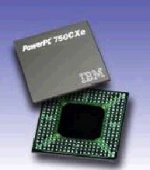
I've made the case previously for using the 750CX in these machines (and the 2300/5300/1400 upgrade projects) because it is a fast, cool-running chip with 256k of onboard L2 cache in a low-profile package that protects the processor die from accidental damage during installation. The FX and GX are faster, but they're hotter and more fragile, plus they have more pins than the CX. In addition, your return diminishes with each increase in clock frequency: at 667MHz (the maximum available at a 20x clock), the 33MHz memory bus is a huge bottleneck, not including the slower '030 bus on the rest of the board. The 750CX would be easier to implement and also its 333MHz maximum speed would be a huge improvement without wasting most of your new clock cycles in waiting for the rest of the system to catch up.
the FX/GX are not any more fragile at all we are running them now in pci accels on classic amiga we use both harrier asic and mpc107/tsi107/etc etc

im actually testing a 7457 atm

 
From reading the Apple Dev Notes, the only thing NuBus-related is in logical psuedo-space; there's nothing in these computers that runs NuBus physically or electrically: the machine is built from ASICs that talk either directly to the processor or directly to the '030 bus on the bridge chip. The only exception is the Duo series, and that doesn't really count because all of the NuBus-related hardware is in the Dock (and the controller is addressed directly by the '030 bus); there's none in the Duo itself. The desktop 52/53/62/63xx series is the same way: they have only psuedo-PDS and CS slots; nothing is physically or electrically NuBus.

These machines (Duo 280, 5x0, 190, 5300, 1400) used different speeds and bus widths on the logic board: the processor bus, and the '030 expansion bus. Typically the processor/memory bus was 32-bits at 25 or 33MHz, depending, but the '030 bus was either 22 or 16MHz and devices could be 16 or 32-bits wide. In the Duo Dock, the 32-bit '030 processor bus could be up to 25 (original) or 33MHz (in the Dock II), but the variable 32-bit I/O bus was always 16MHz regardless, just like the LC PDS slot in desktops.

(Yes, the '030 bus could run a nominally 32-bit bus with narrower devices on it using the "dynamic bus sizing" and "byte steering" features, both of which were not present in the '040 or 60x bus standards. This is the entire reason Apple kept building all of these bus translation chips: so they could keep using legacy hardware with minimal changes.)

My larger point was that, if they had really wanted to, Apple could have introduced their first PPC PowerBook as a game-changing machine that would have justified its huge price tag rather than the underwhelming mess that we got. And who thought it was a good idea have a swappable drive bay without full-size CDROM support? Supposedly the design goal of the 5300 was to be "as small as possible." So, what was the design goal of the Duo 2300? Be more smaller? '90s Apple was full of dumb decisions.

 
I think CardBus compatibility was the big thing really. If you can believe Wikipedia, it wasn't generally available in Laptops until late 97. Apple had it in the 3400c at its 2/97 rollout.
While it's true that the 3400 used TI's CardBus-capable PC card controller, the card cage in the 3400 (and 2400) was not CardBus-compliant so the feature was disabled by Apple. If the 3500/Kanga didn't have it enabled, then the first PowerBook with proper CardBus support would have been the WallStreet in 1998.

 
the FX/GX are not any more fragile at all we are running them now in pci accels on classic amiga we use both harrier asic and mpc107/tsi107/etc etc

im actually testing a 7457 atm
So the whole reason Sonnet started shipping their upgrade cards with heatsinks bolted on and would void the warranty if they were removed is that clumsy installers were cracking the processor dies during installation. This is a huge problem with FC-BGA devices like this that don't ship with some sort of cap or other protection for the die. In an application where heatsinks would potentially be frequently removed and reinstalled, especially by a novice, a 750CX is ideal because its processor die is protected in a recessed cavity on the underside of the chip package, not exposed on the top. Thus, they're more robust than the FX and GX.

 
From reading the Apple Dev Notes, the only thing NuBus-related is in logical psuedo-space  .  .  .
That's all it takes, it's not really about the Slots themselves, it's all about the Slot Manager's use of NuBus IDs, Slot Space and SuperSlot Space for any device, be it a NuBus Card, a PDS Card or hardware implemented on a logic board as a PseudoSlot. So far as any Mac is concerned, they're all the same thing and were handled the same way independent of CPU until the advent of the PCI architecture.

No, Apple could not have introduced their first PPC PowerBook as the game changer you wish it had. Apple couldn't even manage that for the first PPC Desktop/Tower Generation when physical NuBus was already a serious bottleneck.

I'll be quiet now. :mellow:

edit: interesting about that hobbled CardBus thing, where did you see that?

 
Last edited by a moderator:
@Trash80toHP_Mini You know, some of what you say actually makes sense to me. Basically, my interpretation of it is that NuBus is "implemented" as a software protocol, despite nothing physical or electrical being present.

And I think this is just the way the Mac ROMs were written; they didn't really understand anything else, as they weren't really designed with slots in mind (being descended from the slot-less 128k), and had NuBus "grafted" on. As a result, when it comes to the firmware and addressing for any sort of expansion device, it is treated as a psuedo-NuBus device.

This, I suspect, is one of the reasons Apple went with Open Firmware; it natively supports PCI and such, and was probably much easier to implement than hacking up the earlier ROMs with some weird PCI support (Apple's implementation of OF was odd enough as it was-- they didn't need to make it worse).

Disclaimer: I don't know any of this for certain. I'm just speculating.

c

 
5300 was NuBus architecture, not just 68030 I/O bus architecture.
This is what you said, Trash, and here is why you are wrong: We were talking about the electrical interconnects physically on the boards, not its logical arrangement. So in this context your statement makes zero sense. "Slot Manager", et al, isn't a physical thing in silicon anywhere in these machines. Sure, I get it it, from a software perspective these are "Nubus" but that has *zero* to do with the traces on the motherboard, and that's what I was musing about.

 
Last edited by a moderator:
@Gorgonops Agreed. I think that, in a sense, you're both right, and it's perhaps just a problem with semantics on Trash's part-- and mistaking "NuBus architecture" and "68030 architecture"; They're vaguely similar, but NuBus is strictly for expansion (arbitrating device I/O, assigning addresses, etc.), whereas the 68030 architecture encompasses the entire system, defining the buses that connect all the system's support chips together, and providing a means for the CPU to interoperate with all those chips and devices.

Based on this, NuBus, in effect, is nothing more than a subsystem within the 68030 architecture, and thus isn't an architecture per se, but rather just a protocol for addressing devices on an expansion bus and interfacing that bus to the 68030 CPU, and as such, is primarily software-based. NuBus as hardware is not much more than a set of standards that define the slot type, how to wire the slots, etc.

Am I making any sense???

c

 
... or to just cut to the chase, "Nubus" is completely beside the point and a non sequitur in this context. The point was to contrast the fact that these machines are at least in theory crippled because they contain a massive *electrical* choke point between the CPU and certain peripherals like the video RAM that don't exist in other contemporary machines, including Apple computers. The "Nubus" 601-based PowerPC desktops don't run dinky little busses to cripplingly old support chips to anything like the same degree as these PowerBooks. Even the 68040-based 500 series looks crippled by having *every* significant peripheral on the wrong side of that LC bus bottleneck; even the mediocre Quadra 630 and friends put video on the 68040 local bus.

These machines' limitations have nothing directly to do with 'Nubus Architecture' and everything to do with Apple needing a cheap hack to get something out there pronto.

 
Last edited by a moderator:
So the whole reason Sonnet started shipping their upgrade cards with heatsinks bolted on and would void the warranty if they were removed is that clumsy installers were cracking the processor dies during installation. This is a huge problem with FC-BGA devices like this that don't ship with some sort of cap or other protection for the die. In an application where heatsinks would potentially be frequently removed and reinstalled, especially by a novice, a 750CX is ideal because its processor die is protected in a recessed cavity on the underside of the chip package, not exposed on the top. Thus, they're more robust than the FX and GX.
thats nonsense mythical crap and the cx just has a heatspreader that is all that isnt from people cracking cpu dies from installing heatsinks lol that is a old wise tail rumor

 
Last edited by a moderator:
I have a lot of 7455 chips with pieces chipped off on the corners of the die. The problem is not as uncommon as you say. Most of them seem to work just fine though so not sure if this is really a problem or not.

It is less likely to happen though on chips that don't need 2kg worth of metal to be cooled... never seen it happen on any 750 or 7410 yet.

 
heatspreaders were just for that hold huge heavy heatsinks and to help keep them level ppc were used most in embedded equipment and professionals installing heatsink to that were not breaking dies people been saying that rumor above for decades but all those people were just consumers spreading rumors

not from engineers like me who mess with this stuff daily

i have never seen or heard anyone cracking dies IRL in the field only online forums etc and most were consumers installing athlons why they added those corners pieces

these PPC's were talking about run much much lower wattage and cooler why they are used in embedded markets everywhere in everything

the cards we use in our amiga's now are PMC cards with PCI carrier before that we were using the sonnet crescendo 7200 but thats slow in everway due to a 66mhz only mpc107 slow dram and slow old ppc

 
Last edited by a moderator:
I have a lot of 7455 chips with pieces chipped off on the corners of the die. The problem is not as uncommon as you say. Most of them seem to work just fine though so not sure if this is really a problem or not.

It is less likely to happen though on chips that don't need 2kg worth of metal to be cooled... never seen it happen on any 750 or 7410 yet.
Every one of the four CPUs in my Genesis have tiny chips off the corners of the die. Awful way of attaching heatsinks to those CPUs, especially as the dies themselves are kinda small, and the tiniest tilt sideways puts all the spring pressure on one edge, or even worse on one single corner.

 
We were talking about the electrical interconnects physically on the boards, not its logical arrangement. So in this context your statement makes zero sense. "Slot Manager", et al, isn't a physical thing in silicon anywhere in these machines. Sure, I get it it, from a software perspective these are "Nubus" but that has *zero* to do with the traces on the motherboard, and that's what I was musing about.
Then we're in agreement and it's semantics, GttMFH2e explains just what you've said in Chapter 8, "NuBus Card Firmware."

I don't have a Blackbird to check SlotInfo, but I've been very curious about it and that crazy Modem Slot.  For instance, Gauge Series SlotInfo (and TattleTech NuBus/PDS) reports show CSC/E-CSC Built-IN Video at $00 and Keystone Built-In External Video at $0E. Blackbird Ariel/Keystone should be much the same. This gets back to earlier in this thread when Paralel and I were discussing the Modem Connector and general expansion. Since we're talking about the introduction of PBX on one end of the Pratt Bus Bridge, thinking about introducing Baboon (IDE controller) from 190 and 5300 on the other end via the Modem Slot comes to mind. I wonder which would give more "bang for the buck," a PBX G3 retrofit on the processor card or a PATA SSD retrofit for the HDD bay? Baboon in the Modem cubic would conflict with the proposed RAM expansion option for Plan B1 in that cubic, but for Plan A  .  .  .  [}:)]

 
thats nonsense mythical crap and the cx just has a heatspreader that is all that isnt from people cracking cpu dies from installing heatsinks lol that is a old wise tail rumor
Have you ever seen a 750CX? It most definitely does not have a heat spreader glued on: it has a completely flat top surface because the die is bonded to a cavity on the underside of the package instead of protruding from the top of the package like its relatives. Because of this it has a lower profile (which makes it ideal for use on top of an interposer) and is basically immune to rough handling.

750cxe.jpg

 
No, Apple could not have introduced their first PPC PowerBook as the game changer you wish it had. Apple couldn't even manage that for the first PPC Desktop/Tower Generation when physical NuBus was already a serious bottleneck.

I'll be quiet now. :mellow:

edit: interesting about that hobbled CardBus thing, where did you see that?
Meh, it's just an academic discussion on a forum; if there aren't constructive replies it's kind of pointless and may as well be a blog. Anyway this is all speculation: without some former Apple employees from the era here to explain why they did or didn't do something, we'll never know the rationale behind most of it. I simply contend that if they wanted to go big, they could have, but it wasn't worth the effort to one section of Apple or another (a likely combination of hubris, turf wars, and management wanting to save a buck and/or rush to market). Too bad, but I wasn't in a position to do anything about it at the time (I don't think they would have hired a 10-year-old) and my time machine is on the fritz so there's likely no fixing it now, either. 

It's hard to categorize all of these machines into large groups because a lot of them don't fit purely into one; you'd need about 10 subgroups for everything up to the NewWorld machines. For example, a number of machines still used psuedo-slots well into the PCI era: the Alchemy boards had their new Valyrie AR video processor, and it lived directly on the 60x bus. The 7200 had a weird hybrid video system (with its Iridium and Platinum chips) that also lived on the 60x bus instead of PCI. There were a few other oddball machines, especially those with heavy A/V integration, that also used psuedo-slots for things that didn't live on a proper expansion bus. 

As for the 3400, Kanga, and 2400 CardBus, System 7.6 apparently didn't support it so you would have had to wait until 8.1 anyway. The respective Service Source documents specify that only PCMCIA cards are supported, though apparently they will still do zoomed video which I would have thought was part of the new standard but whatever. Physically the 2400's card cage will accept CardBus cards, but they aren't recognized until traces/resistors (depending on board revision) on the logic board are removed. The 3400/Kanga won't physically accept the cards unless you mod the card cage, something about a ridge on the card connector that isn't present on the original PCMCIA standard. MCE used to advertise fixes for both machines.

 
Academic  .  .  .  but fun!  [:)] You're probably right about the squabbling between divisions. From the release date views over on everymac for 1995, it looks like Apple was concentrating on bringing PCI/Tsunami architecture and the 9500 to market in order to keep high end, high profit sales rolling in from content creators. That was the bread and butter of mid-nineties Apple. They were still introducing three slot limited NuBus variants into the world market later on that year for Bog's sake!

That's probably where the resources for PCI development went at the beginnings of the losing battle they waged against the onslaught of the unexpected HIGH END Clones. The 5300 was a a PPC code compatible parallel to some of the more limited mid-market Macs that replaced the Quadra 630 and its offspring until Alchemy hit the scene in 1996 and then Gazelle in 1997.

Yep, now I remember those hijinks necessary to fulfill the promise of CardBus for the 3400c and 2400c. But still, that promise was there early in the year, ahead of the market trend for a change.

IMHO and off topic of course.

_____________________________________________________________________________________________________________________________

Back onto a more productive tangent: I've been looking at doing a PCB that will convert the 1400's pair of connectors into a sort of PGA socket for development purposes. Gotta yank the Blackbird parts bin box back out of storage and see if I can make it a dual purpose dev board?

 
Back
Top