If I had two working examples (I do happily have one), I would pop in a 68-pin scsi and Nubus Jackhammer, and install MacOS 8.1 on one of the machines. A Nubus card like the SpigotPower AV would also do nicely in such a unit if you wanted actually to use it for its intended purposes, while the Jackhammer/68-pin scsi combo would provide storage capacities that were almost inconceivable in 1993.
You do, however, need 4 x 256k vram chips to take advantage of certain of the AV hardware features.
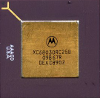
The other I would likely keep stock as a 7.1 Pro machine with a smallish 1 or 2 GB drive. The stock system installation naturally runs like greased lightning on the 40MHz '040. I would not make it any more complex by way of Open Transport, etc., just so as to marvel at the speed of the thing in its original configuration.
So, one would be big, while the other would be fast.
My one working 840av I have set up as a dual booting system (7.1 and 8.1, but when booted from 7.1, accessing its 9GB HFS+ disk that runs from a Jackhammer Nubus card is problematic). That is why I suggest separate configurations.
For additional cheap thrills, install the various Text-to-Speech components — and a GeoPod adapter. Set the machine up as an answerphone, just to say you'd done it and heard it answer the phone for you. Some of the answerphone features can operate with one of the stock PlainTalk voices. Most of this is handled by the DSP, as another of the interesting features of the 840av (and the two 660avs) is that multiprocessing is what they are all about. You can do audio work on them, for instance, and not take a significant performance hit while working at other tasks.
Accordingly, operations of the System software on these machines are significantly more complex than than on an ordinary Quadra. Some details about this can be found
here. It's not ideal, and it's not unix, but it shows one of the directions Apple tried to take in the early 90s in order to overcome the inherent limitations of the MacOS, prior to the abortive leap towards Copland (which was what the switch to PPC was largely about — and it failed). To see the last gasp of the 68k and classic MacOS in trying to reinvent itself is alone worth a tinker.
They are also wonderfully quiet machines for word processing and the like.






 (other) 68k Mac to haul up here to the university, it'd be my 840av, the AudioVision display, and probably either the Apple Extended Keyboard II or the Apple Adjustable Keyboard, and I'm thinking, just to be safe, the QuickTime Conferencing Cam (for making my Video Blog) and just for good measure, the LaserWriter Select 360.




