• Hello MLAers! We've re-enabled auto-approval for accounts. If you are still waiting on account approval, please check this thread for more information.

New to Lisa. Requesting guidance

Hey all,

I just took delivery of a Lisa 2. I’ve got it set up in my lab, but i haven’t applied power yet. Is there an SOP for what to test before first attempting to turn it on? According to the seller, this was an estate sale piece that hasn’t been powered on many years.

Thanks so much in advance!
 
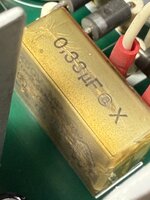
RIFA caps in the power supply are likely to go (and stink when they do), mine did after about 15 minutes of it being on post-rescue. Video board caps are also recommended to change but I don't think it'll break anything. I'm not well versed yet in the Lisa, maybe lisalist is the place to ask? Also see this thread

Thank you. I’ve got some new actual RIFAs on hand as well as some replacement X caps kicking around. I don’t like to recap before applying power in typical situations because if it works and then doesn’t work after a recap I know I messed up. If I recap without powering it on first it makes troubleshooting a bit trickier. But I’ll definitely replace the RIFA first thing. Thanks again
 
Definitely - remove the battery from the IO board, remove the PSU and check its voltages, re-cap if needed, check the CRT for issues, check for additional corrosion and address as needed.
Possibly - replace the switches in the keyboard.
 
Definitely - remove the battery from the IO board, remove the PSU and check its voltages, re-cap if needed, check the CRT for issues, check for additional corrosion and address as needed.
Possibly - replace the switches in the keyboard.
Will the PSU power up with no load? Most of the PSUs of that vintage that I deal with don’t.

My plan rn is to swap the RIFA, and inspect everything.


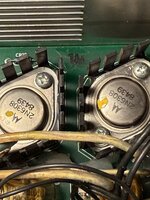
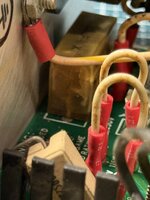
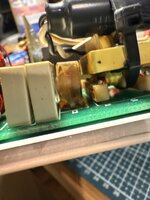
Edit: ya these RIFAs are shot. There looks to be several to-220 linear regulators in there. Is it good practice to replace these with modern more efficient regulators? Also looks like the Lisa doesn’t use a battery, it’s just always in low power standby to energize the CMOS. Or am I mistaken?

Also, I’ve inspected all of the boards and there are no leaking electrolytics and the boards look brand new. So I’ll give the PSU a little TLC and see if she boots!
 

Attachments

  • IMG_1572.jpeg
    IMG_1572.jpeg
    938 KB · Views: 4
  • IMG_1573.jpeg
    IMG_1573.jpeg
    1.2 MB · Views: 3
  • IMG_1574.jpeg
    IMG_1574.jpeg
    1.2 MB · Views: 4
  • IMG_1575.jpeg
    IMG_1575.jpeg
    1.3 MB · Views: 4
  • IMG_1576.jpeg
    IMG_1576.jpeg
    5.1 MB · Views: 3
Last edited:
Will the PSU power up with no load? Most of the PSUs of that vintage that I deal with don’t.
It should have a load placed on it and I think there was another trick that was required (switch in the case, which needs to be triggered) I recall.
Also looks like the Lisa doesn’t use a battery, it’s just always in low power standby to energize the CMOS. Or am I mistaken?
It depends on the IO board (whether there is a battery and also whether someone was smart enough to remove it if it was there) - it would have been in the lower right side if you had one and it looks like you are quite fortunate, since this one does not. It is not required to boot.
So I’ll give the PSU a little TLC and see if she boots!
Fingers crossed!
 
It should have a load placed on it and I think there was another trick that was required (switch in the case, which needs to be triggered) I recall.

It depends on the IO board - it would have been in the lower right side if you had one and it looks like you are quite fortunate, since this one does not.

Fingers crossed!

There is definitely a micro switch on the PSU that actuates when it’s seated. I have had good luck with Deoxit D100 when those get wonky.
 
Back
Top