• Hello MLAers! We've re-enabled auto-approval for accounts. If you are still waiting on account approval, please check this thread for more information.

Need opinion on IIcx under consideration

Alex

6502
Hello

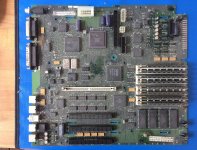
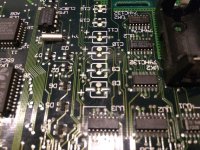
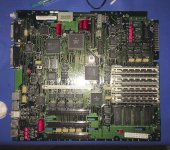
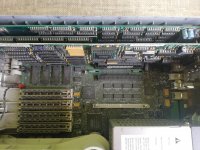
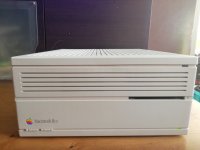
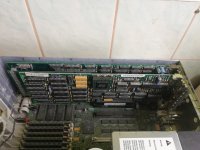
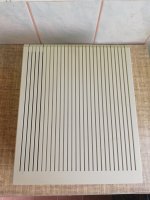
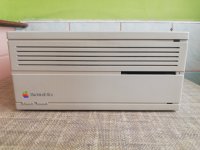
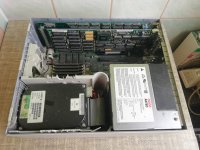
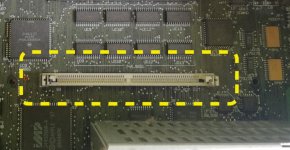
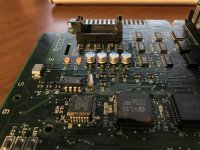
I am thinking of saving this machine through purchase but the seller knows little and I have to understand if there is even a startup chime. Just wondering what you all think just by the pictures. Also, the ROM SIMM is missing? I have an SE/30 MLB and ROM for it, are they interchangeable?

Would a missing ROM mean no startup chime? Would a missing ROM mean the car crash startup error chime for this model?

Any help would be appreciated.

IIx_1.jpg

IIx_3.jpg

IIx_4.jpg

IIx_2.jpg

IIx_6.jpg

IIx_5.jpg

 
The IIcx has ROMs on the logicboard, you don't need to fill the SIMM slot.

No chime can also mean that there is no sound at all, which would not be surprising if it has not been recapped yet.

 
The IIcx has ROMs on the logicboard, you don't need to fill the SIMM slot.

No chime can also mean that there is no sound at all, which would not be surprising if it has not been recapped yet.
Interesting. Thanks for the headsup, so what is this slot for?

 
Apple had the SIMM slot on there as well as having ROMs soldered to the logicboard. The SIMM slot allowed them to upgrade the ROM in the future without soldering new ROMs to the logicboards. You can also see the logicboard ROMs in your pictures right next to the RAM slots.

You can fill the slot with a ROM from a SE/30 (which would not make a lot of sense though as the SE/30 and IIcx ROMs are identical I think)

The jumper next to the Nubus slots has to be removed when the SIMM slot is filled with a ROM. If the Jumper is installed the machine uses the logicboard ROM.

 
Very nice looking machine! I hope the seller is asking a reasonable price and that you can "rescue" it (from the hands of another collector?). :-)

 
Expect a lot of repair work, if it has never been recapped.

I have a box of about 20 IIcx logic boards.   A few months ago, I pulled them out of the attic and started removing the caps and cleaning the boards.   Fortunately, I pulled the batteries soon after I got them.

But just the cap damage on these boards is appalling.   The chips around the caps have corroded legs.  In some cases (kind of rare) the chips just pop off the board, the solder has been so weakened.

Now many of the chips in the cap vicinity are little standard logic chips which are easily purchasable.    But the sound chips are also in a danger spot and those are only replaceable by scavenging old boards, so far.

Your board's photos actually look pretty good, although it's not quite possible to see enough detail to tell whether there's corrosion on the pins.   A photo of the rear left of the logic board with the Nubus cards removed would be good.

 
Expect a lot of repair work, if it has never been recapped.

I have a box of about 20 IIcx logic boards.   A few months ago, I pulled them out of the attic and started removing the caps and cleaning the boards.   Fortunately, I pulled the batteries soon after I got them.
I won the bid, the machine arrived about a week ago. I am focused on my Q950 and finally replaced on tantalum. Tomorrow I will open up the Iicx to immediately remove the battery but I have taken a look and no visible leaks.

Now — 20cx boards? You should liberate a few or frame them and put them on the wall, the latter I suggest because you have that many.

 
My IIcx has no feet. :(

It was a successful recap target though! My board wasn’t too badly damaged by the goo as I had cleaned the goo off the board on a regular basis. The job was pretty easy with liquid flux, solder braid, chip paste solder, and tweezers. 

I would go all Japanese on caps. No point in getting cheap ones and having to do it again in 4 years. You can get nearly like OEM axial caps from Nichicon. Polymer SMD caps are a great choice as they look OEM but do not leak. Tantalum are good too but if you install them backwards you will get a magic smoke and fire show. 

I attached a photo of my IIcx recap job.

8A12CE12-E017-4A45-9F33-1F7D69288618.jpeg

 
On the topic of feet, I use the hard felt pads that are actually intended for putting underneath furniture that will rest on parquet.

I don't know how hard it is get them where you are, but they are cheap and plentiful in Switzerland.

They allow the Mac to be moved quite easily across a hard surface.

 
I have been using these as well. Both the felt and the hard sliders work nicely. Here in the US you can get them at any Home Depot type store. 

It is almost easier if all the feet are missing, but you can probably rig something up for a single missing foot. 

 
Last edited by a moderator:
My IIcx has no feet. :(

I attached a photo of my IIcx recap job.

View attachment 24176
My cx has 3 feet. I have to find one! :)

Nice job on the recap.

So those SMDs, not the tantalums, you figure they can last a good long time. I guess technology has moved along? I have issue using those, which brand do you recommend. 

I came here today to post some pics of my progress and if you will indulge me, I will post some pics, perhaps it can help others who are starting out with this sort of work.

Steps I took for the first phase of my repair. 

1) I did a visual inspection of the board and found that all SMD caps showed a minor amount of package had occurred. The axials appeared to be ok but I removed them anyway, I would rather have all fresh caps on the board.

2) I measured the battery with a multimeter and as expected a nearly 30 year old battery was near dead. Thankfully the battery was not otherwise compromised.

3) Since the electrolytic material that escaped the caps was small, I was able to focus on those areas of the board and wipe them clean with a q-tip and isopropyl alcohol.

4) I then added flux to each of the legs and for some reason I add a thin pool of isopropyl alcohol around the area, I find it helps me focus heat to the area of interest, it seems to help somehow. I did try a tweezer style soldering iron but I had no luck with it so I resorted to my trusty TS100 iron set to 400°C and while holding the cap with tweezers I flipped back and forth with the tip, at times I had to add more flux and some solder to focus the heat. I did not put an pull or wiggle pressure as I applied heat from the iron, well very lightly reducing any risk to the pads.

5) After the cap slid off the pads from the heat, I washed those areas once more with cotton q-tips with isopropyl alcohol. When dry, I used a small soft paint brush and lightly brushed all the dust off.

I like to remain patient while working so it id take me hours to do but I am satisfied with this first phase. You will find videos of people fly through this on youtube but soldering although conceptually simple, it does take time to develop your 'style' and to get the feel of the tools and materials in use. So anyone reading this because they are still learning or sitting at the curb, make some time for deploying the work at hand. These machines are becoming harder and harder to come by and yes, there are probably quite a number of these machines stored away in people's homes but in some cases they may already be beyond an economical repair. So anyone learning who is reading this, take your time, watch videos or watch a friend who knows how to do this and learn before you dive in. I am still learning too but I find this most rewarding.

Maccaps Capacitor reference page for the Macintosh Iicx.
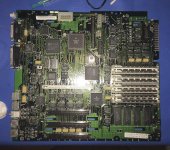
After_Cleanup_IMG_1661_taken_in_the_evening_with_indoor_lighting_small.jpg

Before_Cleanup_taken_with_natural_light_IMG_1631_small.jpg

After_Cleanup_closeup_IMG_1659.jpg

After_Cleanup_IMG_1661_1631_comp.jpg

 
Last edited by a moderator:
This machine has now been revived. Fairly straight forward. There was very light leakage from the caps and the battery although depleted did not leak.

 
Back
Top