• Hello MLAers! We've re-enabled auto-approval for accounts. If you are still waiting on account approval, please check this thread for more information.

MacRelix: unix-like OS as Mac app

Bunsen

Admin-Witchfinder-General
68040
http://www.metamage.com/code/MacRelix/

MacRelix is a Unix-like environment that runs on Mac OS, formerly called Lamp (Lamp Ain't Mac POSIX).
MacRelix supports three platforms:


  • 68k: classic 68K application with code resource tools
    std: 'standard' build, non-Carbon PowerPC CFM application and tools
    osx: Carbon PowerPC CFM application and tools
Never heard of this one before - anyone else? Sounds a bit like MachTen, only free. Also, unlike MachTen, it looks like it is still being actively updated.

Also cute/interesting:

Maxim: A Mac Simulator in Javascript

 
This is Josh Juran's work. I don't know if he hangs around here at all.

MacRelix still needs some work, but it is coming along. I'm still trying to get Tenon to open source MachTen, but they're still selling it, so they must make some amount of money from it still to this day.

 
Bizarre. I have trouble believing they're still selling enough copies to make it worth their while - especially the 68k version ferSteve'ssake.

 
They don't sell the 68K version anymore, but I'm sure the PPC version uses a similar kernel at the higher levels. The PPC version they definitely do still sell.

Speaking of, I have install media for MachTen Professional and I think it's high time to stick it on the Q800.

 
http://www.pliner.com/macminix/

Why MacMinix?
In an educational environment, MacMinix is ideal. It's easy to install, it runs on top of the Mac OS, and it starts up very quickly. (Just like MachTen.) You can recompile the OS, quit it, and restart the MacMinix application, very simply, without restarting the whole computer. And if you mess something up, you can easily revert to an old version. This is one advantage MacMinix has over the other versions of MINIX. Plus, it utilizes 68K assembly code, which may be more suitable for an educational enviroment than PowerPC, or even Intel instruction sets.
 
You might also look around for MacMINT (yes, the same MiNT that Atari STs can run). It runs a stub called JET ("Just Enough TOS"), which then boots MiNT.

Note that it will not work on OS 8 (7.6.1 or earlier only).

 
... and it looks like most of the Minix links are dead on that page, so here are others:

http://www.minix3.org/previous-versions/Macintosh/

I can't find the '040 patch, though.

Minix has real problems running without 24-bit addressing. You can create a dummy app to force it into high memory and it will work in 32-bit mode. Dupe, say, SimpleText and give it an allocation of (physical RAM - 16MB); if your machine has 32MB of RAM, give PigSimpleText 16MB, 48MB, give it 32MB, etc. Then run Minix after that. See http://www.pliner.com/macminix/32bitworkaround.html

This page (in Japanese if you can read it), http://www.tagiya.co.jp/toshi/macminix.htm , implies you can coerce MacMINIX to run on a Power Mac with that same trick, but it doesn't look like it's all that reliable.

 
I can't find the '040 patch, though.
Oh, so '030 and below only, huh?

I have the older edition of Tanenbaum here, so setting up Minix 1.x on an SE/30 seems peculiarly appealing.

 
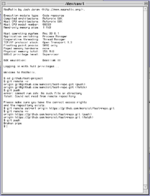
So I just tried MacRelix and it failed on the one thing I would use it for:

MacRelixGitError.PNG

I've been curious about Josh Juran's work for a while, in particular AMS (https://www.v68k.org/advanced-mac-substitute), but the thing is that his projects lack any sort of documentation and they all seem to be intended for use by one person only, that person being Josh himself. The source code repository is obscure as heck, gives no hints as to what anything is all about, and is about as inviting as a locked lavatory deep in a dark cellar with a sign on the door saying "Beware of the Leopard" 😜
 
So I posted an issue on GitHub and Josh replied git under MacRelix does not support SSH nor HTTPS. But he did mention it supports unencrypted git daemon. I also realized that I can clone repos via the This PC virtual volume in Basilisk II, so that gives me an indirect way to pull and push data from my Basilisk II environment to a repo that in under Windows. That works well enough for me.
 
Back
Top