• Hello MLAers! We've re-enabled auto-approval for accounts. If you are still waiting on account approval, please check this thread for more information.

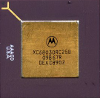
Levco MonsterMac SCSI for 512K

It wouldn't be REPC online if it wasn't priced too high for the Market. I shop in this store frequently. I should go and see if I find it in their vintage shelf. I don't know exactly how much, but theres gotta be some cut off point where they don't want to bother with shipping on lower priced items.

Personally at that price I'd rather go out and find a Plus. Now if that was $25 I'd probably want to grab it.

You should see the prices on their low capacity SCSI drives.... really, just go look at their other auctions.

 
I think you would have a hard time finding chips to populate the board fully. You'd be better off buying a Plus motherboard to upgrade your 128k or 512k machine. The 30 pin SIMMS are much easier to get. This board would be more of a novelty than a working upgrade that you would actually use.

 
Well I think the key here is that it'd be cool to have this capability and still have the 64K ROMs.

 
Well I think the key here is that it'd be cool to have this capability and still have the 64K ROMs.
Exactly. And upgrading to a Plus would NOT allow you to retain the 64k ROMs.

Ah... I would love to play guinea pig if I lived in the states. But I'm not about to pay MORE in shipping than the cost of the board to have it shipped over here to Japan.

Mac128, make the seller and offer and let us know if the ROMs are 64k!!! :b&w:

Seriously!

 
Here's a working 512k Mac with SCSI upgrade. The same seller's also selling a non-powering 512k with the same upgrade.

Link

 
From the my library of clippings:

Full comment about RAM upgrade:

http://apple.slashdot.org/comments.pl?sid=154419&cid=12951397

While that plan was folly for Apple, it worked out pretty well for third

market folks. Back in 1986, I was working at an independent Mac repair

shop in La Mirada called "Computer Quick" that could upgrade a 128K to

512K or even (gasp!) 2 Megabytes.

I absolutely hated the 512K jobs. First, you would take a pair of

cutters and cut the 16 64K x 1 bit RAM chips off the board, leaving the

pins in place and usually making a mess of the thing. Next, you'd use a

desoldering iron (we had an industrial grade one with a pump,

thankfully. None of this squeeze bulb garbage, thank heavens) to remove

the pins and clean out the holes. Inevitably, you'd wind up pulling up a

trace or shorting something out here, so you had to inspect it very

carefully. Finally, you'd solder the new chips (128K x 1 bit) in and

solder in a thumb sized daughter board that would handle all the address

line magic. Then power it up and keep your fingers crossed for "Happy

Mac" to show his face.

In comparison, the 2 Meg upgrades were a piece of cake. We used daughter

boards called "Monster Macs" [mactech.com] from a San Diego company

named Levco. Since there was no expansion slot, you'd cut the 68000 out

and add a socket. Then the daughter board (which had its own 68000)

clipped right on top, neat as can be. Levco also had a controller board

that could clip on top of that for SCSI hard drives - a "grandaughter"

board.

When we had accumlated a stack of clipped 68000 chips, we'd file off the

edges and drill a couple of holes to make keychains. Very cool. I had

mine for a decade before it got stolen. Only worked on the plastic cased

chips, though. The ceramics would crack.

Levco was known for a pretty cool sense of humor. When you powered the

thing up, "Happy Mac" had fangs (since they'd had to hack the Mac ROMS

to make it work anyways). Also, there were four PALs on the board

labeled Harpo, Chico, Groucho, and Zeppo. My boss told me some of the

Levco engineers had wanted to name "Zeppo" "Karl" but he'd warned their

management about the fallout this might've caused. Remember, the Berlin

Wall was still up and Reagan was in office.

I know that these days a megabyte seems absolutely trivial, but back

then it was an absolute phenomenon. You simply never heard the term

"Megabyte" except with hard drives and even that was a pretty new thing.

Kind of like gigabyte drives a few years back. And its utility was

beyond question - Levco let slip that Apple's finance department in

Cuppertino used Monster Macs for their accounting.

Alas, all good things come to an end. Computer Quick's was surface mount

technology in the Mac Plus. I was ecstatic the first time I saw SIM

memory - no more soldering! Our chief tech tried to fix a trace on the

logic board and it took him twelve hours once he got done repairing the

damage he'd caused. He handed it over to our boss and told him, "That's

it. We're out of business."

I enrolled in a four year school and decided to go into software instead

of continuing as a tech as I'd originally planned. Computer Quick was

out of business by my sophmore year. The era of garage based computer

businesses was over.

 
Here's a working 512k Mac with SCSI upgrade.
I can almost give you a 100% guarantee that the Mac shown in that link has the new ROMs. I know because I once owned that type of battery-door-SCSI-port upgrade -- you had to use newer ROMs.

...had to hack the Mac ROMSto make it work anyways
Evidence that the stock 64k ROMs are not used on the Levco. Thanks for this.

And so, the search continues for an upgrade board (especially one with SCSI) that allowed continued use of the stock 64k ROMs. Was such a beast even made? Will we ever know? :-/

 
Whoops! :p I mistook them for the same thing.

However, I do think this is a nice clean 512k for a good price(besides the sticker) I've seen other 512ks at this price, but they had bad yellowing.

 
And so, the search continues for an upgrade board (especially one with SCSI) that allowed continued use of the stock 64k ROMs. Was such a beast even made? Will we ever know? :-/
Depending on how you define "stock ROMs" I don't think that such a beast is possible. The stock 64K ROMs do not contain drivers or memory mapping for the SCSI port. So any upgrade which adds SCSI must make some addition to the firmware of the machine.

Now, I was talking with a programmer who did low level Mac stuff wayyyyyy back when, and he said there was a little address space up at the top of the memory map which one could use to hijack the program execution at start up. Apparently this little area gets executed, but usually all it does is send execution back down to the lower addresses. Or something like that. This was a few years ago. The point was, there is a hook in the boot code of the original Mac that a developer can use to gain control of the boot process and add his own code.

So, one method of "modifying" the ROM would be to map that address to a PROM on the expansion card and after loading the necessary code turn execution back over to the 64K ROM.

However, from a software point of view, this would look just like a modified 64K ROM such as the LEVCO uses. The only difference is that one stores the original and modified ROM on one set of chips and the other stores the original code on a different set of chips from the modified code.

 
What is so important about retaining the 64k ROM's anyway? Wouldn't the 128k ROM's provide more functionality and greater compatibility?

 
What is so important about retaining the 64k ROM's anyway? Wouldn't the 128k ROM's provide more functionality and greater compatibility?
I will let Mac128 answer you in detail on that point, as I have expressed my full opinion on that before in other threads on this site.

But I will summarize by saying this, if we all apply your thinking and cast the 64k ROMs to the wind, there is no meaning whatsoever in buying any Mac other than a Plus. Seriously. I personally am not drawn to a machine simply because its "the first Mac." Some software is incompatible with the new ROMs.

 
What is so important about retaining the 64k ROM's anyway? Wouldn't the 128k ROM's provide more functionality and greater compatibility?
I will let Mac128 answer you in detail on that point, as I have expressed my full opinion on that before in other threads on this site.

But I will summarize by saying this, if we all apply your thinking and cast the 64k ROMs to the wind, there is no meaning whatsoever in buying any Mac other than a Plus. Seriously. I personally am not drawn to a machine simply because its "the first Mac." Some software is incompatible with the new ROMs.
You can retain the old motherboard and ROM's, I am not suggesting they should be discarded, but to say you want to keep it stock for the few pieces of software that won;t run with the newer ROM's (which would likely be impossible to find today, anyway) is like saying you refuse to upgrade from a G3 to an Intel Mac because the Intel Mac doesn't support classic and Leopard doesn't support G3 executable code. You're only hurting yourself because everything you are running on the G3 is obsolete and you will miss out on the later software that is available on newer machines. So what's the problem with putting a Plus motherboard in a 128 or 512k machine and putting the original board in storage to keep it safe? How much software are you realistically missing out on using without the 64k ROM's assuming you can even find it anymore?

 
is like saying you refuse to upgrade from a G3 to an Intel Mac because the Intel Mac doesn't support classic and Leopard doesn't support G3 executable code.
Then why bother with old Macs at all? You're trying to apply logic to a hobby, which simply doesn't work. I have a 512K *entirely* because of ChipWits, a game that was given to me for my birthday back in the mid 80s. Never mind that I can play it via an emulator on my G4.

None of this needs to make sense. We do this because we enjoy it - there doesn't have to be a practical application for anything we do.

 
Then why bother with old Macs at all? You're trying to apply logic to a hobby, which simply doesn't work. ...

None of this needs to make sense. We do this because we enjoy it - there doesn't have to be a practical application for anything we do.
Well said. I was just going to say: "If I have to explain it, why bother."

We all have our reasons. In my case, "because it's there" probably sums up my feelings best. Whether it was just Steve Jobs' "reality distortion field" or not, I really believe that 128K was fine for most people at the time and that there was nothing software could not do utilizing the hardware resources at hand.

JDW, as do I, would like to see the holy grail of SCSI implemented on the 64K ROM, in no small part so that we can run them with modern flash drives, rather than noisy external (or internal) options.

(Although I think [Megaroids] will run with 128K ROMs, just not with more than 512K of RAM.)
Thank God! Here's an example of software that won't run on MORE RAM. One of the reasons I wanted to preserve the 128K intact was for just this issue. Some software was written for only 128K and did not know what to do with 512K even. Although I am still hard-pressed to name a specific application, I at least remember having the issue come up. Megaroids is clearly a related issue.

One other thing to consider as well: The 64K ROMs and 128K ROMs work differently and ROM patches are implemented differently for each. Despite Apple's efforts to make them fully retro-actively compatible, they weren't and some old software just didn't run correctly on the 128K ROMs and some System versions.

Finally, not everyone is interested in bigger, better, faster, more powerful, like QUADRA-man. His screen name says it all! ;-)

 
...QUADRA-man. His screen name says it all! ;-)
:lol:

By the way, I did once own a Q650 (I paid US$1,000 to upgrade the 030 logic board in my IIvx to the 650). I loved that machine. So I fully understand what QuadraMan means! Go Quadras!

But at the same time, I also like the original 128k/512k because of the 64k ROMs. I think it's therefore silly to buy a 512ke, which is just a stripped down version of a Plus, with the same newer 128k ROMs. (And no, I do NOT consider the 128k or 512k to be "stripped" down because, in my mind, they are a different class of machine because of their 64k ROMs.) And in some respects, it's silly to buy the Plus since the SE is a better "68000" machine, offering you essentially the same software compatibility as the Plus, and the SE is also upgradeable too (upgradeable while allowing you to still retain that 68000). And no, I don't think you should cast aside the SE for the SE/30 because the SE/30 has an 030 CPU whereas the SE has a 68000.

So what I am saying is, if you want the original Mac with 64k ROMs, get a 128k or the original 512k. If you want a higher end 68000 CPU machine than that, get an SE. And if you want the fastest compact Mac available, get an SE/30 and max it out (with a DiiMO 50MHz 030 or 40MHz Daystar board, keeping in mind the DiiMO is more compatible and truer to what the SE/30 is -- an 030 compact Mac). If you want the fastest "68k" Mac possible, get a Q840AV. And if you want the fastest PPC Mac, get a G5 -- seriously, I see no other benefit to going with a 601 or 604e or G3 or even G4 (unless you, like me, love the beauty of the G4 Cube), since PPC is PPC and the fastest PPC rules (which is not true of 68k Macs, since 68000 machines are a different breed of Mac than 68020, 68030 or 68040 in terms of software compatibility). And before you call me nuts for my logic, consider what is sold on EBAY. Certain 68k Macs fetch high prices on EBAY. Many older PPC Macs, especially G3 machines, are next to worthless.

But getting back to the originally point... I, like Mac128k, want to see if there is a way to get SCSI going on the 64k ROMs, perhaps in conjunction with the HD20 init or similar "software hack." And if we could get extra memory too, without sacrificing software compatibility inherent to the 64k ROMs, then of course that would be nice as well (although any memory above 512k would be used as a RAM disk in conjunction with the 64k ROMs and no ROM hack). I think its fun to try to max out an older Mac while at the same time retain it's true nature (in other words, add SCSI to a Mac128k with 64k ROMs, rather than gut the machine and put in a Mac Mini and LCD screen).

 
Last edited by a moderator:
In this house, there is no Mac newer than a 1GHz eMac and a 600MHz 14" iBook. Both of them run Panther, and they are my wife's machines for her academic work. They do 'just work', and that is the totality of her interest in and need for them. I do my 'work' on a bunch of 500MHz iMac CRTs running Jaguar to Tiger.

The other however-many Macs in the house include about 30 68K Macs and 20-odd 'G2' and G3 Macs. Every one of them is upgraded within its capacity to be so without turning it into an even mildly FrankenMac. To those who ask 'Why have so many?' I answer 'Because I can'. bigD accurately fingered the difference between a hobby and a home factory.

Were Quadraman to preface his pronouncements with 'I think that ...', or 'In my opinion ...', or 'It seems to me ...', his alternative take would be as unexceptionable as the 'I don't need to justify the Macs that I have or what I do with them' school of thought. Hobby, fixation, pastime, escape, business or pathology are all equally valid in a value-free context. Chacun a son goût.

de

 
Then why bother with old Macs at all? You're trying to apply logic to a hobby, which simply doesn't work. I have a 512K *entirely* because of ChipWits, a game that was given to me for my birthday back in the mid 80s. Never mind that I can play it via an emulator on my G4.

None of this needs to make sense. We do this because we enjoy it - there doesn't have to be a practical application for anything we do.
Amen to that. I have an Apple //e fully loaded in my workshop and enjoy playing Short Circuits on it every now and again. I enjoy tinkering with my Mac Plus's and SE/30's because that's what I used in grad school to write my technical thesis. I also used an SE/30 to spend WAY too much time playing on MUDs... The Plus was my first Mac, so I'll always have a soft spot for it.

 
Back
Top