If you can't see, then you need magnification. A microscope, even a cheap one, makes a world of difference.I just get nervous when I solder the PLCC chips because I can't exactly see where pins could be bridged if possible.


If you can't see, then you need magnification. A microscope, even a cheap one, makes a world of difference.I just get nervous when I solder the PLCC chips because I can't exactly see where pins could be bridged if possible.


Before you do, try using the camera on your phone. Modern phones used in good light are often so good, that the images they take are better than a cheap microscope once you zoom in.Good point, I'll definitely look into getting one of those!

Pffffft. Carbon Arc Lamp any day.Agreed on the lighting, but I'll take an old fashioned halogen fiber optic dual gooseneck illuminator over a big window any day
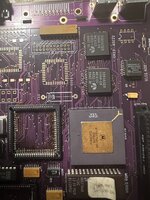
Good to hear it is going wellI feel more confident in soldering the PLCC chips directly. I got some better solder paste and I must say... it's much easier than installing PLCC sockets on EVERY chip! Just got the ADB chip and the 65C22s installed. May not look super even, but I touch up any bridges or missing joints as needed by hand. I feel confident I can get this thing working.
View attachment 72404
@croissantking ? What was your thread called?Also... wasn't there a fix for artifacting on these SE30 reloaded boards? Think I saw it somewhere...


I don't suspect the 53C80 - that's the SCSI chip.I suspect the 53C80 and 8530 chips are bad, personally.
OK, then I'd start around there. Make sure it is properly seated, check all the pins are soldered nicely. Check for shorts on data and address pins perhaps. After that personally I'd be doing a careful visual inspection for solder bridges.I'm using the stock ROM SIMM.