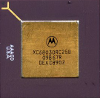
Once I had the same issue with another PowerBook G4. The fan activity became annoying, thus I decided to dismantle and reassemble the heat pipe and fan assembly. The black thermal glue used in the manufacturing process is quite difficult to remove. To avoid any shorts caused by newly applied thermal grease, I used a compound that is only thermal conductive (no metal particles used). However, the problem was not solved, if not made worse. Probably it was not an aged thermal contact but only a series of software updates that lead to the issue. On many machines a most effective way to permanently run the fan on full throttle is just to fire up M$ Office…
After working a while on thermo electric generators, I learned a little which applies to heat spreader assemblies, as well: Any thing you put into the thermal conductive path from a heat source (here: CPU) to a heat sink (here: environmental air) actually _increases_ the thermal resistance of this path. Think of an analogon in electrical resistances. The thermal resistance may be understood as a connection of individual resistors in series, which consists of the ceramic tile of the CPU, the heat spreader (with or without heat pipe system), the thermal transmission resistance from the heat spreader to environmental air (made as small as possible by fan propelled ventilation) and, of course, the thermal resistance of the small gap between the CPU tile and the heat spreader. If this gap is filled with air, it makes a large heat transmission resistance. Thus usually some stuff is put into the gap which conducts heat much better than air. However, even expensive silver compounds do add to the overall thermal resistance, in direct proportion to the thickness of the gap filled with the compound. Thus the amount of thermal paste always should be kept at a minimum to fill evenly the gap between surfaces in contact. Particles in thermal compounds lead to a minimum gap width of about the diameter of the largest particles in the compound. For smooth and even surfaces a much better solution than a particle filled compound might be a small amount of silicone oil or silicone grease (like this stuff:
https://www.sigmaaldrich.com/catalog/product/aldrich/85402). This allows the gap to become as small as possible.
But beware: Silicone oil or grease or also silicone rubber casting compound or mastic is never again completely removable. Traces always remain on the surface and will not allow to durable glue or paint this surface. Many thermal conductive compounds contain silicone grease, as it is thermal and chemical very stable. When applying such stuff, be careful not to spread traces of it all around your workplace. It pays to use examination gloves and to change them frequently. Keep silicone stuff apart from other agents, in a separate box.
→
Before taking apart a PB G4's heat pipe assembly, make sure the air cooled surfaces are clean, without a fur of dust particles. Do _not_ blow compressed air through the fan, as spinning it up to a revolution speed beyond specification may damage the bearings. Also check for a correlation of fan noise and the System software you are running (Panther, Leopard, other…). On the G4 I prefer 10.4 a lot over 10.5, for the ability to seamlessly run the Classic software environment instead of SheepShaver.
P.S.: thermal conductive glue is not recomended for home use in CPU heat spreader applications. It necessarily must be applied with a minimum gap width to keep thermal stress low enough to avoid low cycle fatigue. Also it may easily end up with a total mess of cured epoxy resin, encumbering further treatment.


 but i know you know what it is…)