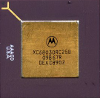
The G3 used Apple's new "Gossamer" logic board, which had originally been developed with an eye towards maximum compatibility with PC components. This was known as the "Yellowknife" project, which had sought to develop the first Apple RISC product[clarification needed] — capable of running any OS that would support it, be it Mac OS or Windows.[citation needed] It was an effort by Apple to gain market share, by allowing their hardware to run industry-standard software, but still remaining Mac OS proprietary[citation needed]. The prototype had a ZIF-socket G3 processor, PCI and ISA slots, Mac and PC serial ports, onboard SCSI, PC and Mac floppy drive connectors, ATX power supplies, and PS/2 keyboard and mouse connections, inserted into an ATX case[citation needed]. The project was scrapped by Steve Jobs, after his return to Apple, and his realization of the devastation of Apple's profits due to the Clone makers[citation needed]. Remnants of this effort can be seen in the form factor of the production G3: the logic board's similarity to the PC ATX motherboard standard; solder points for a PC-type floppy drive; and the ability to use both proprietary Apple power supplies and industry-standard ATX power supplies. As a compact and versatile motherboard, the Gossamer board was originally designed to be able to support both the high-end PowerPC 604e and the new PowerPC G3, but when initial tests found that the cheaper G3 outperformed the 604e in many tests, this functionality was removed and Apple's 604e-based systems died a quiet death.