Since I've started acquiring more and more 68k and PowerPC Macs, I suppose opening a personal conquests thread is appropriate ;D
Now, I've had a lot of good finds in the past, and I might make posts about them here, but I'll denote them as old finds as to not create any confusion
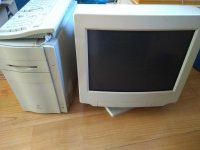
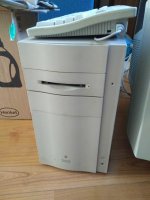
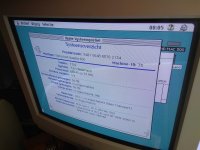
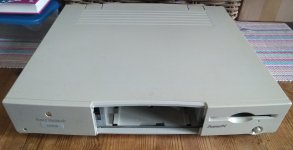
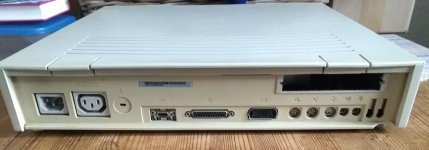
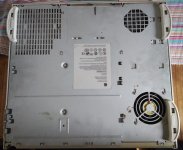
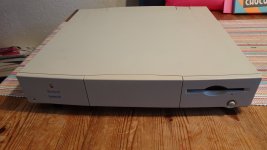
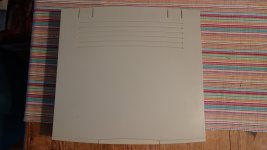
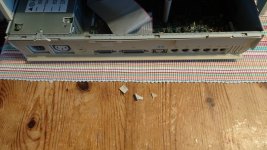
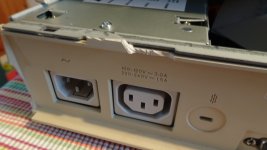
Anyways, to kick off this thread, I'll talk about today's find, a Macintosh SE/30. Since it's late and I don't feel like setting the Mac up for a photoshoot, I'll just borrow the seller's photos:


There is a catch however, this SE/30 is no longer working, therefore we agreed on the price of €30. The seller had suspected that the analog board had gone bad, as when turning on the Mac, no image would appear on the CRT at all. He also said it didn't chime, but he thought it was due to the speaker cable not being attached to the logic board. It had been a while since he last messed with the SE/30, so he couldn't remember a whole lot about it, he thought it was still running Linux 68k, and that he had replaced the PRAM battery at some point.
Once I had picked it up and gotten back at home, I swapped the logic boards between the SE/30 and my SE, which I know is working as it should, and something interesting happened: The SE board booted up fine in the SE/30 chassis, and the CRT worked fine. The exact opposite happened to the SE/30 board in the SE chassis, it was doing exactly the same as it was doing in its own. Also, the chime never played, but this was no surprise as the speaker cable was attached to the SE/30 board when I took it apart.
After looking around, I noticed that a trace had been eaten away, with copper sticking up. One end of the trace went to a pad, which in turn had a jumper wire soldered to it, which connected to a pin on the chip marked as UI6 on the board. The other end of the broken trace seemed to go to the Gate Logic Unit chip. After looking up the Apple part number for the UI6 chip, which was 341-0665-A, I found out that this is a PAL HSync chip.
The schematics I found, if I'm reading those correctly, seemed to show that the jumper and trace connect pin 8 of said chip, which is for the FC0 line, to pin 29 of the GLU chip. I'm a little tired, so I could be wrong on that, but I am fairly certain this is correct. It would make sense for the SE/30 to fail to display a video signal or even boot if a data line for the HSync of the video signal is missing, and the Mac could potentially also have bad caps, worsening any symptoms this could have already caused.
I'm not very good at soldering beyond simple components, but with some patience I should be able to double check my suspicions, and resolder that jumper wire straight to the corresponding pin on the GLU, bypassing the broken trace. That, along with a board cleaning and a recap job, should get this SE/30 back on the road. I also found out that the SE/30 has been fitted with a 100MB IBM SCSI drive, and four 4MB RAM SIMMS, totalling the system RAM to 16MB.
Now, I've had a lot of good finds in the past, and I might make posts about them here, but I'll denote them as old finds as to not create any confusion
Anyways, to kick off this thread, I'll talk about today's find, a Macintosh SE/30. Since it's late and I don't feel like setting the Mac up for a photoshoot, I'll just borrow the seller's photos:
There is a catch however, this SE/30 is no longer working, therefore we agreed on the price of €30. The seller had suspected that the analog board had gone bad, as when turning on the Mac, no image would appear on the CRT at all. He also said it didn't chime, but he thought it was due to the speaker cable not being attached to the logic board. It had been a while since he last messed with the SE/30, so he couldn't remember a whole lot about it, he thought it was still running Linux 68k, and that he had replaced the PRAM battery at some point.
Once I had picked it up and gotten back at home, I swapped the logic boards between the SE/30 and my SE, which I know is working as it should, and something interesting happened: The SE board booted up fine in the SE/30 chassis, and the CRT worked fine. The exact opposite happened to the SE/30 board in the SE chassis, it was doing exactly the same as it was doing in its own. Also, the chime never played, but this was no surprise as the speaker cable was attached to the SE/30 board when I took it apart.
After looking around, I noticed that a trace had been eaten away, with copper sticking up. One end of the trace went to a pad, which in turn had a jumper wire soldered to it, which connected to a pin on the chip marked as UI6 on the board. The other end of the broken trace seemed to go to the Gate Logic Unit chip. After looking up the Apple part number for the UI6 chip, which was 341-0665-A, I found out that this is a PAL HSync chip.
The schematics I found, if I'm reading those correctly, seemed to show that the jumper and trace connect pin 8 of said chip, which is for the FC0 line, to pin 29 of the GLU chip. I'm a little tired, so I could be wrong on that, but I am fairly certain this is correct. It would make sense for the SE/30 to fail to display a video signal or even boot if a data line for the HSync of the video signal is missing, and the Mac could potentially also have bad caps, worsening any symptoms this could have already caused.
I'm not very good at soldering beyond simple components, but with some patience I should be able to double check my suspicions, and resolder that jumper wire straight to the corresponding pin on the GLU, bypassing the broken trace. That, along with a board cleaning and a recap job, should get this SE/30 back on the road. I also found out that the SE/30 has been fitted with a 100MB IBM SCSI drive, and four 4MB RAM SIMMS, totalling the system RAM to 16MB.
Last edited by a moderator: