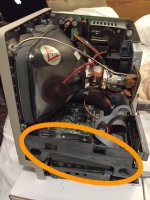
Unless you have an early SE, the CRT should be self-discharging unless there are problems with components on the board.
Please take this advice with a disclaimer. This has worked for me, but I offer no guarantees; you are at your own risk if you follow it.
I have never discharged a CRT in a later model SE or Classic. I have removed anode caps many times from dozens of machines in the course of over a decade and have yet to be shocked. I have also taken anode caps off the 12" LC topper monitors without discharge.
To remove them, I use an insulated pair of pliers to grip the cap itself, squeezing in on the metal piece and taking it out. (In the LC monitors, I actually barehand them since the pliers I have don't do the trick).
I usually give the monitors at least 5 minutes after switch-off.
I once read that discharging a CRT could cause more damage than anything if you aren't careful with it, so I elected from the start not to discharge unless necessary. I have done it before though (on a very early SE where I wasn't sure if the resistor existed; I'll be doing it again on my Plus soon as well).
Again, please take my advice as-is and at your own risk if you choose to follow what I do. There are risks involved, and I accept those risks when I work on these CRTs. I cannot be held responsible for any damages or shocks, as I have properly warned you that this procedure is not guaranteed to be 100% safe.