• Hello MLAers! We've re-enabled auto-approval for accounts. If you are still waiting on account approval, please check this thread for more information.

An SE/30 that has a socketed motherboard is on eBay

Yes, I see that it is a gold-capped CPU, but nowhere in the auction photo do I see evidence of a socket. Nowhere in the listing text does it state the CPU is socketed. You are assuming that all the gold-capped CPUs are socketed? Also note that the other socketed chips on the logic board, other than the CPU, are nothing unusual -- see my SE/30 motherboard photo.
Equill, do both your Rev.A & Rev.10 socketed SE/30 logic boards have gold-capped CPUs installed? Do you have any photos showing the socket from the side? (Top-down photos don't show the CPU socket.)
I have an SE/30 mobo just like the auction one and it has the socketed gold topped CPU. The socket itself is almost 1/4 inch tall - I'd say the one in the auction is socketed from the appearance and shadow; however if I were buying solely on that reason I'd check with the seller. As JDW states - were all gold topped CPU's socketed? My mobo is dated 1988 and has an "engineering change" on the back side - a little green wire put on likely due to an error in the traces (I recall this discussion some time ago about a Classic or Classic II mobo with a blue wire and this was the explanation given).

 
Hey JDW, do you have a picture of the socketed accelerator?
No, but Steve should be able to shoot us one of his board, right Steve? (Please, not from the top-down though!)

 
I own one of the mysterious Daystar boards (a 50MHz full 68030) but as it is in service, photos will have to wait a long time. Scanning the manual may be an easier proposition. I bought my accelerator new in box from a UK mail order supplier about ten years ago for about £25. The operator with whom I spoke on the phone had never head of it before, but they had five or six in stock. I have been kicking myself ever since for not buying the lot.

I know that a few people have been looking at reworking the IIcx adapter from Daystar that plugs into the 68030 and provides a IIci cache slot. A version for the SE/30, the target, would allow for an accelerator whilst leaving the original PDS slot available for other enhancements without creating a PDS Christmas tree.

 
I own one of the mysterious Daystar boards (a 50MHz full 68030)... for about £25. The operator... had five or six in stock. I have been kicking myself ever since for not buying the lot. ...photos will have to wait a long time.
Charlieman, I think a photo of you kicking yourself would suffice. :'(

 
Hey JDW, do you have a picture of the socketed accelerator?
No, but Steve should be able to shoot us one of his board, right Steve? (Please, not from the top-down though!)
Happy to...


http://www.flickr.com/photos/16539524@N00/3295765835/

http://www.flickr.com/photos/16539524@N00/3295765791/


I got this board in a large Freecycle load. Apparently NOS and looks to be so. I can't decide if I should put this into an SE/30 case that currently is built as an SE Superdrive or keep it as is. That gold top CPU sure is nice to look at :)

 
Steve, you need to give guidance to Charlieman on how to break out a camera and use it to snap photos of old Mac equipment within a realistic time frame. However, I suppose there's no good reason for Charlieman to make us all lust after something we never have even the faintest hope of owning. Lust aside, I am curious what the Daystar socket upgrades look like. That's precisely why I shoot so many classic Mac photos of my stuff and put them on Flickr (i.e., do unto others as you would have done to you).

So why all this talk about socketed motherboards and Daystar socketed upgrades in the first place? One lone reason: internal grayscale with acceleration. Which is of course a rather silly reason because even if I were ever to obtain a coveted socket upgrade, I would then need to pay through the nose to get a socketed logic board, and then I would have to sell a kidney to get an Xceed card with a grayscale adapter. But if I were able to get all of those parts, how glorious an SE/30 it would be! You could then have acceleration in the CPU socket, freeing you to add a grayscale PDS card AND possibly an Ethernet PDS card as well. That's really my dream setup. I have a semi-dream setup now with my 50MHz 030 DiiMO and 128MB of RAM -- all that's missing is just the internal grayscale.

All said, it does seem kind of funny I am even lusting after this at all. People who aren't classic Mac enthusiasts must think we are nuts. And perhaps we partly are. That's the fun in being a Mac lover. Our Macs love us back even though we're nuts.

 
All said, it does seem kind of funny I am even lusting after this at all. People who aren't classic Mac enthusiasts must think we are nuts. And perhaps we partly are. That's the fun in being a Mac lover. Our Macs love us back even though we're nuts.
Ah, but nutty people in large numbers can do great things :)

 
All said, it does seem kind of funny I am even lusting after this at all. People who aren't classic Mac enthusiasts must think we are nuts. And perhaps we partly are. That's the fun in being a Mac lover. Our Macs love us back even though we're nuts.
Ah, but nutty people in large numbers can do great things :)
They just make star wars, star trek, Lord of the rings, etc convention producers rich.

 
Well actually, the amazing things these so-called "nuts" create are like this -- which, sadly, are wonderful modern add-ons that I've not seen for the compact Mac. True, the Mac is a more complex beast. Even so, there are just so many things one could do with the SE/30's PDS slot! I've mentioned this in another thread, but I would just love to see a flash disk that works in the SE/30 via PDS, theoretically bypassing the rather slow SCSI implementation.

 
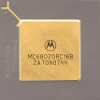
pull the existing stock XC68030RC16B and replace with a XC68030RC50B ?
the new 50MHz processor will run at 16MHz / Typically accelerators require a combination of hardware and a software INIT/CDEV.
What if I found the correct INIT/CDEV software on the web and tried that?
It would have no effect whatsoever.

The CPU speed is set by an oscillator on the motherboard. That is part of the reason all CPU accelerators have an extra electronics board between the CPU and the motherboard. There's another oscillator (and other stuff) on that board that sets the upgrade CPU's speed.

And before you ask - no - swapping out the motherboard oscillator for a faster one won't get you up to 50MHz either. Every other component on the motherboard is specified for the 16MHz clock as well. At best, you might be able to get to 20MHz. Output Enablers have oscillator kits.

[mistake redacted]

 
Last edited by a moderator:
... BTW, AFAIK the 50MHz '030s are all 40MHz labelled parts that have been tested good when upclocked to 50
All of the PowerCache cards that I have seen use the MC68030RC50B chip, which may well have been the latest revision then available. None of the 030s wears a heatsink. By 2005 there was a revision C. While all things are possible, I have to doubt that Motorola, or Freescale, would go to the trouble of producing a revised processor with 0.8 micron technology only so that it could be clocked up 25%, rather than be designed for 50MHz from the outset.

We know/suspect that many components are classified after manufacture into less than, spot on and more than before they are labelled, but rev. C 50MHz 68030s would not fit convincingly into that paradigm. It would be interesting to know the unit price of the rev. C chip.

de

 
Ahem. Clearly there is bloodlust associated with this socketed motherboard and related accelerator card. So much so that my previous post was overlooked. :beige: So again I ask: did Apple actually manufacture the SE/30 with a socketed CPU, or was this a this party modification specifically for the aforementioned card? If Apple produced the board, why? To accommodate the third party companies, or some nefarious internal project of their own?

 
Ahem. Clearly there is bloodlust associated with this socketed motherboard and related accelerator card. So much so that my previous post was overlooked. :beige: So again I ask: did Apple actually manufacture the SE/30 with a socketed CPU, or was this a this party modification specifically for the aforementioned card? If Apple produced the board, why? To accommodate the third party companies, or some nefarious internal project of their own?
I believe the earliest of these boards were manufactured this way. The one I have has not been modified, and I seem to recall reading this to be the case somewhere.

UPDATE: According Larry Pina's book "Mac Classic & SE Repair and Upgrade Secrets" there were two SE/30 motherboards:

P/N 820-0260-10, 1988 (this is the one I have)

P/N 820-0260-A, 1989

This link has pictures of the 1989 board, top and bottom views: http://www.kevinomura.com/macs/se30/index.html

Notice the little wire (the "engineering change") on the underside is not present on this one....

 
Allow me to muddy the waters further. In five SE/30 MLBs, only one of which is in use, I have just found the following:

1) 820-0260-10 dated 1988 on the MLB, socketted for a CPU, soldered-in MC68882FN16A, assembled in Singapore. A white sticker next to the PDS connector shows SG9200TA198A. On the underside of the board, C70 and C71 are positioned directly under the socket.

2) 820-0260-A dated 1989 on the MLB, socketted for a CPU, soldered-in MC68882FN16A, labelled as assembled in Singapore in 1989 (SG9...). A white sticker next to the PDS connector shows SG940J0E380A. On the underside of the board, C70 and C71 are positioned directly under the socket.

3) 820-0260-A and 640-4198, dated 1989 on the MLB, soldered-in MC68030RP16B and MC68882FN16A, labelled as assembled in Singapore in 1989 (SG9...). A ? sticker next to the PDS connector shows ? (The Mac is reassembled at the moment.) On the underside of the board, C70 and C71 are positioned between the socket and the PDS. This MLB is in use in a 32MB/4GB/MacCon 30si machine.

4) 820-0260-A, dated 1989 on the MLB, soldered-in MC68030RP16B and MC68882FN16A, labelled as assembled in Ireland in 1991 (CK1...). A buff sticker next to the PDS connector shows CK1071S900YA. On the underside of the board, C70 and C71 are positioned between the socket and the PDS.

5) 820-0260-10 and 640-4198-V, dated 1988 on the MLB, socketted for a CPU, soldered-in MC68882FN16A, assembled in (?). An orange sticker next to the PDS connector shows BK9042591. On the underside of the board, C70 and C71 are positioned directly under the socket. This is the MLB that I mentioned in another post as having the broken Bank B RAM clips. This may be the oldest of the five boards, although the manuscript 'V' after the inventory/part number may contradict that.

Seemingly, there are socketted and non-socketted MLBs in both revisions. Nothing indicated that the sockets are after-market additions by a third party. The traces around C70 and C71 are part of the board's original layout in all cases.

de

Supplemented on 23 Feb. 09

 
Last edited by a moderator:
Amigas seem to have cornered the market on real 68030/50's. By the mid 90's when accelerators for Amigas were coming out with fast 030's the 50 Mhz speed existed and was cheap.

 
Seemingly, there are socketted and non-socketted MLBs in both revisions. Nothing indicated that the sockets are after-market additions by a third party.
A socketed CPU in one of Apple's flagship products!? And from the beginning to boot ... what were they thinking? Surely they didn't do that for just third party manufacturers to take advantage of ... clearly Apple had plans for it that they abandoned, probably after the SE/30 began to erode sales from their high-end Macs.

 
Back
Top