• Hello MLAers! We've re-enabled auto-approval for accounts. If you are still waiting on account approval, please check this thread for more information.

Novel method for restoring original coloration of Compact Mac cases

FWIW, I was using superglue to fix a crack in a yellowed case and found that in under a minute, the area of the case touched by the glue was back to the original color. Tested this again by just putting a drop on, waiting 30 seconds, wiped it off, and it was back to the original color. Now I am not going to go rub superglue all over my cases and wipe it off… but I probably saw a similar reaction to what @terminalcancerman saw.

I had a post on my profile page back in July with some pictures.
 
Solvents applied to plastics will loosen the molecular bonds so that ingredients of the plastics compound may mix by diffusion. Usually, the discoloration is only to the surface of the plastics. By mixing with less altered portions of the plastics compound beneath the surface, the mixture at the surface may return to a near original state.

However: As already stated by others in this thread, it must be considered a bad idea to expose ABS, Polycarbonate or Acrylic plastics to organic solvents that actually solve or embrittle major components of the plastics compound. Some solvents might also come as components of glue. Some glues can be removed by specific solvents. Some solvents might be successfully used as glue. Always do some research and obtain glue that is actually meant to do the job with the combination of materials you want to bond to each other. A wrong choice of glue may easily ruin parts instead of fixing them properly.
 
Has anyone tried a piece of vinyl wrap? Maybe it's the same adhesive. It'd be an economical way to wrap a Mac for a week (or however long it takes to work) then peel it off.
 
More anecdotal information...

A while back, I picked up a Color Classic that was yellowing and the previous owner had started "restoring the color" using a non-acetone nail polish. He would wipe it on with a cloth towel, then quickly remove it with a plastic cleaner. It did indeed "restore the color" but also removed the fine surface texture of the plastic and left some swirl marks in the texture. I ended up using a magic eraser to remove the swirl marks and then retrobrited using peroxide immersion and it came out very nice, but ya, please don't use solvents of any kind. :)
 
FWIW, I was using superglue to fix a crack in a yellowed case and found that in under a minute, the area of the case touched by the glue was back to the original color. Tested this again by just putting a drop on, waiting 30 seconds, wiped it off, and it was back to the original color. Now I am not going to go rub superglue all over my cases and wipe it off… but I probably saw a similar reaction to what @terminalcancerman saw.

I had a post on my profile page back in July with some pictures.

In my cursory research, I determined that superglue was the most widely available alkyl-based adhesive. I am far too cowardly to put superglue on my vintage cases. But if you find a good method for doing so, you have discovered the most expedient application of this method already. If it works as well as the labels do, with original color and no streaking or marbeling, then this is revolutionary. Good work.
 
Last edited:
In my cursory research, I determined that superglue was the most widely available alkyl-based adhesive. I am far too cowardly to put superglue on my vintage cases. But if you find a good method for doing so, you have discovered the most expedient application of this method already. If it works as well as the labels do, with original color and no streaking or marbeling, then this is revolutionary. Good work.

Well like I said, I was just making an observation regarding the superglue. I was NOT going to coat my cases in it :)
 
This is very interesting! I can’t wait to read more.

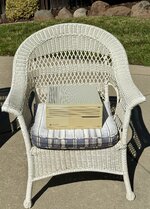
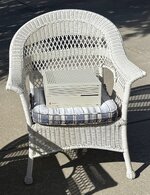
Tangentially I let my new-to-me Mac IIci do some sunbathing in Northern California sunlight and after 3 full blast days have seen a pretty dramatic decrease in yellowing.
 

Attachments

  • IMG_7882.jpeg
    IMG_7882.jpeg
    3.2 MB · Views: 38
  • IMG_7970.jpeg
    IMG_7970.jpeg
    1.3 MB · Views: 37
This is very interesting! I can’t wait to read more.

Tangentially I let my new-to-me Mac IIci do some sunbathing in Northern California sunlight and after 3 full blast days have seen a pretty dramatic decrease in yellowing.
That's the best way, even if it's just a temporary solution.
 
I'm not sure if there have been further updates but an article I read before on the sun-only retro bright method showed a significant and detrimental impact regarding the brittleness of the plastics.

I would prefer to do a retro bright bath for 4 hours than 3+ days of high UV exposure on these old machines.
 
This is very interesting! I can’t wait to read more.

Tangentially I let my new-to-me Mac IIci do some sunbathing in Northern California sunlight and after 3 full blast days have seen a pretty dramatic decrease in yellowing.
Seems like either the wicker chair also lightened or the white balance is off between the two. Definitely better, but maybe not quite as dramatically as the photos portray. Also, I've started putting a UV treatment on my machines after retrobrighting, I also capture the date of the retrobright, as well as trying to leave one part un-retrobrighted to have a control (e.g. the battery cover on a Plus, slot covers on desktops, etc). AAll of my machines seem to still be better off, but some of the ones I did 4-5 years ago have yellowed again a decent bit. Still not matching the control piece. If I re-treat them I will use 303 Aerospace Protectant on it and hope it lasts longer.
 
All methods also make plastics more fragile
In my experience (with retrobriting), the opposite has been true.

Also, I am experimenting with UV protectant recommended by another member here to see if the re-yellowing of a retrobrited piece can be delayed or prevented. Since the re-yellowing takes years when the retrobriting is performed correctly, checking on this could take a while and I'm only a couple years into testing.
in Northern California sunlight and after 3 full blast days have seen a pretty dramatic decrease in yellowing
I would love to try this on some yellowed keyboards! :cool:
 
Last edited:
Back
Top