• Hello MLAers! We've re-enabled auto-approval for accounts. If you are still waiting on account approval, please check this thread for more information.

PPC750GX vs. PPC750GL?

thats very cool to see, even just from a novilty perspective, just to push the G3 to its maximum limits, it would be fun to see one in an MDD, because they have a 167Mhz bus and all that :)


what software things did you have to figure out in the end, was it BootROM patches or OS X side software patches? I notice your still using 10.4.8 for some reason rather then 10.4.9 or 10.4.11


one thing I have always wondered about the PowerLogix 750GX ZIF's is I have always wondered how do they work? because the PowerMac G3 blue and white, has a CPU block in its latest bootROM, if the PVR is not recognised, the machine halts


but somehow the powerlogix ZIF is able to masquerade as a normal 750 G3, and its PVR is reported back as that of a 750, so you dont have to patch the BootROM on the G3 blue and white

but theres no logic on the ZIF's its all just passives, so I have always wondered how that works! does the 750GX itself have some sort of "pretend to be an older chip if you pull down this line" mode?
I've always understood it was an intentional block from using G4s (specifically from the Yikes! most likely). Apple just being an a**.

I think Powerlogix's CPU Director (to set the PLL) had to be updated for each version (from my time using my 750gx) and they stopped at 10.4.9 I think.
 
I've always understood it was an intentional block from using G4s (specifically from the Yikes! most likely). Apple just being an a**.

I think Powerlogix's CPU Director (to set the PLL) had to be updated for each version (from my time using my 750gx) and they stopped at 10.4.9 I think.

there was both, a "halt on unknown PVR" any CPU with an unknown to the BootROM PVR, if you put in a 7410 or 7455 you get the same result

and a separate check that does check for the 7400 PVR where it then beeps at you, remove this, and you will see the G3 Blue and white's latest BootROM does actually recognise the 7400 and gives it the Name PowerPC,Max in the Device tree which was the G4's code name and also fully enables the L2 cache at the firmware level.

if you put in a 7410 or later you will see it gets PowerPC 60? and no L2 cache is enabled since its completely unknown to the BootROM

most Uninorth BootROM's also have this halt on Unknown CPU PVR thing as well, hence why all the 7447+ CPU upgrades require a BootROM patch

I have always been dismayed by PowerLogix's decision to by default set the 1st PLL to only 500Mhz, then require software to enable the 2nd PLL and get full 1Ghz, because exactly as feared, they then dropped support for it, and also if your running more obscure OS's theres no way to enable the full speed, say OS X Server 1.2v3 or some form of Linux etc

I have always wondered what it was that changed in 10.4.10 that stopped PowerLogix in their tracks (10.4.9 was the last version supported by CPU director and its special kexts etc)


I wish they had defaulted to full speed, such that even without their software you did not lose performance
 
there was both, a "halt on unknown PVR" any CPU with an unknown to the BootROM PVR, if you put in a 7410 or 7455 you get the same result

and a separate check that does check for the 7400 PVR where it then beeps at you, remove this, and you will see the G3 Blue and white's latest BootROM does actually recognise the 7400 and gives it the Name PowerPC,Max in the Device tree which was the G4's code name and also fully enables the L2 cache at the firmware level.

if you put in a 7410 or later you will see it gets PowerPC 60? and no L2 cache is enabled since its completely unknown to the BootROM

most Uninorth BootROM's also have this halt on Unknown CPU PVR thing as well, hence why all the 7447+ CPU upgrades require a BootROM patch

I have always been dismayed by PowerLogix's decision to by default set the 1st PLL to only 500Mhz, then require software to enable the 2nd PLL and get full 1Ghz, because exactly as feared, they then dropped support for it, and also if your running more obscure OS's theres no way to enable the full speed, say OS X Server 1.2v3 or some form of Linux etc

I have always wondered what it was that changed in 10.4.10 that stopped PowerLogix in their tracks (10.4.9 was the last version supported by CPU director and its special kexts etc)


I wish they had defaulted to full speed, such that even without their software you did not lose performance
Didn't Xlr8's Mach Speed Tools support setting that PLL too? I don't know if it had that same software problems that CPU Director had. I swear I remember trying it one time under OS X but went back for some reason.
 
To begin with: this post was made possible by joevt, who figured out the software.
The software:

Firmware Updaters​

There are Apple firmware updaters for these firmware versions:
3.2.4f1, 3.2.7f2, 4.1.7f4, 4.1.8f5, 4.1.9f1, 4.2.8f1, 4.2.9f1, 5.1.4f0, 5.1.5f2, 5.1.8f7

They can be found at:
https://forums.macrumors.com/threads/powerpc-mac-firmware-boot-rom-updates.2285855/
There may be other firmware updaters.

Each firmware updater can update multiple Mac models. The contents of the firmware update for each Mac model is the same for each firmware version except for the sys (config) section which describes the Mac model. It is unknown if Apple tested each firmware version for all the Mac models listed in each firmware updater. For example, although the 4.2.9f1 firmware updater lists the Pismo, it is unknown if that version is desirable for the Pismo or if it even works with the Pismo.

Firmware updaters > 5.x.x have a list of Open Firmware drivers per Mac model. They also have a list of drivers per Mac model that need to be executed by the firmware updater (mpu-i2c, SPU.1.1.x)

A Firmware updater's contents can be converted to and from a ROM except for the tst (serial number, MAC address) and nv (nvram) sections which must come from the Mac.

A Firmware updater can change any part of a New World ROM, including the compressed parts (Open Firmware and Open Firmware drivers).

Firmware Patchers​

"NewerTech 7457/7447A/7448 Enabler 3.1b5" is a newer version of the "PowerLogix 7457/7447A Enabler 2.0f1.1"

This patcher can patch any of the uncompressed sections of the New World ROM.

There are 4 patches that the patch can apply:
- 7457 or 7457/7447A HID0
- PLL
- L3CR
- Thermal (in 31b5 only)
Other patch types can be added.

The patches are slightly different for each firmware version. The supported firmware versions are:
4.1.8b5, 4.1.9f1, 4.2.1b2, 4.2.1f2, 4.2.3f1, 4.2.4f1, 4.2.5f1, 4.2.8f1, 4.3.3f2, 4.4.6f2, 4.4.8f2, 4.5.7f1, 4.6.5f3
Versions of the patches for other firmware versions can be added.

To add the 750GX, I created a new version of the HID0 patch which checks for these PVR values:
Code:
000c, 800c                  : (G4 old family):7400,7410
0003, 0006, 0007            : (603 family):603,603e,603ev,603r
0008, 7000, 7002            : (G3 family):740,750,745,755,750CX,750CXe,750FX,750G
0035                        : (POWER4???)
8000, 8001, 8002, 8003, 8004: (G4 new family):7450,7451,7441,7445,7455,7447,7457,7447A,7448
I also added support for firmware version 4.1.8f5 which some Pismo may have.

The patchers include an nvramrc script for Mac OS 9. It only changes the CPU(s) to "7445/7455, v2.1" in the device-tree:
Code:
" /cpus/@0" find-package if drop " /cpus/@0" find-device 80010201 encode-int " cpu-version" property then
" /cpus/@1" find-package if drop " /cpus/@1" find-device 80010201 encode-int " cpu-version" property then
device-end \ PLX-OS9-PATCH

The 31b5 patcher includes a nvramrc script for Mac OS X which is actually a Mac OS X kernel patch.

Mac OS X Kernel Patcher​

The 31b5 firmware patcher includes an nvrarmrc script for Mac OS X. The nvramrc script patches the quiesce word of the client-services package. When CallKernel in BootX (see BootX/bootx.tproj/sl.subproj/main.c) calls quiesce to pass control to the xnu kernel (/mach_kernel), it will patch the processor_types table (see xnu/osfmk/ppc/start.s) so that the table entry that accepts the 7447A CPU will also accept the 7448 CPU.
This is the same nvramrc script that @dosdude1 worked on and was discussed at:
https://forums.macrumors.com/threads/powermac-g4-fun-part-2.2246307/post-31365002
https://forums.macrumors.com/thread...g-a-pencil-to-overclock.1973903/post-30815165
https://forums.macrumors.com/thread...g-a-pencil-to-overclock.1973903/post-33295607
https://discord.com/channels/394224641654259712/948589192835911710/1262139336682635295
My nvramrc script for the 750GX changes the table entry that accepts the 750FX v2 CPU to also accept the 750GX CPU.
Any number of kernel and kext patches can be added. Patching the kernel this way means the kernel file can remain unmodified which is convenient for read-only media.

 

Attachments

Hopefully this result will encourage other experimenters out there. There are still some mysteries about the aftermarket upgrades that used these chips. If anyone has a 750G (or even a 750F) and would be willing to share data, it would be nice collect some information about these CPUs in this thread. For example, what happened with this?:

Very cool to see this, I've been wanting to see a 750GX or GL on one of those G4 cards, purely for the possibility of making the fastest PowerMac G3, with AGP and possibly a 1GHz G3 :-)
Would be a cool sort of "alternative timeline" machine, one where either the G4 didn't exist or was delayed, or where Apple stuck with the G3 for a longer time.

Very curious about those interposers too, I'd love to build my own AGP G3 (wonder if I should go G3 blue + G4 white panels, or G4 graphite + G3 white panels for the case?), and experiment with some other GX/GL/FX/FL/CL footprint chips. Especially as I have a Wii Broadway processor, which should fit the footprint, that I'm really curious to see if it works in a Mac :-)
 
Would a 750GX work on a measly 233 Zif board? My idea is remove the 233 cpu, remove both L2 cache chips and reball the GX on it. As the original 233 does not have any pll multipliers on it it would make for the most interesting Beige G3 upgrade ever
 
The software:

Firmware Updaters​

There are Apple firmware updaters for these firmware versions:
3.2.4f1, 3.2.7f2, 4.1.7f4, 4.1.8f5, 4.1.9f1, 4.2.8f1, 4.2.9f1, 5.1.4f0, 5.1.5f2, 5.1.8f7

They can be found at:
https://forums.macrumors.com/threads/powerpc-mac-firmware-boot-rom-updates.2285855/
There may be other firmware updaters.

Each firmware updater can update multiple Mac models. The contents of the firmware update for each Mac model is the same for each firmware version except for the sys (config) section which describes the Mac model. It is unknown if Apple tested each firmware version for all the Mac models listed in each firmware updater. For example, although the 4.2.9f1 firmware updater lists the Pismo, it is unknown if that version is desirable for the Pismo or if it even works with the Pismo.

Firmware updaters > 5.x.x have a list of Open Firmware drivers per Mac model. They also have a list of drivers per Mac model that need to be executed by the firmware updater (mpu-i2c, SPU.1.1.x)

A Firmware updater's contents can be converted to and from a ROM except for the tst (serial number, MAC address) and nv (nvram) sections which must come from the Mac.

A Firmware updater can change any part of a New World ROM, including the compressed parts (Open Firmware and Open Firmware drivers).

Firmware Patchers​

"NewerTech 7457/7447A/7448 Enabler 3.1b5" is a newer version of the "PowerLogix 7457/7447A Enabler 2.0f1.1"

This patcher can patch any of the uncompressed sections of the New World ROM.

There are 4 patches that the patch can apply:
- 7457 or 7457/7447A HID0
- PLL
- L3CR
- Thermal (in 31b5 only)
Other patch types can be added.

The patches are slightly different for each firmware version. The supported firmware versions are:
4.1.8b5, 4.1.9f1, 4.2.1b2, 4.2.1f2, 4.2.3f1, 4.2.4f1, 4.2.5f1, 4.2.8f1, 4.3.3f2, 4.4.6f2, 4.4.8f2, 4.5.7f1, 4.6.5f3
Versions of the patches for other firmware versions can be added.

To add the 750GX, I created a new version of the HID0 patch which checks for these PVR values:
Code:
000c, 800c                  : (G4 old family):7400,7410
0003, 0006, 0007            : (603 family):603,603e,603ev,603r
0008, 7000, 7002            : (G3 family):740,750,745,755,750CX,750CXe,750FX,750G
0035                        : (POWER4???)
8000, 8001, 8002, 8003, 8004: (G4 new family):7450,7451,7441,7445,7455,7447,7457,7447A,7448
I also added support for firmware version 4.1.8f5 which some Pismo may have.

The patchers include an nvramrc script for Mac OS 9. It only changes the CPU(s) to "7445/7455, v2.1" in the device-tree:
Code:
" /cpus/@0" find-package if drop " /cpus/@0" find-device 80010201 encode-int " cpu-version" property then
" /cpus/@1" find-package if drop " /cpus/@1" find-device 80010201 encode-int " cpu-version" property then
device-end \ PLX-OS9-PATCH

The 31b5 patcher includes a nvramrc script for Mac OS X which is actually a Mac OS X kernel patch.

Mac OS X Kernel Patcher​

The 31b5 firmware patcher includes an nvrarmrc script for Mac OS X. The nvramrc script patches the quiesce word of the client-services package. When CallKernel in BootX (see BootX/bootx.tproj/sl.subproj/main.c) calls quiesce to pass control to the xnu kernel (/mach_kernel), it will patch the processor_types table (see xnu/osfmk/ppc/start.s) so that the table entry that accepts the 7447A CPU will also accept the 7448 CPU.
This is the same nvramrc script that @dosdude1 worked on and was discussed at:
https://forums.macrumors.com/threads/powermac-g4-fun-part-2.2246307/post-31365002
https://forums.macrumors.com/thread...g-a-pencil-to-overclock.1973903/post-30815165
https://forums.macrumors.com/thread...g-a-pencil-to-overclock.1973903/post-33295607
https://discord.com/channels/394224641654259712/948589192835911710/1262139336682635295
My nvramrc script for the 750GX changes the table entry that accepts the 750FX v2 CPU to also accept the 750GX CPU.
Any number of kernel and kext patches can be added. Patching the kernel this way means the kernel file can remain unmodified which is convenient for read-only media.


Awesome! Thank you for the juicy technical breakdown, this is the sort of thing I live for! another firmware patcher worth looking into is the Gigadesign's firmware patcher as I noticed that one does not check for a specific BootROM version it only checks for certains within a BootROM, so we where able to use it to patch BootROM versions that the PowerLogix one baulked at, I note that the Gigadesign's one weirdly seems to install itself into the start of BootX!

thats really awesome to hear that the OS X NVRAMRC patch can indeed be tweaked to work with other CPU's and make OS X think its is running on other CPU's as I have said in the past I have often wanted to tweak it such that it makes OS X think its running on a 7445/7455, so early versions of OS X properly recognise 7447A/7448's as G4's which they dont currently do, I also wonder if its possiable to make it boot OS X on a 604/603 without the need of the patched kernel I made?


BTW I notice you missed out a firmware update in your list, apple did release one 4.4.8 for the FW400 MDD back in the day


this was leveraged by the OS 9 crowd because you could downgrade a FW800's BootROM with it, but now there are better methods then doing that for running OS 9 :) it would be interesting to hear what you find inside the firmware update tho :)

I have always long suspected BootROM updates being universal in some regard it would be fun to try and apply some of them and see what happens! I have often wondered about trying to apply the 4.2.8 BootROM update to my Quicksilver to see if that might help with its L3 cache detection woes, but a BootROM on a PPC mac is big ol parallel EEPROM not something one can easily put an 8 pin chip clip over to rewrite if it all goes wrong LOL
 
Would a 750GX work on a measly 233 Zif board? My idea is remove the 233 cpu, remove both L2 cache chips and reball the GX on it. As the original 233 does not have any pll multipliers on it it would make for the most interesting Beige G3 upgrade ever

Not without an interposer board.
 
The ebay chip I used is labeled PPC750GLECR2H33V-G and has a PVR of 0x70020112, which agrees with the IBM datasheet for the 750GL. CPU Director (which doesn't run on OS X 10.4.11) recognizes the chip, presumably based on the PVR, while no other software I have does. I don't understand how these could work on the ZIF upgrades without software support. There could be some secret back door trickery, or maybe a batch of chips was actually made with special/compatible PVR. Maybe someone who has one of these upgrades can shed some light.

The base speed (initial value of PLL0) is configured with input pins on the CPU. You could change this with a few minutes and a soldering iron.
 
The ebay chip I used is labeled PPC750GLECR2H33V-G and has a PVR of 0x70020112, which agrees with the IBM datasheet for the 750GL. CPU Director (which doesn't run on OS X 10.4.11) recognizes the chip, presumably based on the PVR, while no other software I have does. I don't understand how these could work on the ZIF upgrades without software support. There could be some secret back door trickery, or maybe a batch of chips was actually made with special/compatible PVR. Maybe someone who has one of these upgrades can shed some light.

The base speed (initial value of PLL0) is configured with input pins on the CPU. You could change this with a few minutes and a soldering iron.

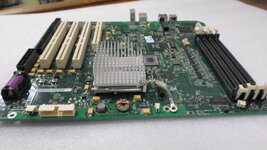
interesting, I very briefly had one of those 750GX ZIF's in my hand I posted a picture of my one earlier in this thread (the one being held by fingers with a messy background was my own picture :) )

index.php


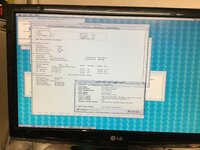
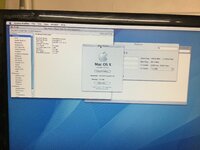
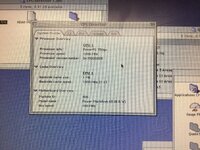
heres a few extra shots I took of how various software saw the CPU as, all software (including OF etc) reports the PVR as 0x00080203 which is the PVR for a regular 750P G3 Copper CPU, PowerLogix CPU director is the only one that saw its true PVR of 0x70020203

it very much is one that baffles me, and I wish I asked for more time to play with the CPU some more! I still want to try one of these PowerLogix ZIF's in my XLR8 Slocket in my 9600 for example :) and as you say I have wanted to figure which resistors on the ZIF where the PLL0 resistors to try and work around the broken software control

IMG_0497 2.JPGIMG_0496 2.JPGIMG_0505 2.JPG
 
Last edited:
I'm afraid I have missed the thread, but I have already made a replica of the PowerLogix 750GL accelerator...
It however does not work as I did blow the VRM, so there's possibly a short somewhere in my design that I need to trace.
I had a PowerLogix board that I recovered from a scrap lot, that was destroyed. It's an 8 layer PCB, and it was extremely challenging to both reverse engineer and assemble.

View attachment 38954View attachment 38955
Hello @Siliconinsider, did you ever manage to solve the problem? I’m quite interested
 
... PowerLogix CPU director is the only one that saw its true PVR of 0x70020203

I think that helps to clear things up. CPU Director loads a kernel extension to get access to the CPU configuration registers. So I don't think there is any special hardware; it must be the initial software/firmware setting things up for OS X such that things appear to be an earlier G3 CPU. Software with direct access to the hardware sees something else.

So no firmware patches are needed to install the 750G ZIF upgrade CPU? I could try putting a 750G onto an apple ZIF module, but I'd have no way to test it. There are logic boards for sale. Is it easy to run these on a bench or do they need special power supplies, soft-power boards, etc? It might be better to look for a whole computer?

ZIFlogic.jpg
 
I think that helps to clear things up. CPU Director loads a kernel extension to get access to the CPU configuration registers. So I don't think there is any special hardware; it must be the initial software/firmware setting things up for OS X such that things appear to be an earlier G3 CPU. Software with direct access to the hardware sees something else.

So no firmware patches are needed to install the 750G ZIF upgrade CPU? I could try putting a 750G onto an apple ZIF module, but I'd have no way to test it. There are logic boards for sale. Is it easy to run these on a bench or do they need special power supplies, soft-power boards, etc? It might be better to look for a whole computer?

View attachment 76831
I am pretty positive that it did not require any BootROM patching or NVRAMRC patches, I seem to recall even in my G3 beige, it just saw the 750GX ZIF, as a 750P ZIF with 1MB of "backside" L2 cache, even in OpenFirmware, and thats a system one *cannot* patch the BootROM on since it truly is read only

but its been a good few years since I had it in my hands, its makes me want to try find another, just to re-affirm what I recall from all those years ago, but they dont grow on tree's sadly!

the G3 Blue and white, and Yikes! motherboards run off the same PSU's that sawtooth's do, details of the pinout and adapting an ATX PSU for one can be had here :) http://atxg4.com/sawtooth.html

and the G3 beige board can actually run directly off an ATX PSU there is a "PS/2" or "Macintosh" jumper on the motherboard for telling the system what sort of power supply the system has

so it should not be hard at all to get a logic-board going outside of the system


it would certainly be most interesting to see what happens if you stick a 750GX via one of your interposers onto a standard 750 ZIF, see how that compares to a PowerLogix ZIF
 
I am pretty positive that it did not require any BootROM patching or NVRAMRC patches, I seem to recall even in my G3 beige, it just saw the 750GX ZIF, as a 750P ZIF with 1MB of "backside" L2 cache, even in OpenFirmware, and thats a system one *cannot* patch the BootROM on since it truly is read only

but its been a good few years since I had it in my hands, its makes me want to try find another, just to re-affirm what I recall from all those years ago, but they dont grow on tree's sadly!
I have a couple of the 750GX cards for the PCI PowerMacs (x500, e.g. 9500). They do not require any drivers or ROM patches to operate. As far as I can tell, there's no where on the card firmware could be stored. Of course, if one wishes to run at a speed other than 500 MHz, one needs the PowerLogix utility.
 
I have a couple of the 750GX cards for the PCI PowerMacs (x500, e.g. 9500). They do not require any drivers or ROM patches to operate. As far as I can tell, there's no where on the card firmware could be stored. Of course, if one wishes to run at a speed other than 500 MHz, one needs the PowerLogix utility.

yeah Old World Macs thankfully dont have any sort of "halt on Unknown CPU" check like New World PowerMacs do, so they inherently dont need any patching for more modern CPU's (although of course on those systems even a most basic G3 upgrade will need some sort of 3rd party software to enable L2 cache etc)

but does beg the question what does the 750GX in those PowerSurge OWR systems show up as, when *not* running any 3rd party extensions/software/utilities, IE if you boot a stock install of Mac OS 9.1 and use a stand alone utility like Gauge Pro or Metronome to query it? or go into OpenFirmware do a .properties on the cpu itself in the device tree that would be quite interesting to see in its own right :)

the reason I mention the G3 beige is because of how it did see the CPU as a regular G3 rather then displaying it as PowerPC 60? with the 750GX PVR as I would have expected it to do (like for example what it does with a G4 CPU, obviously displaying the G4's PVR in those cases)

PS do you have any pictures of those cards? I dont think I have ever actually seen one pictured, I have only read about them from period articles and on the old XpostFacto Forum, so it would be cool to see what one actually looks like after all this time


@herd just as a sanity check, I assume that a Sawtooth (or other PowerMac G4) with a stock unpatched BootROM wont POST with one of your 750GX cards?
 
Last edited:
I tried the 750G in an "AGP":

Machine Name: Power Mac G4 (AGP graphics)
Machine Model: PowerMac3,1

With this CPU it would not "bong" or do anything when powered on, with either the stock firmware or with the Powerlogix/NewerTech patches. It required the new firmware patch from joevt. With the firmware fixed, the computer would bong, boot to Open Firmware, boot linux, or boot your 604 modified mach_kernel for 10.4.11. Then, it required either edits to mach_kernel or the new NVRAMRC script from joevt to boot 10.4 normally. These were basically the required software modifications that joevt figured out and posted here for us.

Looking at the patched areas, I think a 750F would work fine without modifications. So I suspect installing a 750G into an iBook would require similar edits.

I don't know what the IBM nintendo chips use for PVR, but I believe they dropped 3.3v support. So they would be more complicated to install in older machines with 604 CPUs (for example).
 
I don't know what the IBM nintendo chips use for PVR, but I believe they dropped 3.3v support. So they would be more complicated to install in older machines with 604 CPUs (for example).

There are user manuals floating around for both the Gekko, and the Broadway.

The Gekko supposedly uses either 0x0008 or 0x7000, depending on hardware revision:

The processor version number is 0x7000 for Gekko. Early releases of the hardware may have a processor version number of 0x0008. The processor revision level starts at 0x0100 and is updated for each silicon revision.

The Broadway uses 0x0008:

Implementation Note—The processor version number is 0x0008 for Broadway. The processor
revision level starts at 0x71r0...

The User Manuals don't go into all the voltage details that the datasheets go, but following the IBM 750CL datasheet, it does appear it's not meant to run much higher than 1.15V. This makes sense, as the CL would logically be the low power version of the CX(e), as it is with the 750FX and FL, and 750GX and GL.
 
I tried the 750G in an "AGP":

Machine Name: Power Mac G4 (AGP graphics)
Machine Model: PowerMac3,1

With this CPU it would not "bong" or do anything when powered on, with either the stock firmware or with the Powerlogix/NewerTech patches. It required the new firmware patch from joevt. With the firmware fixed, the computer would bong, boot to Open Firmware, boot linux, or boot your 604 modified mach_kernel for 10.4.11. Then, it required either edits to mach_kernel or the new NVRAMRC script from joevt to boot 10.4 normally. These were basically the required software modifications that joevt figured out and posted here for us.

Looking at the patched areas, I think a 750F would work fine without modifications. So I suspect installing a 750G into an iBook would require similar edits.

I don't know what the IBM nintendo chips use for PVR, but I believe they dropped 3.3v support. So they would be more complicated to install in older machines with 604 CPUs (for example).

interesting! and how does the CPU show up in OpenFirmware once patched? does it just show up as PowerPC 60? as 7447/7448's do with the standard PowerLogix patch, or does it show up as a PowerPC 750 with all the L2 cache child node?

and on that how did it show up in Linux was the L2 cache active? :)

also I am curious to know, how does it behave in OS 9? does it still display the same abnormally slow memory speed as it did in OS X?

the nice thing about the 750GX is that its still a 4 stage pipeline CPU but one that has a full 1MB of full speed on die L2 cache and a good amount of clocks, so it should be quite speedy when it comes to non-altivec tasks :)

I am also curious just how far where you able to clock your 750GL? the ZIF I had I dont recall it wanting to clock even to 1.1Ghz but that was via powerlogix's software, so dont know if it was issues with that or if the chip I had just had not much head room

I am wondering since these are pretty late production 750GL's you have, are they well refined with lots of clocking room, like the MPC7410's floating around have? :)

I hope you dont mind all the questions! but I love seeing/doing hardware hacks like this and then I love to see just what all the software makes of it and how it behaves etc!

PS on that I note it shows up as 300Mhz in About this Mac, do you know why that is? I know with some multiplier values older OpenFirmware revisions cant figure out the right clock value to display in the device tree/About this Mac, but I figured an 8x multiplier would of been fine for a sawtooth to display correctly?

or have you got it set to 300Mhz on the first PLL and clocking it up to 800Mhz with the 2nd PLL via PowerLogix software?
 
interesting! and how does the CPU show up in OpenFirmware once patched? does it just show up as PowerPC 60? as 7447/7448's do with the standard PowerLogix patch, or does it show up as a PowerPC 750 with all the L2 cache child node?

and on that how did it show up in Linux was the L2 cache active? :)

also I am curious to know, how does it behave in OS 9? does it still display the same abnormally slow memory speed as it did in OS X?

the nice thing about the 750GX is that its still a 4 stage pipeline CPU but one that has a full 1MB of full speed on die L2 cache and a good amount of clocks, so it should be quite speedy when it comes to non-altivec tasks :)

I am also curious just how far where you able to clock your 750GL? the ZIF I had I dont recall it wanting to clock even to 1.1Ghz but that was via powerlogix's software, so dont know if it was issues with that or if the chip I had just had not much head room

I am wondering since these are pretty late production 750GL's you have, are they well refined with lots of clocking room, like the MPC7410's floating around have? :)

I hope you dont mind all the questions! but I love seeing/doing hardware hacks like this and then I love to see just what all the software makes of it and how it behaves etc!

PS on that I note it shows up as 300Mhz in About this Mac, do you know why that is? I know with some multiplier values older OpenFirmware revisions cant figure out the right clock value to display in the device tree/About this Mac, but I figured an 8x multiplier would of been fine for a sawtooth to display correctly?

or have you got it set to 300Mhz on the first PLL and clocking it up to 800Mhz with the 2nd PLL via PowerLogix software?
I know the 750GX I had for a good while in my B&W G3 could clock to 1.2GHz. I thought initially it ran at 800MHz without setting the PLL in software. I know the software had an option to do 'power-saving' by clocking down to 500MHz and then up to full speed depending on processor usage.
 
Thanks for posting the datasheet for the 750CL. For our purposes it looks much less interesting than the 750G: no 3.3v support, less cache, fewer/lower multipliers, lower clock, etc.

I think joevt is far better at understanding the firmware than I. My guess is that there are multiple PVR checks at different places in the firmware and the patch we've discussed fixes one of them. For example, if you search for the string "PowerPC 60? " you can find another check. The CPU clock speed is not reported correctly and I would guess that another PVR check is used there, which also reads HID1 to calculate the CPU speed and populate the device tree. Under linux the CPU is detected as 750GX but the speed is also wrong (it must get this from OF). The cache is enabled in the firmware with L2CR (and another PVR check?) and currently CPU Director is the only way I have to touch those registers from the OS.

I don't have good ways to test it, but I believe the memory speed handicap for G3 CPUs in this machine is hardware related. As noted in that Pismo MPX thread the SHD and DTI signals are not connected. This might have something to do with it, but a G4 in 60x bus mode is still much faster than the G3? I have a simulation software package that directly benefits from cache and main memory speed. It compiles under OS X and linux so I was able to test G3 vs G4 and OS X vs linux. The results are similar between OS X vs linux, and even the G4 running the program compiled for the G3 is much faster than the G3. Cache Basher shows L2/main speeds for the G3 at ~4000/200 MB/s vs ~11000/730 MB/s for a 7447 at the same clock in the same machine. The G3 has a 32-bit compatibility mode, but I don't think this is what's going on. Any G3 vs G4 tests I've been able to find online show similar results. Yes, a 1GHz G3 will be faster than a 400MHz G4 in most tests, except for memory throughput and altivec.

The 750G chip I used first booted at 800MHz using "middle of the road" settings from the datasheet. Later when I was testing against the 7410 I set it for 1.1GHz to see if I could reproduce other results I'd seen online. Increasing the voltage may help with overclocking but I did not try; it can be very time consuming to test combinations. To do it, I would wire up an external switch block to the speed and voltage settings and then proceed to reboot repeatedly and run different programs to stress the CPU and expose faults. Then hours (days?) later I would have mapped out one CPU, with one cooling setup, etc. As noted earlier, I think these chips would be better suited for the 3.3v machines like the 604, 740L, 750L, etc. In the AGP, a 1.1GHz 7447 would stomp all over the 750G at the same clock.
 
Back
Top