• Hello MLAers! We've re-enabled auto-approval for accounts. If you are still waiting on account approval, please check this thread for more information.

What wire do you use for trace repairs?

JC8080

6502
After watching Bruce's videos I bought some coated wire similar to what he was using. Unlike his wire coating that melts very quickly with heat, the coating on my wire seems rather immune to heat. I have had to carefully strip the coating off with a razor before using for repairs. Does anyone have any suggestions for good trace repair wire? This is the wire I ordered (link).
 
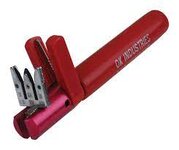
It's probably not the best solution, but I've been using 30 gauge wire intended for wire-wrapping, because I have lots of it from past projects. The insulation doesn't melt. I have a tool that easily cuts it and strips it, very similar to this one:

Untitled4.jpg
 
I use enameled magnet wire, similar to your link, only the enamel is red. I run the ends through a blob of hot solder to remove the enamel.
 
It depends how big of a break we're dealing with. Minuscule break? I tend to use a single strand from a 28 (ish) gauge stranded scsi wire then run solder overtop: all the wire is doing is helping the solder bridge the gap. Then overcoat pen on top of the solder.

For larger runs or outright trace replacement, 28 (ish?) gauge solid Mynar wire-wrapping wire is my go-to. It's a great all around wire for small repairs.
 
I've been told a strand of wire as used in "solder wick" is excellent owing to conductivity and easy to solder with
 
After watching Bruce's videos I bought some coated wire similar to what he was using. Unlike his wire coating that melts very quickly with heat, the coating on my wire seems rather immune to heat. I have had to carefully strip the coating off with a razor before using for repairs. Does anyone have any suggestions for good trace repair wire? This is the wire I ordered (link).
Not all enamel wire is designed with melt through coatings.

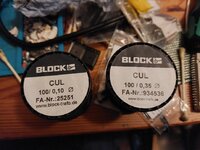
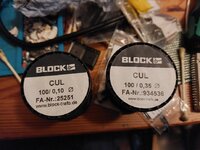
This is what I use. I need to turn my iron up to about 280 before I can tin it, so I do it off circuit. I do exactly what @ymk does.
20230812_125609.jpg
If I was buying again, I'd buy a little thicker than the 0.1.
 

Attachments

  • 20230812_125609.jpg
    20230812_125609.jpg
    224.1 KB · Views: 3
For trace repair, I just use copper strand wire salvaged from an old power cord... it's just straight-up copper wire very fine gauge (couldn't say exactly), works well enough for those small little bridging repairs where you're recreating the trace or reconnecting a via. But for longer bodges, I use either solid or stranded silicone-coated wire depending on how flexible or stiff I want it to be. I have some enamled magnet wire, but I don't use it... for some reason I don't trust the insulation. Dumb, I know, lol but 🤷‍♂️.
 
For wider traces, using solder wick really works well. Just tin the length of it after soldering. I forget where I saw this - it was probably one of Mr Solder Fix’s videos on YouTube. For fine work, I use a single strand of wire from Radio Shack 20ga stranded wire.
 
For wider traces, using solder wick really works well. Just tin the length of it after soldering. I forget where I saw this - it was probably one of Mr Solder Fix’s videos on YouTube. For fine work, I use a single strand of wire from Radio Shack 20ga stranded wire.
Good idea on the solder wick, I hadn't thought of that. I have an IIsi PSU with one dodgy large trace that I repaired with possibly too-small wire. It's a backup unit so I wasn't too worried at the time, but that trace seems like a good candidate to re-do with solder wick.
 
Back
Top