• Hello MLAers! We've re-enabled auto-approval for accounts. If you are still waiting on account approval, please check this thread for more information.

Wallstreet I and its 83.33MHz bus

Just curious: does anyone know the story behind why the original Wallstreet PowerBook G3 used an ‘odd’ 83MHz bus for the 250MHz and 292MHz models?

Were yields too low on the 266 and 300MHz chips and so they overclocked slower chips? (Or did they underclock faster ones?)
 
Just curious: does anyone know the story behind why the original Wallstreet PowerBook G3 used an ‘odd’ 83MHz bus for the 250MHz and 292MHz models?

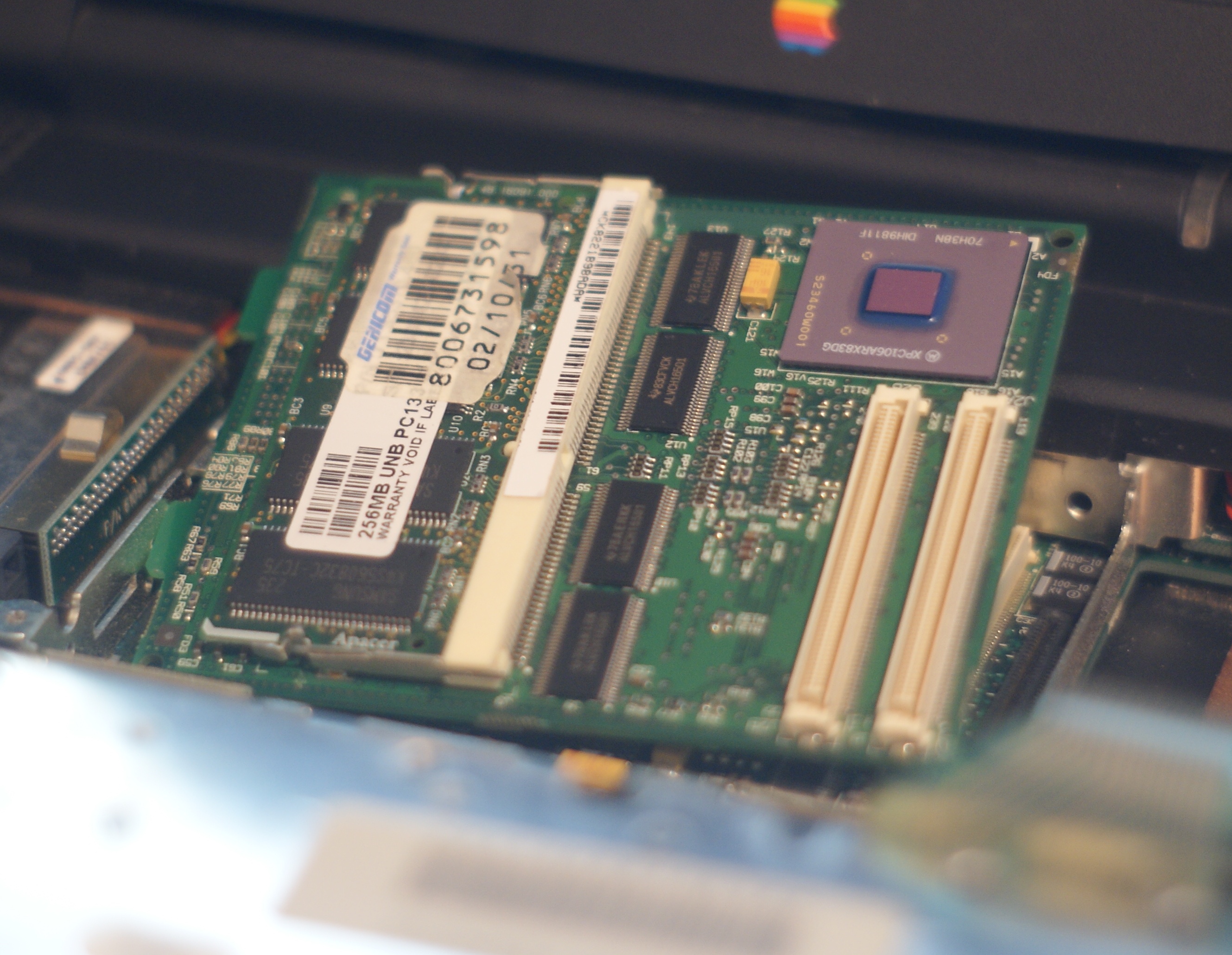
They used 83MHz rated XPC106s, as seen in this picture from journaldulapin.com:

DSC05175.jpg
 
I was looking for a photo of that. Yes, I assumed they used 83MHz XPC106 parts as the 66MHz parts are not always stable at 83MHz.

I was mainly just curious what the reason for choosing an 83MHz bus was over the more standard 66MHz which they did drop back to in the Wallstreet II.

Also curious what the 250 and 292 CPUs are actually rated for.
 
Wikipedia claims the following, but it's without a source, so take it for what it is:

The 250 MHz and 292 MHz models shipped with 1 MB of cache. Because of this large cache, as well as the swifter system bus, the Wallstreets were known to suffer from some heat issues.

I'm guessing they picked the 83MHz bus to increase memory throughput, but without taking into account the higher heat output.
I would not be surprised if Apple went back to 66MHz to reduce heat output and increase the system's stability, at the slight cost of performance.
 
as I understand it the choice of faster Grackle chips on the high end also produced yield issues, and production delays, hence the G3 PDQ which as I understand it stands for Pretty Damn Quick, as in, the Lore goes that Steve Jobs said something along the lines of you better fix it Pretty Damn Quick! so they standardised all the G3 PowerBooks on a standard 66Mhz Grackle chip
 
Why did they do it? Well an 83MHz bus is ~20% faster than a 66MHz bus. The G3s were clocked at 250 and 292 because those were the closest they could get with the standard .5 multipliers (the 250 was probably actually rated at 250 while the 292 was rated for 300).
Why did they stop? It added complexity to the product lineup which introduced logistical problems, etc., so they shut it down. The 66MHz part was more plentiful and less expensive than the 83MHz part, so they chose 66MHz instead of moving it all to 83MHz.
Plenty of early beige G3s also use 83MHz Grackles, but they were never sold configured as such. I like to find these models and clock them up to their rated speed. One of my go-to bridge machines is a highly modified G3MT with a Rev. C ROM, an 83MHz bus, and a (slightly overclocked) 416MHz G4 (from a 400MHz Yikes! G4 that was upgraded).

 
The 292@83 is faster than the 300@66 that came out after.

Never really looked into which of my G3 desktops were 83Mhz capable.
 
Back
Top