• Hello MLAers! We've re-enabled auto-approval for accounts. If you are still waiting on account approval, please check this thread for more information.

SE/30, Installing Battery Packs, *Crazy Idea*

uniserver

68LC040
what spawned this thought was Dougg3's ROM simm,

then bunsen mentioning how cool this ROM simm would be in a SE/30, used as a serial terminal emulator,

i was thinking of using some LION battery packs, maybe making a circuit that auto recharges when plugged into ac,

having a secondary push button on switch to turn the computer off and on when on battery,

i figure if were running just off Dougg3's ROM simm, no need for a hd .. or a floppy really, more room for some lion battery packs :)

and energy consumption shouldn't be that bad?

maybe Velcro a mini adb kbd /w track pad, to the side?

and a serial cable holder on the other side,

could be a way cool device to carry around the colo, :) and get your nostagic kicks in at the same time :)

and if dougg makes more progress with this PDS thing he is working on, maybe we can get some USB WIFI or Blue tooth…

but that may be too far fetched :)
messyrack-199x300.jpg

 
Hmm...

Intriguing idea!

Here are some of my thoughts:

Lithium Ion is kind of dangerous/expensive, at least for a proof-of-concept design. Perhaps NiMH or NiCad could be used instead? Not only are they somewhat safer (I think?), but also I believe they don't require fancy charging circuitry, which would greatly simplify it. Once the basic design is set up and you know it works, you can add on more "bells-and-whistles".

The CRT requires some high voltages. I kind of want to know exactly how many volts it requires, how is it derived from 12V, and how much current it draws?

Aside from that, I don't see why it wouldn't work.

Let's see what the "experts" think...

c

 
the other idea i had is a simple one.. just use a 100 watt(or less) inverter, make it easy on my self :) i wold need some kind of safety circuit so when its plugged in the inverter is turned off.

 
Li-ion is really not all that expensive anymore, and you can buy protection PCBs for multi-cell packs and intelligent chargers that are all fairly inexpensive. Going from 12V>120V>12V/5V with an inverter driving the existing PSU is a LOT of extra losses for no real benefit. Small DC-DC converters are dirt cheap now, a few bucks each so one of those for each voltage output would be easy enough. An inverting one will give you the -5V.

I think the idea is doable if you really wanted to. IIRC the SE/30 draws around 40 Watts, which would be 3-4 Amps draw from the battery. Most 18650 Li cells are good for around 500mA but matched ones can be wired in parallel. You can also get larger cells, 32500 and 32650 are about the size of D cells and good for quite a bit more current. Lithium iron phosphate and li-poly cells commonly used for RC models and high powered flashlights are capable much higher current drain without damage. Check out the RC groups and places like the Photonlexicon forums for battery info.

 
great ideas, i know the inverter has some loses, i need to think realistically,

heck with the floppy drive and hd taken out, i might have room for 2 sealed lead acid batteries,

i'm not sure how the voltage changes when its supplied to the Step UP to fire the crt tube,

i would assume that current stays 120v and goes up from there.

so i would have to generate 120v anyways, that is why i am thinking just do maybe a 50 watt inverter,

maybe i will even wire the batteries in series to make 24V, and just use a 24v inverter that way my loses are less.

 
While SLA batteries are resistant to abuse and can supply very high currents, they have about half the energy density of lithium chemistries, in other words they're bulky and heavy for the power they produce.

The SE/30 monitor operates from 12VDC which is produced by the power supply. 120VAC goes into the power supply, is rectified and filtered to 160VDC, chopped and fed to the high frequency transformer which steps it down to the required voltages. These are rectified and filtered to produce the 12V, 5V and -5V rails. If you wanted to run it from batteries, it would make the most sense to start out with something like 16VDC from a set of 4 Li cells in series, then use DC-DC boards which can be had for <$5 each to step it down to the various outputs you need. Some creativity would be required to allow the internal PSU to seamlessly power the machine but it could be isolated from the batteries with a Shottkey diode on each rail, or replaced entirely with a charger having enough grunt to power the machine while charging.

 
Just duct tape an automotive booster battery to the side for your recharging circuit, an accessory plug and dual purpose unit overall.

Bonus points for hacking its bits inside the case and replacing the deep discharge duty cycle cell(s) with marine battery cell(s). :o)

 
Lead-acid is the best bang for your buck, but heavy and bulky.

LiPoly and LiFePoly are the best weight and size to energy density, but expensive, and require precision charge/discharge controllers to prevent damage (potentially catastrophic damage).

LiFePos are less prone to bursting into flames than LiPo.

NiMHs are in the middle between PbA and lithium for cost vs weight vs energy, and safer to DIY than lithium.

NiCads are about the same as NiMHs, but have one advantage (able to deliver higher current) and two disadvantages (not as readily available in high capacities like 2000+mAh, somewhat more expensive per mAh).

If you are considering lithiums, check out the charge/discharge controller kits available from Adafruit. I've been looking around recently and these are about the best out there for smaller projects (like cellphone size and upwards)

A MiniITX DC-DC board might be a useful component, too. They're very small, and even the cheapest ones should have enough power (check the current ratings for each voltage line, though). You can then run a single 12V line to the board. The "intelligent automotive" ones from that link have beefed up protection from unpredictable voltage spikes on the input (ie, when the car starts up for example).

If you also need say -5V, and that's not available on the DC-DC, you can pick up a separate converter for that for not much.

/ETA/ The very simplest hack would be to use a small UPS (rather than an inverter) - you get your batteries, charger, and AC inverter in one unit. Though that means leaving the SE/30 PS in place, cutting into your room for internal additions.

 
ok i am looking at this:

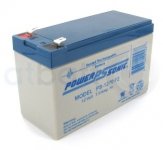
12v Sealed lead acid, its 84 Whr,

Screen shot 2012-10-29 at 1.27.53 PM.jpg

http://www.atbatt.com/product/22257.asp?utm_source=frog&utm_medium=cpc&utm_content=textlink-sealed-lead-acid&utm_campaign=frog1&utm_term=PS-1270-F2&gclid=CPDao9_fprMCFYpFMgodaDsAjQ $23.00 bucks

so that means i can pull 84 watts and in a hour before its dead correct?

so that means if i pull 40 watts then this battery should give me almost 2 hours of use,

i know of situations where i have not had -5v with some computer power supplies and it still works anyways,

sometimes though the serial ports suffer...

i was thinking of getting a 5v and 12v voltage regulator, wiring right to the +5 +12 rails.

if i am thinking about this correctly i can just hook it up and leave it up because the voltage regulator will work in the opposite when its charging????

that way it will not over change when plugged, so all i would need is a supplemental ( battery on/off ) switch.

 
Well, sort of. The W*hr rating depends on the load. The more current you draw, the higher the internal losses and the less total energy you get. Also a 12V nominal battery doesn't provide enough overhead to regulate the 12V rail, especially since the battery is considered "dead" at something like 10.2V.

Lead-acid is really not a good choice for a portable computer. There's a good reason portables started out with NiCd, migrated to NiMH, and finally to Lithium cells. That SLA battery you posted probably weighs 10 lbs and may not even fit inside the machine. All of the above pack a lot more energy into less size and weight than SLA. You really do have to be careful with Li though and use a protection board and intelligent charger. NiMH is readily available, inexpensive, and relatively tolerant of less than ideal conditions.

-5V is easy, you can get an inverting DC-DC converter for a few bucks that will turn +12V into -5V, it may in fact only be used for the serial ports, I don't know.

 
so that means i can pull 84 watts and in a hour before its dead correct?so that means if i pull 40 watts then this battery should give me almost 2 hours of use
Well uh .... theoretically.

One problem with PbA batteries is that deep-discharging tends to kill them dead. It's not recommended to discharge to less than half the capacity, even once, even on those marketed as "deep cycle". So, in practice, you would get one hour at 40 watts, max, and even that is pushing it as far as long-term life of the battery goes.

Overall, given this that and the other, I would recommend NiMHs for DIY.

 
i was thinking of getting a 5v and 12v voltage regulator, wiring right to the +5 +12 rails.
Not recommended in this use case. Regulators dump the excess as heat, thus wasting your expensive battery capacity. DC-DC switchmode converters are a much, much better choice. At a minimal extra cost you get 85-95% conversion efficiency and far less heat inside the box.

 
i have an triplite ups,

Wonder if i can take that apart just use that somehow???????????????????

there should be room in the case with out the HD/SuperDrive, Drive cage.

i love simplicity!

that sealed lead acid battery is 4.5 lbs.

i wonder if i could use NiMH with the UPS board?

I'm wondering if my thoughts are lazy or truly simplicity…

i mean heck i could make a battery pack with D cell NiMH

from harbor freight,

i am thinking 4 (4) packs series/parallel to make 12vdc.

 
*Linear* regulators burn up the excess voltage as heat, switching regulators convert the excess voltage to current. Unless you are dealing with a few tens of milliamps or less, linear regulators are obsolete and much better solutions are available.

http://www.ebay.com/itm/DC-DC-Converter-Buck-Step-Down-Regulator-LM2596-Power-Supply-3-30V-To-1-21-18V-/120962074605?pt=LH_DefaultDomain_0&hash=item1c29e6c7ed

I've used the LM2596 and related parts in many applications and they work very well.

A UPS is nothing more than an inverter with a built in battery and charger, and when it comes to inverters, the ones in inexpensive consumer grade UPS's are lousy. They're intended to run for a few minutes once in a rare while when the power goes out, and usually the batteries are trashed after a few power outages. You'd be lucky to get 20 minutes of run time from a SLA battery that would fit inside a compact Mac if you want to step it up to 120V to feed the power supply.

 
The biggest thing for powering from batteries, is the CRT. How much load is it drawing on the 12v rail? Also a 12v battery would do fine on a 12vrail, using power-factor correction, At the cost of some excess current.

Basically you bring the 12V in, and step it up, say 24v. then step it all back down into various voltages from that point.

the LM series is ok, but its only good for a couple of amps or so. Anything larger, you have to go custom.

Best place to look is ITX power supplies that run from 12v, and produce all the ATX voltages required.

 
Power factor correction doesn't apply to DC. Power factor is the phase relationship between the voltage and current waveforms when driving a reactive load with AC current. When the current waveform leads of lags the voltage waveform, the apparent power that you would calculate with Volts*Amps is higher than the true power being consumed. What you are describing is a boost converter, a DC-DC converter in which the output voltage is higher than the input voltage.

There are few reasons to use a linear regulator anymore for anything more than a few tens of milliamps. This is particularly true in battery applications where every bit of juice counts. The buck converter modules I've been using can be had for less than 3 bucks each and are super easy to use. Connect power in, connect the load, and there's a trimpot on the board that you can dial in the output voltage.

IIRC the monitor in a SE series Mac draws around 1.2A from a 12V supply. There is no regulation in the monitor itself so picture size will vary noticeably with supply voltage, a regulated supply is needed.

 
that sealed lead acid battery is 4.5 lbs.i wonder if i could use NiMH with the UPS board?
NO. Do NOT mix and match battery chemistries and charger technologies. NiMHs and PbAs require *totally* different charging regimes. You will destroy your batteries for sure, possibly your UPS board or your Mac.

The *only* exception to this is that NiMHs and NiCads are similar enough that they can *usually* work in the same charger. LiPos and LiFePos have a similar relationship to each other (*only* to each other, *not* to NiMHs and NiCads) but given their tendency to splode, I would only recommend charging each type in a charger that *is guaranteed* to work with that type (ie, you can get chargers that do both lipo and lifepo).

i mean heck i could make a battery pack with D cell NiMHfrom harbor freight,

i am thinking 4 (4) packs series/parallel to make 12vdc.
Uh....

NiMHs are 1.2V each. Four of them = 4.8V. 16 of = 19.2V. Neither of these is 12V. For 12V, you need ten, in series.

I would suggest either of the following courses of action:

• Use as large a 12V SLA (sealed lead-acid) as you can fit [*] in the Mac, a small MiniITX DC-DC board (and a thingum for -5V if required), and an external, readymade SLA charger (one rated for SLAs, not car batteries)

• Step away from the hack and research moar.

[*] Remember, with the mITX DC board, you can remove the SE/30s original power supply for even more room.

 
IIRC the monitor in a SE series Mac draws around 1.2A from a 12V supply.
Huh. That's surprisingly little tbh. It makes me wonder if replacing it with an LCD would even be worthwhile.

 
Back
Top