"As far as Mac Prototypes go, one of the most glorious I ever saw was the Radius 'SkyLab.' That was the development name for the project we were working on. Radius at that time was an early Mac peripheral manufacturer. We had made a Mac II accelerator called the Radius Rocket.
"The SkyLab was a server with 14 NuBus slots and a power supply so huge you could do arc welding on the side with it. It also had fifteen 3-1/2" drive bays, and four 5-1/4" drive bays (for CD ROMs or optical drives).
"The idea was for it to be a dedicated Image RIPer for graphic houses. It never happened.
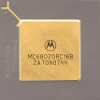
"I was a Radius employee from 1988 to 1997. The SkyLab box was just as I described: power supply, drive bays and slots. The processors were the Radius Rocket Accelerators. Each Radius Rocket contained its own 68040 Processor and six 72-pin SIMM sockets. The concept was that it would operate as a distributed processor. A render farm. Your computer would have a plug-in that would break down your tasks and divide it amongst the Rocket Processors.
"At the Time of development, we didn't have an agreement with Apple. Only after showing SkyLab to Apple did they have us sign a Licensing agreement. (This was before the PowerPC clones.) An interesting result of the licensing agreement allowed us to use the actual Mac ROMs, but we were forbidden to include a boot floppy. Which was fine, since the whole thing ran from a console application anyway. So we had a Mac SE/30 as the console, but it would run with almost any '020 Mac.
"Another stipulation of the agreement was that we could not actually come out and say we were using the Mac ROMs. This was because at the time DayStar Digital and a few others were working on accelerators, and Apple didn't want to look as if they were playing favorites.
"From what I remember it was possible to boot the whole shebang from a floppy, but for fear of God and Apple it was not pursued or ever mentioned ever again. Using the SE/30 or a Mac IIcx, the whole thing was run like a headless server. The ROM issue was handled by us loading the ROM image into RAM. I forget why we did that, but just another aspect of the goofiness."
-by Anonymous Former Radius Engineer