

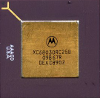
I have been doing bits and pieces of research on some recently acquired hardware. According to this snippet, the RasterOps 24XLI nubus card that I now have bouncing around in a cardboard box once cost $3500. And that $3500 was back in 1991.
Now I know that large screens were cutting edge and the technologies involved were of commercial importance to the burgeoning desktop publishing/ printing industry of the time, but really — $3500? How did the manufacturer get away with it?
The RasterOps 24XLI was, having said that, a rather interesting and obviously high-end video card which supported 24 bit colour on a 20" monitor without further ado, which was quite something back in 1991. The odd thing is that the 24XLI also contained 4 perfectly ordinary 30-pin SIMM slots. So once I get around to firing it up, I'm going to go with 4x 4MB SIMMS for 16MB in a video card from 1991, just to say that I'd done it.
The RAM added can apparently be used either for "Gworlds" use, which nubus video card aficianados will know all about — or, much more eccentrically ... for a RAM disk!
Why the latter functionality on a video card, do you suppose?
Now I know that large screens were cutting edge and the technologies involved were of commercial importance to the burgeoning desktop publishing/ printing industry of the time, but really — $3500? How did the manufacturer get away with it?
The RasterOps 24XLI was, having said that, a rather interesting and obviously high-end video card which supported 24 bit colour on a 20" monitor without further ado, which was quite something back in 1991. The odd thing is that the 24XLI also contained 4 perfectly ordinary 30-pin SIMM slots. So once I get around to firing it up, I'm going to go with 4x 4MB SIMMS for 16MB in a video card from 1991, just to say that I'd done it.
The RAM added can apparently be used either for "Gworlds" use, which nubus video card aficianados will know all about — or, much more eccentrically ... for a RAM disk!
Why the latter functionality on a video card, do you suppose?








