
-
 Hello Guest! We're hosting a challenge to welcome vintage Intel macs to the MLA during the month of July! See this thread for more information.
 -
We've made some quality of life improvements to the Trading Post. More info here.
You are using an out of date browser. It may not display this or other websites correctly.
You should upgrade or use an alternative browser.
You should upgrade or use an alternative browser.
Macintosh Classic chessboard screen
- Thread starter saturizer
- Start date



Just checked the voltage from the analog board.Yeah in order the UH6, UG6 and VR1, in particular the VR1/LM751 looks pretty bad. I don't believe the classic has a public schematic.
+12V and -12V — 22,5V
+12V and ground — 11V
+5V and ground — 4V
So, what components on the analog board could cause lower voltage? I can replace all the capacitors left, but it would be much better to know the reason.
I would like to know what this VR1 thing is, cause if it's somehow related to video, than probably it's the reason of my problem, although that guy with the same problem got all those microchips in perfect condition with no corrosion at all...


How does it look like or is it somehow signed on the analog board? Is there a way to test it to know it's corrupted for sure?the opto oscillator is an issue with those 230v AB, for some reason.


its opto-isolator, but only thing you can do is change it.
Okay, but I still don't have any idea of how it looks like. Is it possible to replace it or is it this machine specific?its opto-isolator, but only thing you can do is change it.

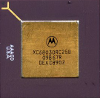
Okay, but can I somehow test this component, to know for sure it has to be replaced? I wish to know it for sure, cause I have to order this chip with delivery within up to 3 weeks, so if the reason is not the opto-isolator, I'd waste pretty much time waiting for the replacement parts...
opto-isolators cannot be easily tested. they have to be replaced.
the opto oscillator is an issue with those 230v AB, for some reason.
its opto-isolator, but only thing you can do is change it.
So, guys, I've finally got those chips (had to buy 35 of them and wait for several weeks), changed it, but everything is the same — perfect black and white rectangles. What's next?
without troubleshooting the feedback circuitry in the power supply, theres no way to know why the voltages are low.
Double check and make sure your 5V has risen to 5V, or if its still stuck at 4V.
Double check and make sure your 5V has risen to 5V, or if its still stuck at 4V.
I have little experience in repairing such a complex electrical devices, can you give me a few hints?without troubleshooting the feedback circuitry in the power supply, theres no way to know why the voltages are low.
Double check and make sure your 5V has risen to 5V, or if its still stuck at 4V.
I've also replaced QP2 / IRFBC40 (mosfet), but still the same thing. I guess I'll replace every component on the analog board eventually...
The voltage is still low.
Unfortunately that response scares me.
It sounds to me you just dont have the necessary troubleshooting skills to figure out exactly what the problem is, and "throwing parts at it" MAY fix it, but it MAY not. and it will get expensive.
My advice is to plan on shipping the analog board off to someone who is knowledgeable at electronics repair to fix it.
It sounds to me you just dont have the necessary troubleshooting skills to figure out exactly what the problem is, and "throwing parts at it" MAY fix it, but it MAY not. and it will get expensive.
My advice is to plan on shipping the analog board off to someone who is knowledgeable at electronics repair to fix it.
Ditto.
I hate to see somebody try to learn electronics (and especially soldering) on a classic machine, because the risk of damaging something more-or-less irreplaceable is so high.
Which is not to say that I think that you should be afraid of electronics - you just need to learn more from experience; so if you are interested in it, for soldering get some e-waste PCBs and use that as sacrificial guinea pigs; and for electronics troubleshooting skills in general, build some kits and mess around with how they go together (i.e, test out partial circuits to see how they work). There's lots of info on the internet for this stuff - especially youtube videos.
But for the machine that you have; I would send it to somebody who knows what they are doing.
Also; I should probably also mention that the Analog Board and CRT have very high voltage on them (in the many thousands of volts range) that persists after AC power is removed; care must be used to prevent a nasty or even fatal shock as well as to avoid breaking the fragile neck of the CRT (there's more info on procedures for this online, also).

I hate to see somebody try to learn electronics (and especially soldering) on a classic machine, because the risk of damaging something more-or-less irreplaceable is so high.
Which is not to say that I think that you should be afraid of electronics - you just need to learn more from experience; so if you are interested in it, for soldering get some e-waste PCBs and use that as sacrificial guinea pigs; and for electronics troubleshooting skills in general, build some kits and mess around with how they go together (i.e, test out partial circuits to see how they work). There's lots of info on the internet for this stuff - especially youtube videos.
But for the machine that you have; I would send it to somebody who knows what they are doing.
Also; I should probably also mention that the Analog Board and CRT have very high voltage on them (in the many thousands of volts range) that persists after AC power is removed; care must be used to prevent a nasty or even fatal shock as well as to avoid breaking the fragile neck of the CRT (there's more info on procedures for this online, also).
Well, there is a problem — I'm in Russia, not sure that I would be able to find someone who repairs obsolete Apple computers. And shipping to US and back is too expansive. I think that this particular problem could be caused only by certain components' failure, unfortunately nobody knows these computers well enough to detect what's going wrong. So far I simply searched the web for the similar problem and replaced the mentioned components. I replace a component only if it was mentioned as a reason for a chessboard display problem and I'm sure it would work sooner or later.Unfortunately that response scares me.
It sounds to me you just dont have the necessary troubleshooting skills to figure out exactly what the problem is, and "throwing parts at it" MAY fix it, but it MAY not. and it will get expensive.
My advice is to plan on shipping the analog board off to someone who is knowledgeable at electronics repair to fix it.
I'm in Russia, there are no specialists who repair obsolete Apple computers here, even finding a RAM for old iMac is a problem. If in US/EU there are at least hundreds of people collecting old computers, then in Russia there might be dozens or less. Shipping to US and back is too expansive (I could simply buy a working Classic instead), I don't know why, but recently shipping prices became weird. I know basic things about electricity, don't worry about me or my Classic, I'm pretty good with soldering, I always check the polarity and other stuff. The problem is that nobody knows this stuff for sure, beyond the leaking caps it is always a guess. If the name of the component were erased nobody can tell what it was. And as I said before, the number of the components on the board is finite and only a fraction of it could cause this particular problem, so I hope to solve the problem sooner or laterDitto.
I hate to see somebody try to learn electronics (and especially soldering) on a classic machine, because the risk of damaging something more-or-less irreplaceable is so high.
Which is not to say that I think that you should be afraid of electronics - you just need to learn more from experience; so if you are interested in it, for soldering get some e-waste PCBs and use that as sacrificial guinea pigs; and for electronics troubleshooting skills in general, build some kits and mess around with how they go together (i.e, test out partial circuits to see how they work). There's lots of info on the internet for this stuff - especially youtube videos.
But for the machine that you have; I would send it to somebody who knows what they are doing.
Also; I should probably also mention that the Analog Board and CRT have very high voltage on them (in the many thousands of volts range) that persists after AC power is removed; care must be used to prevent a nasty or even fatal shock as well as to avoid breaking the fragile neck of the CRT (there's more info on procedures for this online, also).
How do you know there isnt anyone else in Russia? Russia is a huge country and there HAS to be someone out there that is an electronics repair tech, and even a plus if they are into vintage machines.
There has to be someone...
There has to be someone...
Similar threads
- Replies
- 4
- Views
- 209


- Replies
- 2
- Views
- 150

