jmacz journey

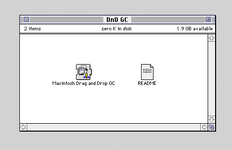
Created a system extension that resolves screen artifact issues when using Apple's 8 * 24 GC video card with drag and drop on System 7.1 or System 7.5+. Issue was described in this thread:


Will play with it for a while before uploading to Macintosh Garden.

Screenshot.png
 

Attachments

I have been trying to reduce my collection and sold a few of them recently. But having issues reducing further. For the following 11 machines, if you could only keep 5 of them, which would you let go?
  1. Macintosh SE - full memory, has a working miniscribe hard disk
  2. Macintosh SE/30 - full memory, 47MHz 030 Booster and color LCD kit from ZZJ, internal magneto optical drive, Bolle's combo card for ethernet
  3. Macintosh IIci - full memory, has a daystar 50MHz 030 accelerator, ethernet card, many supermac video cards to choose from
  4. Macintosh IIfx - full memory, ZZJ's NuCF compact flash drive, 8 * 24 GC, ethernet, another 8 * 24
  5. Macintosh Quadra 700 - full memory, running at 50MHz with Bolle's quad doubler
  6. Macintosh Quadra 800 - full memory, overclocked to 40MHz
  7. PowerBook 540c - full memory, overclocked to 40MHz, has a full 68040 processor (ie. FPU), working batteries
  8. PowerBook Duo 280c - full memory, has a full 68040 processor (ie. FPU), working batteries
  9. Power Macintosh 8500 - 1GB of memory, 500MHz Newertech processor card upgrade
  10. Macintosh Quadra 950 - full memory, having issues with the SCSI subsystem right now though.. needs to be fixed
  11. Macintosh 512K - stock
I don't think I can cut anything...

If it were me, I could cut you down to three and then bring you back up to five.

Mac SE/30 — Your build is absolutely top tier compact Mac and a manifestation of the “how far can we take it?” camp of vintage computing.

PowerBook Duo 280c — Sub notebook before sub notebooks were even a thing. Take your full ‘040, memory maxed Duo and match it with a Duo Dock, M1212 Color monitor, and the gen1 Apple extended keyboard, and you’ve got a supreme setup the would make anyone in the 1994 know absolutely drool.

Quadra 700 — Yeah, sure it’s basically a IIci turned on its side, but somehow so much aesthetically more. Being topped out as it is, this would be a fantastic A/UX machine.

So I’ve got you down to three machines. Now what? Well, how about a couple of curves to bring you to that five machine goal:

Macintosh Portable — Esoteric classic, exhibiting perfect Snow White design language. With its 640x400 display, possible 9Mb RAM, internal hard drive and 16 MHz (!!!) 68000, it probably what the Plus could have been given no budget constraints. And it’s “portable”!

UMax SuperMac SuperMac S900 250/DP — Gives you a clone era machine in your collection that is arguably a better than the PowerMac 9600. Dual 604e CPUs! Up to 1Gb RAM! (In 1997!) 6 PCI slots mean unlimited (lol) expansion possibilities. Maybe a RAID card with striped 10,000 rpm scsi drives? Dual monitors on a Twin Turbo card? Absolutely 90s aesthetics. The very end of old-school Macintosh before the Jobs era. A testament to what might have been had clones really been allowed to innovate.

 
Quadra 700 — Yeah, sure it’s basically a IIci turned on its side, but somehow so much aesthetically more. Being topped out as it is, this would be a fantastic A/UX machine.

Man, I couldn’t agree more. The IIci case as-presented is the ugliest computer case Apple ever designed (IMHO). Just by turning it into a minitower for the 700, it becomes awesome.
 
Not by a long shot. You could call it utilitarian or uninspiring, but it’s not ugly. The LC500 Series and Molar Mac (G3 AIO) wins that award.

I agree, the IIci design fits pretty well with the design of the big box IIs and SE/30. It was all looking like a very coherent line of powerful computers implementing the same design. That said, beauty is very subjective.

UMax SuperMac SuperMac S900 250/DP — Gives you a clone era machine in your collection that is arguably a better than the PowerMac 9600. Dual 604e CPUs! Up to 1Gb RAM! (In 1997!)

@jmacz 's 8500 has a fast G3 CPU and 1GB RAM (in 1995!). I believe the 8500 is highly underrated because of it's reputation of being hard to work in (which is arguable), having too much brittle plastics to deal with (which I agree), and I also believe because of coming from an era where Apple was pretty down and didn't promote its high end products correctly. Next to that, the 8500 is also a powerful early Power Mac, able to run from System 7 up to OSX, with a pretty compact form factor, still being one of the most upgradable Mac relative to it's year of release. One of my favorite Mac anyway! ;)
 
it's reputation of being hard to work in
They are, anytime you want to work on the motherboard you have to disconnect all the internal cables, remove all the expansion cards and then awkwardly slide it out, fighting with clips and hooks as you go.
 
Last edited:
They are, anytime you want to work on the motherboard you have to disconnect all the cables, remove all the expansion cards and then awkwardly slide it out, fighting with clips and hooks as you go.
I agree it can be a pain when you want to manipulate the RAM (which you don't do that often when it's maxed out). However, you don't have to go through this process to access the PCI or processor ports. The plastics retaining the PCI cards are a pain though and I agree this is deffinitely a bad design.

Now, when it comes to removing the motherboard away from the machine, I actually find it quite convenient on my 9500 as there is no tab retaining the board onto the chassis like there would be on an LC or a II. Not saying that it is the most conviennent but I guess I got used to it with time and I find it pretty easy to do.
 
I agree it can be a pain when you want to manipulate the RAM (which you don't do that often when it's maxed out). However, you don't have to go through this process to access the PCI or processor ports. The plastics retaining the PCI cards are a pain though and I agree this is deffinitely a bad design.

Now, when it comes to removing the motherboard away from the machine, I actually find it quite convenient on my 9500 as there is no tab retaining the board onto the chassis like there would be on an LC or a II. Not saying that it is the most conviennent but I guess I got used to it with time and I find it pretty easy to do.

My point of reference is the Quadra 840AV so maybe they improved some aspects of the case design by the time the 8500 came out.
 
I have been using and loving my 9500 for the last 27 years (mainly for graphics design). I am so used to it, I cannot be objective anyway! 😅
 
Macintosh Portable — Esoteric classic, exhibiting perfect Snow White design language. With its 640x400 display, possible 9Mb RAM, internal hard drive and 16 MHz (!!!) 68000, it probably what the Plus could have been given no budget constraints. And it’s “portable”!

I have to admit I have been eyeballing the Portable... the only thing that holds me back is tunnel vision.

My point of reference is the Quadra 840AV so maybe they improved some aspects of the case design by the time the 8500 came out.

My 8500 was very brittle, just like the 800/840AV. The design is very similar. That said, my 8500 is holding up after some epoxy, etc. Having used it to work on the 8 * 24 GC patch recently, I think I may have gotten addicted to the speed (for IDE large source code windows) that it's probably going to be a keeper :) that plus I'm running it at 1600x1200 on an LCD which helps for software development too.
 
Back
Top