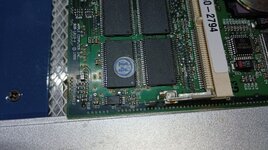
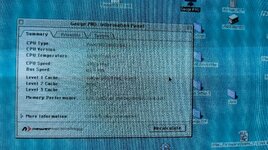
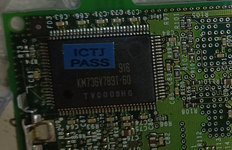
Is the cache at 3.3v on those boards? The pins and solder joints are exposed on the QFP parts so a soldering iron might work better than an oven for repairing the connections.
That was actually with a soldering iron, I don't actually own a soldering oven (only my Aixun T3A station and Atten hot air station).
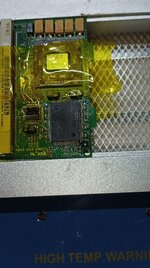
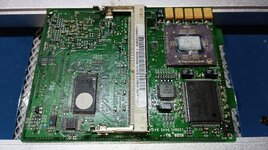
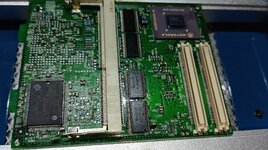
I removed it, and found quite a lot of cruddy traces and vias under the ICs (photos here, first set of six are under the cache IC next to the CPU, second set of six are under the cache IC on the other side of the board).
I scraped it all off, tinned the exposed copper, and reinstalled the cache ICs.
That didn't help, but knowing that the crud under the ICs was worse on the CPU side, I did a bit of a Hail Mary and reflowed the CPU with the hot air station and board preheater.
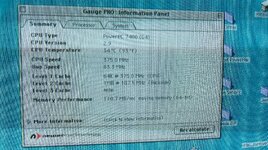
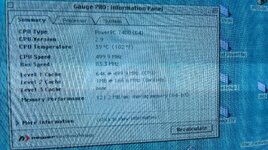
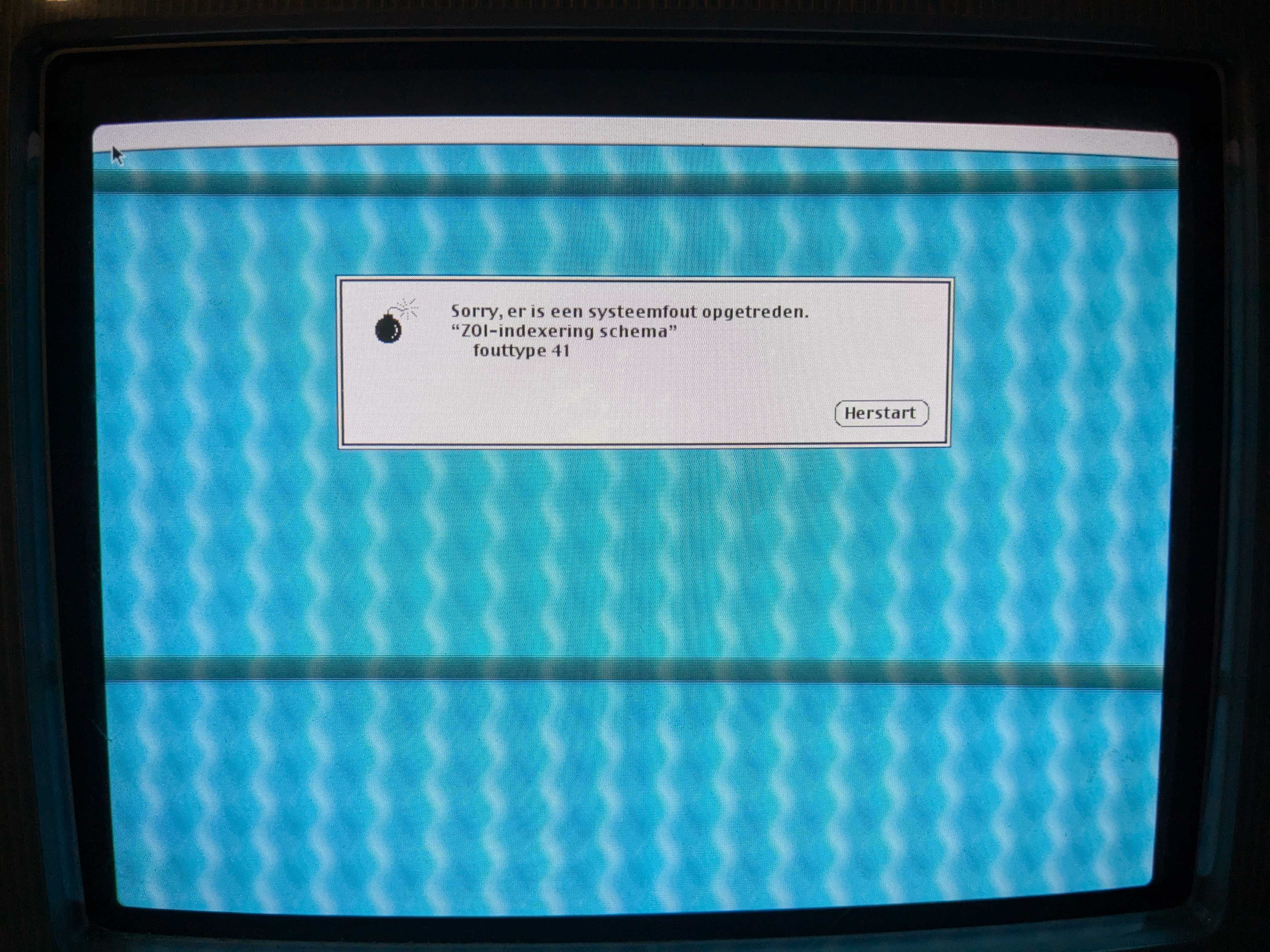
That did actually improve the situation somewhat, as the system will now actually attempt to boot, but it crashes to Error 41 when OS 9 tries to start Finder (in Dutch as the old OS 9 install on this is set to that).
That is true even with all extensions (and thus MAChSpeed Control) disabled and swapping in different RAM SODIMMs, but it at least supports the theory of crud under the CPU or in the solder ball joints causing stability problems.
Reballing might fix the issue entirely, as well as cleaning under the chip, but it would be sad as this chip has .89mm solder balls, which I wouldn't be able to replicate, so it'd get rid of the "factory finish" these XLR8 cards have.