So, in spite of a
few setbacks, I'm thinking now about how I'm going to get everything out the back of the box.
When the LC sized logic board is slid (slided?) all the way to the front of the case, there is about two inches left between the ports and the holes in the back of the case for the (very differently located) Classic II ports.
I'm thinking that I can solve two problems at once by making a little < 2" wide card that moves all the ports over to their correct places on the back of the case. I could (I hope) then position the Ethernet jack behind the now pointless external floppy hole, and make a VGA header or upward-facing VGA plug to send the video up to the innards of the 9" mono monitor.
My other option is carving a big rectangle all the way across the back of the Classic II's port holes for access to the ports, and having a video cable that reenters the case in an ugly fashion. I have seen people make little boards for other projects (there was a particularly well done mini in a Plus mod with what I'm talking about), but have never done such a thing myself.
So what I want is a 813/16" x 2" (223mm x 50mm) board with the correct SCSI, Serial, ADB, and audio ports (probably cannibalized off of the Classic II's dead logic board), in the correct Classic II positions on one 813/16" edge, with either headers & custom cabling, or the opposite gender of the same ports in the LC positions on the other edge. I'm thinking headers and custom cabling is more in my ballpark, since I'd have to source male serial and ADB ports, which would be... difficult. Maybe a combo, with the fairly big and central SCSI actually having a male DB-25 that screws in (providing mechanical support as a bonus), and everything else headers with spliced cables to simplify the routing.
How does one begin the process? I know I'll need to make a parts list and do some very precise measuring. Is there an app? Is there a guy I should ask to do it for er... help me?
I'm hoping one of the accomplished soldering-iron wielders around here will be able to assemble it for me, because I am more likely to end up in the emergency room than end up with a useful product if I try to solder it myself.






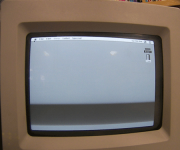
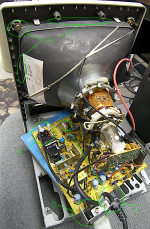
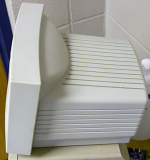
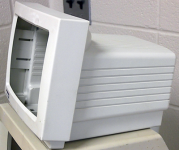
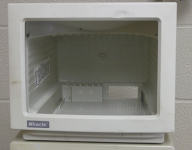
 ;D
;D