FIND] Original Lisa 1 (Twiggy) from Apple Engineer’s estate – French AZERTY unit

Hi everyone,

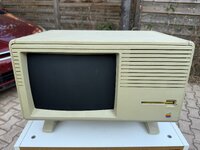
I’m reaching out to this community to share and get advice on a very special machine. I recently recovered my father’s Apple Lisa 1 from 1983. He was an engineer at Apple France, and this machine was part of his personal collection.

The Specs:

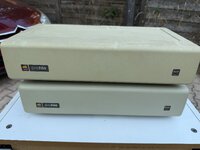
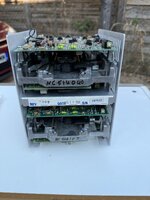
* Original Twiggy setup: Dual 5.25" drives (dated July 11, 1983) with the correct Lisa 1 bezel and State ROM (341-0138).

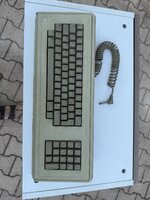
* Localization: Fully French AZERTY model, including the "Tall-boy" mouse.

* Extensions: Includes a Parallel Interface card (A6BB101) and an external Apple ProFile hard drive.

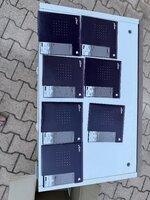
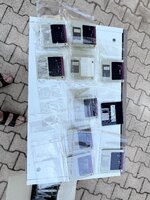
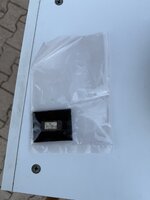
* Software: A complete library in French on both original Twiggy disks and 3.5" disks (Lisa Office System).

Current Condition:

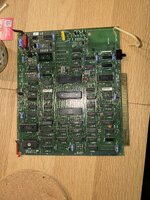
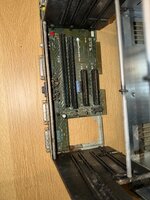
The machine was working perfectly when last stored about 15 years ago. I recently pulled the cards and noticed some battery leakage on the I/O board (near R29-R33). I have already removed the NiCad batteries and performed a preliminary neutralization with white vinegar to stop the acid. The CPU and RAM boards look very clean.

I would love your expert feedback on the following:

* Assessment: Based on the photos, what do you think of the general state of conservation, especially the I/O board?

* Preservation: What are your top recommendations for storing or cleaning it further to prevent any more damage?

* The "To Sell or Not to Sell" dilemma: Given its rarity (Twiggy + AZERTY + Engineer provenance), does it make sense to have it professionally restored before a sale, or is it better to sell it "as-is" to a collector who wants to do the work themselves?

* Restoration: Who would you recommend for high-end restoration for a machine of this caliber?

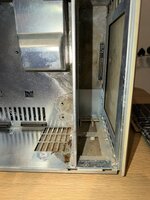
I’ve attached some photos of the boards, the Twiggy drives, and the software. Looking forward to your insights!

Best regards,

Stephane.
 

Attachments

  • IMG_0405.jpeg
    IMG_0405.jpeg
    2.3 MB · Views: 27
  • IMG_0408.jpeg
    IMG_0408.jpeg
    3.5 MB · Views: 28
  • IMG_0411.jpeg
    IMG_0411.jpeg
    3.2 MB · Views: 29
  • IMG_0398.jpeg
    IMG_0398.jpeg
    2.8 MB · Views: 27
  • IMG_0391.jpeg
    IMG_0391.jpeg
    2 MB · Views: 28
  • IMG_0390.jpeg
    IMG_0390.jpeg
    3 MB · Views: 26
  • IMG_0394.jpeg
    IMG_0394.jpeg
    1.5 MB · Views: 25
  • IMG_0432.jpeg
    IMG_0432.jpeg
    2.4 MB · Views: 27
  • IMG_0431.jpeg
    IMG_0431.jpeg
    1.8 MB · Views: 25
  • IMG_0429.jpeg
    IMG_0429.jpeg
    2 MB · Views: 26
Congratulations on your rare find! You have had some very good luck, although if this was part of settling your father's affairs (as you've said "was") then my condolences.

I am not so certain of how to advise about preparing this computer for sale. Treating the corrosion damage was a good thing to do, but a fair amount of cleaning will remain. The motherboard and I/O boards look distressed but recoverable at a glance, but they will be a project. Whether you undertake this yourself should depend on your assessment of your own skills and the equipment you have to hand. That said, none of the logic boards you need to fix are uniquely and distinctively Lisa 1 boards: they are basically the same boards as what you find in a Lisa 2/5. It would be preferable if you could restore these boards skillfully and with a minimum of cosmetic damage, but they are not as irreplaceable as your Twiggy drives.

You may wish to look around for the Lisa 1 front faceplate, which you will need if you want to fit your Twiggy drives and close up the front of the machine. These faceplates are worth quite a lot in their own right, if you are considering selling the system.

The Twiggy drives are the most collectable single component, with drive cage pairs like yours fetching high prices by themselves even without verification of their function. Naturally you should look after those. An operating computer would be necessary to tell if they work, of course.

From a hardware perspective, the only aspect of this Lisa that is uniquely French is the keyboard. Everything else is the same as it would be in any market (EXCEPT for the power supply; see note in follow-up post). What the Lisa would do on boot is query the keyboard for its language: if it said it was a French keyboard, then the system would know that it should be French. If you swapped in an American keyboard and used American software, then the machine would give no hint of once being French.

The software is another story. So far as I know (although I could well be wrong), there is NO archived copy of version 1 of the French-localised Office System (as found on your Twiggy disks, version 1.1F). It would be a service to archive these disks onto modern media. I would be happy to help you with this. I live in the UK and have the equipment to read the disks, though like many Twiggies they have likely degraded somewhat in the past 43-or-so years. If you are in North America I can put you in touch with someone there who has done a lot of archival work himself.

You may wish to save the contents of your father's hard drives. As he was an Apple engineer, there may additionally be details of the Lisa story on the drives as well, if you were interested in sharing those. I am happy to help you out with this, too.

The ROM IC is the I/O ROM for operating the Lisa with the Twiggy drives fitted; it will have been replaced with the ROM that is currently on your I/O board in order to support the 3.5" drive. Some resistors will also need to be restored to the I/O board if you wish to revert this Lisa to being a Lisa 1.

Returning to your keyboard: the foam-and-foil key pads in its Key Tronic-supplied mechanism will have largely perished by now. You will need to source some replacements, for which most people go to TexElec. Though you can fabricate them yourself if you wish.

I can't really speak to preservation and reconditioning of the metal frame: it's not something I've ever had to do. It is probably advisable, but if I stumbled across this computer I would consider that a "get round to it" item while fixing the electronics would be my top priority.

I hope this is helpful. There is always more to say, but for now, congratulations again on your find.
 
Last edited:
Important addendum, as I incorrectly indicated that there is no hardware distinction between this machine and an American (or other market) Lisa except for the keyboard: I forgot about the power supply!

Do not attempt to plug your French Lisa into an American wall outlet --- your Lisa wants 220-240 VAC, not American 115 VAC.

If you need to plug your Lisa into the 115 VAC mains, it is possible to adapt your power supply to this, but it will not be ready for that out of the box.
 
That may be so, and I suspect it is, but I'm also mindful that this post will turn up in web searches for people who may be in different situations.

Also, something closer to "American style" mains voltage turns up in places you wouldn't necessarily expect. Here in the UK we have 230 VAC mains but you wouldn't be too "hard pressed" to find 110 VAC: it's used at most construction sites.

It's also what all of my Lisas and Lisa equipment use, since I moved here from the USA. There is a fair amount of imported equipment here in general and many households will have a step-down transformer for one reason or another.
 
Bonjour Stephane,

The damage is not too bad but will need quite some work, I know few close people on Paris that have already repaired multiple Lisa if you need, I myself would love help too, I’m based in Lyon.

Most important thing is preserving the software it will ensure the computer will still be usable in the future and archiving the software will help others in the community. We’ll also be able to help you on that matter.

In the end it’s up to you, repairing it before selling it may just attract different people, and if you don’t sell it for sentimental reasons, repairing it is still worth it.

N’hésitez pas à me faire signe, que ça soit pour la restauration, la préservation ou la vente.
 
Congratulations on your rare find! You have had some very good luck, although if this was part of settling your father's affairs (as you've said "was") then my condolences.

I am not so certain of how to advise about preparing this computer for sale. Treating the corrosion damage was a good thing to do, but a fair amount of cleaning will remain. The motherboard and I/O boards look distressed but recoverable at a glance, but they will be a project. Whether you undertake this yourself should depend on your assessment of your own skills and the equipment you have to hand. That said, none of the logic boards you need to fix are uniquely and distinctively Lisa 1 boards: they are basically the same boards as what you find in a Lisa 2/5. It would be preferable if you could restore these boards skillfully and with a minimum of cosmetic damage, but they are not as irreplaceable as your Twiggy drives.

You may wish to look around for the Lisa 1 front faceplate, which you will need if you want to fit your Twiggy drives and close up the front of the machine. These faceplates are worth quite a lot in their own right, if you are considering selling the system.

The Twiggy drives are the most collectable single component, with drive cage pairs like yours fetching high prices by themselves even without verification of their function. Naturally you should look after those. An operating computer would be necessary to tell if they work, of course.

From a hardware perspective, the only aspect of this Lisa that is uniquely French is the keyboard. Everything else is the same as it would be in any market (EXCEPT for the power supply; see note in follow-up post). What the Lisa would do on boot is query the keyboard for its language: if it said it was a French keyboard, then the system would know that it should be French. If you swapped in an American keyboard and used American software, then the machine would give no hint of once being French.

The software is another story. So far as I know (although I could well be wrong), there is NO archived copy of version 1 of the French-localised Office System (as found on your Twiggy disks, version 1.1F). It would be a service to archive these disks onto modern media. I would be happy to help you with this. I live in the UK and have the equipment to read the disks, though like many Twiggies they have likely degraded somewhat in the past 43-or-so years. If you are in North America I can put you in touch with someone there who has done a lot of archival work himself.

You may wish to save the contents of your father's hard drives. As he was an Apple engineer, there may additionally be details of the Lisa story on the drives as well, if you were interested in sharing those. I am happy to help you out with this, too.

The ROM IC is the I/O ROM for operating the Lisa with the Twiggy drives fitted; it will have been replaced with the ROM that is currently on your I/O board in order to support the 3.5" drive. Some resistors will also need to be restored to the I/O board if you wish to revert this Lisa to being a Lisa 1.

Returning to your keyboard: the foam-and-foil key pads in its Key Tronic-supplied mechanism will have largely perished by now. You will need to source some replacements, for which most people go to TexElec. Though you can fabricate them yourself if you wish.

I can't really speak to preservation and reconditioning of the metal frame: it's not something I've ever had to do. It is probably advisable, but if I stumbled across this computer I would consider that a "get round to it" item while fixing the electronics would be my top priority.

I hope this is helpful. There is always more to say, but for now, congratulations again on your find.
Thank you so much for such a passionate and incredibly thorough response. To answer your kind words, my father passed away about 15 years ago. He worked at Apple from 1986 to 2008. Although he bought this Lisa second-hand in the early 90s, it was a centerpiece of his collection. We cleared out the family home a few months ago, and I recovered his entire collection, which includes quite a few gems like this one.

Regarding the hardware, I do have the original Lisa 1 front faceplate. As for the disks, I honestly have no idea if they still work; they weren't stored in ideal conditions. I can provide detailed photos of them if you'd like to see their physical state.

I also have no idea what’s on the hard drives, but I remember that around 2010, the Lisa and both ProFiles were still booting and functional. I am quite curious to see what’s inside them as well.

I am indeed located in France, using our good old 220V power.

I haven't dared to plug the machine back in yet. I prefer to explore my options first. For now, I have cleaned the battery leakage as much as possible and I am letting the boards dry in a clean, dry place.

I’m looking forward to hearing more of your thoughts on the best way to preserve or archive this history.
 
Bonjour Stephane,

The damage is not too bad but will need quite some work, I know few close people on Paris that have already repaired multiple Lisa if you need, I myself would love help too, I’m based in Lyon.

Most important thing is preserving the software it will ensure the computer will still be usable in the future and archiving the software will help others in the community. We’ll also be able to help you on that matter.

In the end it’s up to you, repairing it before selling it may just attract different people, and if you don’t sell it for sentimental reasons, repairing it is still worth it.

N’hésitez pas à me faire signe, que ça soit pour la restauration, la préservation ou la vente.
Et bonjour,
Thank you very much for your message. It is a great relief to know that there are experts and enthusiasts so close to home.

To give you more details on my location, I am based in Toulouse. While it's a bit of a drive to Lyon or Paris, being in France definitely makes the logistics of inspecting the boards and archiving the disks much safer and easier.

As you and others have pointed out, I realize now that preserving the software is the absolute priority.

Regarding the sale, I am still weighing my options. J’avais aucun idée de la valeur qui ça avait pour être honnête.

Merci pour le message.
 
Bonjour également,

Stepleton will help you for sure, probably knowing Lisas inside and out, he also has several machines, equipment and connections.

Yes, I think the first step is to get this French system archived.

A Lisa 1 with the original faceplate and Twiggy drives is very sought after… worldwide, not only in France or Europe.
So expect a great amount of money for it.

The decision to keep it or not is only yours.

À bientôt
 
I am not surprised to hear that this machine was the centrepiece of a collection! It certainly is for mine.

Choosing not to power it on right away is wise, and not only owing to the condition of the logic boards. While the power supply is not known to be particularly unreliable, it will likely have a number of RIFA safety capacitors inside, which at their age will probably fail not long after plugging the power supply into the mains. This failure is not likely to do much permanent damage to your machine, but they will generate a lot of foul smoke and leave a mess inside the PSU itself. These will need to be replaced, but as repairs go, it is not so difficult. Note that the Lisa power supply has a standby voltage rail that generates +5V whenever the Lisa is plugged in; in other words, the Lisa does not have to be on in order for the capacitors to fail.

For the rest of this post I will describe some aspects of recovering some of the data on your disks, just to give you an idea of what involved.

The ProFile hard drives are (usually) relatively easy to recover, and it's fair odds that yours may just work. Their power supplies may also have RIFA caps inside (I forget, to be honest), but there is potentially some logic in just YOLOing it if you are only going to try and attempt a recovery. (I would still take a peek inside the PSU and replace any RIFAs I saw there, or at a minimum, remove them.)

The hard drive mechanism is appreciated for being relatively robust. When you do turn it on the drive for the first time after a long idle period, it may make quite a lot of groaning and squealing noise, but this tends to subside as lubricant warms and redistributes through the spindle bearing (or so we assume). It's good to find a YouTube video of a ProFile drive being turned on if you can: you'll see what an ordinary power-up and self-test looks like (the READY light will blink for a couple of minutes before going solid on) and be able to compare what you see.

Assuming it powers on all right, then the easiest way to recover the drives is to use an ESProFile hard drive emulator in diagnostic mode. These devices are inexpensive and will also serve as a modern replacement for a hard drive once your Lisa is running. For now, you will be able to connect it to the ProFile and to your computer, where you use a terminal program to download the entire drive contents via XModem (via option C, Backup Entire Drive). Once you have secured this file, your drive is backed up and you can do with your ProFile as you like (though it pays to confirm that the backup worked by examining the drive image's contents somehow).

Your Twiggy disks are not so easy to recover. With the exception of some provisional experiments with more conventional disk drives by the makers of the modern AppleSauce disk controller, the only devices that are capable of reading Twiggy disks are Twiggy drives. Therefore you will either need to get your own Lisa working to read them, or you will need to send the disks to someone else who has a Lisa 1.

All Twiggies these days are archived with a Lisa program called BLU. This program reads the entire disk into memory, sector-by-sector and track-by-track. Once loaded, it sends the data to a modern computer over a serial cable, again via XModem. Reading a disk in is a tense time, not only because it takes a while but also because the drives were/are notoriously unreliable, and the sound itself (of the drive gradually speeding up the rotation speed of the disk as it moves from track to track) amplifies the tension.

I mentioned the problem of Twiggy media degradation. Here is an example of what you may find if you take a good look at your disks:


With the media completely removed from the disk jacket, what you'd see might look like this (apologies for the blurry photo, and the scary knife you see was used to open the disk jacket):


That disk had never been used before --- also, both those photos are over a decade old (and things will not have improved since)! The issue appears to be the chemistry Apple used for its Twiggies, which degrades over time, particularly at places on the disk that are more exposed to air. This compromises the integrity of the media, and if sufficiently advanced, bits of the data could literally be scraped away! The good news is that data is still being recovered today from disks that look like these, albeit with persistence, technique, and a bit of luck. The disks in the images above were themselves successfully read (the media outside of the disk jacket went on to become this disk image).

As mentioned, there are Lisa owners out there who would be happy to attempt to recover data from the Twiggies if you don't wish to wait and attempt it yourself. The most prolific recoverer lately is a person in the USA, and no matter who does the recovery, it may be wise to seek his advice. It's what I would do if the task were left with me. Naturally, disk recovery technique is the kind of thing people have long debates over --- I'm firmly in "camp cyclomethicone" and would never allow isopropanol to touch a disk of mine. The final say is yours in the end.

Anyway, that's about all I can think to say about disk archiving at the moment. I hope this is helpful.

As a final thought, you may wish to join us on LisaList2 in order to get in touch with more Lisa folks and to ask further questions about your own machine.
 
Whoops, I've left out your 3.5" disks! These are important to save too, but here there are many more options available. Basically any Mac that can read 400K and 800K disks will be able to archive those, provided they are in working condition. Important: be certain to use Disk Copy 4.2 (preferable) or perhaps DART to archive the disks --- do not use Disk Copy 6, as this software does not save some essential metadata from the disk (called "tag bytes") in its disk images.
 
Back
Top