Hi everyone,
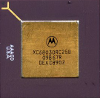
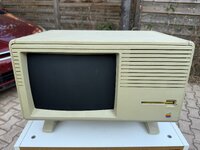
I’m reaching out to this community to share and get advice on a very special machine. I recently recovered my father’s Apple Lisa 1 from 1983. He was an engineer at Apple France, and this machine was part of his personal collection.
The Specs:
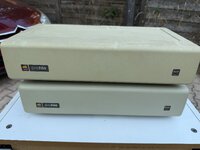
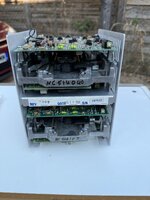
* Original Twiggy setup: Dual 5.25" drives (dated July 11, 1983) with the correct Lisa 1 bezel and State ROM (341-0138).
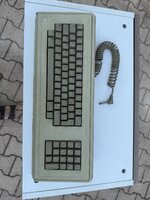
* Localization: Fully French AZERTY model, including the "Tall-boy" mouse.
* Extensions: Includes a Parallel Interface card (A6BB101) and an external Apple ProFile hard drive.
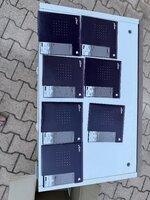
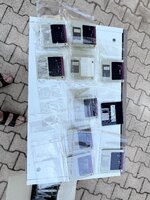
* Software: A complete library in French on both original Twiggy disks and 3.5" disks (Lisa Office System).
Current Condition:
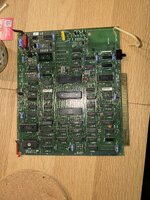
The machine was working perfectly when last stored about 15 years ago. I recently pulled the cards and noticed some battery leakage on the I/O board (near R29-R33). I have already removed the NiCad batteries and performed a preliminary neutralization with white vinegar to stop the acid. The CPU and RAM boards look very clean.
I would love your expert feedback on the following:
* Assessment: Based on the photos, what do you think of the general state of conservation, especially the I/O board?
* Preservation: What are your top recommendations for storing or cleaning it further to prevent any more damage?
* The "To Sell or Not to Sell" dilemma: Given its rarity (Twiggy + AZERTY + Engineer provenance), does it make sense to have it professionally restored before a sale, or is it better to sell it "as-is" to a collector who wants to do the work themselves?
* Restoration: Who would you recommend for high-end restoration for a machine of this caliber?
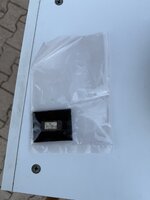
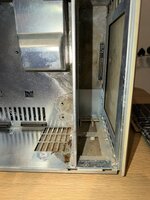
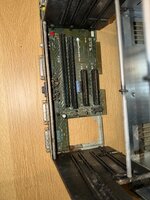
I’ve attached some photos of the boards, the Twiggy drives, and the software. Looking forward to your insights!
Best regards,
Stephane.
I’m reaching out to this community to share and get advice on a very special machine. I recently recovered my father’s Apple Lisa 1 from 1983. He was an engineer at Apple France, and this machine was part of his personal collection.
The Specs:
* Original Twiggy setup: Dual 5.25" drives (dated July 11, 1983) with the correct Lisa 1 bezel and State ROM (341-0138).
* Localization: Fully French AZERTY model, including the "Tall-boy" mouse.
* Extensions: Includes a Parallel Interface card (A6BB101) and an external Apple ProFile hard drive.
* Software: A complete library in French on both original Twiggy disks and 3.5" disks (Lisa Office System).
Current Condition:
The machine was working perfectly when last stored about 15 years ago. I recently pulled the cards and noticed some battery leakage on the I/O board (near R29-R33). I have already removed the NiCad batteries and performed a preliminary neutralization with white vinegar to stop the acid. The CPU and RAM boards look very clean.
I would love your expert feedback on the following:
* Assessment: Based on the photos, what do you think of the general state of conservation, especially the I/O board?
* Preservation: What are your top recommendations for storing or cleaning it further to prevent any more damage?
* The "To Sell or Not to Sell" dilemma: Given its rarity (Twiggy + AZERTY + Engineer provenance), does it make sense to have it professionally restored before a sale, or is it better to sell it "as-is" to a collector who wants to do the work themselves?
* Restoration: Who would you recommend for high-end restoration for a machine of this caliber?
I’ve attached some photos of the boards, the Twiggy drives, and the software. Looking forward to your insights!
Best regards,
Stephane.
Attachments
-
 IMG_0405.jpeg2.3 MB · Views: 50
 -
 IMG_0408.jpeg3.5 MB · Views: 50
 -
 IMG_0411.jpeg3.2 MB · Views: 52
 -
 IMG_0398.jpeg2.8 MB · Views: 51
 -
 IMG_0391.jpeg2 MB · Views: 52
 -
 IMG_0390.jpeg3 MB · Views: 49
 -
 IMG_0394.jpeg1.5 MB · Views: 47
 -
 IMG_0432.jpeg2.4 MB · Views: 48
 -
 IMG_0431.jpeg1.8 MB · Views: 46
 -
 IMG_0429.jpeg2 MB · Views: 46