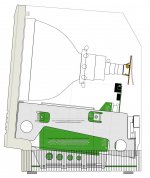
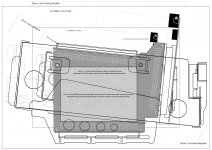
Cool! Thanks for the assist, knocked together a low profile display version. 50MHz puts out a lotta RFI anyway, but there's still a passthru if needed.
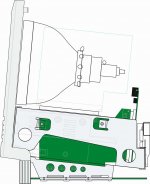
.
.



Exactly, that's Bolle's DiiMO style PowerCache Adapter with a fourth connector grafted onto it ass. IF we can get this up and running that will provide networking for those without Asante NICs or the like, but are lucky enough to have an accelerator or are planning to source one. Might as well get all that done on one card. Especially for folks uncomfortable with the Idea of doing the wrong angle hack on an expensive SE/30/IIsi NIC.I assume one pass-through is for video and another for cache/processor upgrade?
 ]
]

 ]
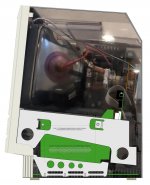
] 
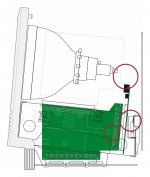
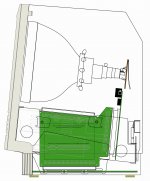 ) might be overall . . . not very. But the CRT Neck Board and LC NIC are set in a worst case approximation. The physical mockup will tell that tale. It's better to keep them on different planes on purpose, matching planes with a bobbleheaded Neck Board is a losing proposition.
 ]
]
 ]
]
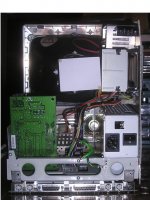
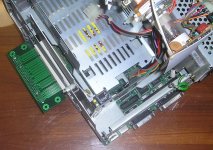
Wow! Very cool to see how it would. I have to be honest, it looks amazing. Can't wait to see what's next. Nice work!
] The only thing I see changing would be to cant the passthru connector back to match the DiiMO adapter angle to keep full size cards parallel to the front bezel and clear of the CRT. But that's a very minor thing far beyond the scope of my prototyping for fitment.