• Hello MLAers! We've re-enabled auto-approval for accounts. If you are still waiting on account approval, please check this thread for more information.

Duo Dock Strange Boot Icon (Picture)

jmacz

68020
I have a functional Duo Dock (it's the original with optional FPU, and replaced top cover to allow for the newer Duos like my 280c). It has no hard drive inside (no cable is plugged in). I do have a 3com Etherlink III nubus card installed (which works).

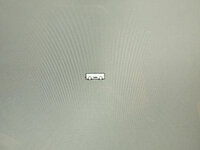
When I insert my Duo 280c and power up, I see this screen:
IMG_9630.JPG

Note it's animated - it has an arrow that appears/disappears pointing down at the iconic representation of the Duo dock. It's stuck on this screen for 10 seconds after which I get the happy Mac icon, followed by the Welcome to Macintosh screen, and then it properly boots up.

I haven't been able to find anything in the manuals about this nor have I found anything on the Internet. Not even sure what search terms to use.

Things I've thought of and checked:

a.) Lid off - the arrow looked like it was pointing at the lid so I checked to see if there's any type of lid sensor but I can't find any, and it does boot after 10 seconds.

b.) Startup device - thought it might be waiting to boot from the duo dock HD (which I don't have installed) so after booting I opened the 'Startup Disk' control panel but it was properly set to the Duo's internal hard drive (ZuluSCSI).

c.) PRAM? - I tried zapping the PRAM but that didn't help. Note that I do have a working PRAM battery installed (this is a brand new battery).

d.) Floppy? - @Fizzbinn was curious whether it was pointing out the floppy drive on the Duo dock. The floppy drive is working properly. To test whether it might be waiting for the floppy, while it was on this icon, I inserted a floppy disk but didn't boot or even attempt to read it... it was paused for 10 seconds on this screen, and then when it continues, it reads the floppy and boots from it.

e.) Security lock - thought it might be something about the security lock but the lock is unlocked right now, and I don't have a key to lock it.

Anyone have any idea what this is?
 
I don’t, but I do think that the “floppy location” icons are part of the ROM on (all?) Old World systems. There’s a Finder hack to allow these pointing icons to show up instead of the generic floppy disk icons in System 6. (I‘ve done this on my dual-floppy LC).

It seems like this is showing up where a flashing question mark might be? That is to say, there are two things going on:

1) An attempt to boot (or at least read from) the floppy disk, before it gives up and boots from the hard drive. Even if your Startup Disk is set correctly, the presence of a disk in the drive would trigger at least an attempt to read it. A broken disk presence sensor perhaps?

2) The fact that this icon is not a normal floppy/question mark/x mark, but is instead a hardware-specific icon. I wonder if either your dock or Duo has a prototype or early ROM?
 
Hmm, the interesting thing is that inserting a floppy later does detect (for both boot and later in the finder) so if it was a faulty disk sensor, I would think it should show issues later where it thinks there’s a disk but there’s not?

The thing I need to check is whether perhaps it’s some issue with ZuluScsi compatibility where with the duo dock, the Zulu stalls and thus the floppy icon shows up, but then it recovers 10 seconds later and boots.

I need to check the Zulu scsi logs but that means taking apart the laptop again to access the sd card and I get worried about the plastics each time I do that.
 
If this is an equivalent to the blinking floppy icon, it could be that the ZuluSCSI is taking a few seconds to start up. My BlueSCSI V2s take a little extra time to get themselves "ready" before they boot. Maybe not 10 seconds, but enough that I do get the floppy icon for a couple seconds before it boots.
 
Yeah, that's probably it. I can also try disconnecting the Zulu and see what icon shows up for how long, and then try the floppy test again.
 
Some more interesting observations.

Icon is related to SCSI, not the floppy - I disconnected the ZuluSCSI and I no longer get that icon, I get the usual question mark floppy icon. That suggests this icon is related to SCSI devices.

Time for Zulu to get ready - the Zulu is ready to go super quick according to the log but just to test out the readiness theory, I configured the InitPreDelay setting to 3 seconds. That did not change anything. The log shows it waited 3 seconds before initializing the SCSI subsystem. All this says is that the Zulu isn't going too early... I can't really test whether it's going too late but I would guess that the Zulu would be ready faster than a physical SCSI disk so I don't think it's that.

External ZuluSCSI drive (no internal Duo drive or internal Dock drive) - with just an external SCSI device, it boots without this icon showing up. Hmm...

Internal ZuluSCSI Dock Drive (no internal Duo drive) - with just an internal SCSI device inside the Dock, it boots without this icon showing up. Hmm...

Internal ZuluSCSI Duo Drive and Internal ZuluSCSI Dock Drive - I get the strange icon again and stalls for 10 seconds before it boots from the duo drive.

Internal ZuluSCSI Duo Drive and Internal ZuluSCSI Dock Drive with Boot Preference to Dock Drive - Still get the strange icon again and stalls for 10 seconds before it boots from the dock drive.

Internal ZuluSCSI Duo Drive (no internal Dock drive) - I get the strange icon again and stalls for 10 seconds before it boots from the duo drive. This is the scenario I've been having issues with.

Internal PHYSICAL SCSI Duo Drive (no internal Dock drive) - no delay and no icon, boots after a few seconds.


At this point it seems like it's specific to the ZuluSCSI being used inside the Duo (ZuluSCSI inside the dock is fine). One observation I noticed is that with the physical SCSI drive (spinning), I don't hear the drive power up until after the gray screen appears with cursor and then the hard drive spins up. So the power on for the drive occurs later, it's not delivering power immediately after the duo/dock is turned on.

Some timing related issue is happening here with the ZuluSCSI when used as the internal Duo drive, which clears after 10 seconds.
 
Played with a bunch of the configurable settings but nothing seems to help. Don't have the cycles to debug this right now and 10 seconds isn't a big deal so going to leave it for now.
 
You may have seen this already, but any details of interest on page 11 (Hard disks) in the following user's guide?
download.info.apple.com/Apple_Support_Area/Manuals/powerbooks/0307136APBDUODOCUG.PDF
 
Last edited:
Does your Duo have a good clock battery?

What happens if you re-set the startup disk in the startup disk control panel, and then reboot?

Some machines will display a question mark if the PRAM doesn’t have a valid boot device set, but will boot after a moment.

Edit: that icon is a normal part of the rom, btw. My dock shows the same.
 
Last edited:
Does your Duo have a good clock battery?
Am I right in remembering you also need a working battery in the Duo for the clock battery to work correctly? As in it won’t charge the clock battery if the main battery doesn’t register anymore?
 
Does your Duo have a good clock battery?

Yup. Brand new one that I made using new Panasonic cells. It’s working.

What happens if you re-set the startup disk in the startup disk control panel, and then reboot?

Didn’t help. Tried this as my first step and then tried it again in my last post.

Am I right in remembering you also need a working battery in the Duo for the clock battery to work correctly? As in it won’t charge the clock battery if the main battery doesn’t register anymore?

Yeah, I think that’s right. But I have a working rebuilt main battery as well and my PRAM battery is brand new and charged.

Edit: that icon is a normal part of the rom, btw. My dock shows the same.

Does your dock show that every boot? and if so, are using a replacement scsi drive or a physical spinning scsi drive (ie stock)?

I only see it with a scsi emulator like the zuluscsi as I mentioned. Don’t see it with the stock hard disk.
 
do you have a scsi2sd you could try? configured with the drive identifiers that drive setup/ hd sc setup like.
 
do you have a scsi2sd you could try? configured with the drive identifiers that drive setup/ hd sc setup like.

Unfortunately, I don't. I only have ZuluSCSI devices.

Also read a blurb about ensuring the driver is updated on the disk so I ran an update of the disk driver with HD Setup and that also didn't help.

Note that I don't see this issue when I'm using the Duo standalone with the same ZuluSCSI inside. It's only when I am using the Duo inside the Duo Dock where I see this icon and the 10 second delay. So it's not like the Duo doesn't like the ZuluSCSI. It's just that with the ZuluSCSI as the internal Duo drive, it shows this icon like it's notifying you that the internal drive is being used instead of another... but I have no drive inside the Duo Dock so not sure why it's showing me this icon. And also why do I not see it when I'm using a spinning disk inside my Duo instead.

And is this all inside the ROM of the Duo itself? Or does the dock itself do something at startup before handing off to the Duo? It could easily intercept the video to display this icon. I mention this because like I posted earlier, when using a spinning disk, the disk spins up late. This icon looks like a different code path and once finished, it clears, and then it continues with the normal boot.

Again, not a big deal, it's 10 seconds.. but just a curiosity thing at this point.
 
Perhaps the difference has to do with there being two SCSI controllers when docked. The one on the Duo logic board apparently is only used for its internal hard disk, the Duo Dock has a separate "external" SCSI controller. When docked it seems there is more going on in the ROM routines (augmented by the dock's declaration ROM) to support this and perhaps some timing issue is being hit?

From the Macintosh Duo System hardware developer note, page 81:
SCSI Manager
The external SCSI bus is implemented like that on the Macintosh Quadra 900. The only difference is that the PowerBook Duo uses a C80, and the Macintosh Quadra a C96 SCSI chip.

From the Macintosh Quadra 900 hardware developer note, page 11:
SCSI controller ICs
In the Macintosh Quadra 900 computer, the SCSI bus is divided into internal and external buses, each controlled by its own IC. Both ICs are NCR 53C96 devices.
The internal and external SCSI buses are logically connected but electrically separate. The external bus is electrically isolated from the internal bus so that changes in external cabling and termination have no effect on the performance of the internal SCSI devices.

and page 49:
Support for SCSI controllers
The ROM software supports the dual SCSI bus design using the NCR 53C96. Because the same ROM code will be used in future models that do not use those ICs, and because of the changes needed to support the dual SCSI bus, the ROM software that supports the SCSI Manager is a separate module addressed by a vector that is set up at startup time.
♦ Note: Even though there are two SCSI buses, there is only one set of SCSI ID numbers. That is, for compatibility with existing applications, the total number of SCSI devices is still only seven.
 
I need to take more advantage of @3lectr1cPPC's vast library of documents. I keep forgetting to check the developer notes.

Thanks for sharing @Fizzbinn. Should have realized that a lot of stuff is off boarded from the Duo logic board. Unrelated, but looks like even the mini dock has its own scsi controller.

Looks like I need to add another thing to my backlog of todos: dump the Duo ROM as well as the dock's decl ROM, and see what condition triggers the icon.

EDIT: rom dump of duo dock is available already: https://68kmla.org/bb/index.php?threads/calling-all-roms-collecting-declrom-data.46056/post-555217

EDIT2: and I already had the 280c ROM dumped. So just need to find time to read through the code.
 
Last edited:
correct. there's no SCSI signals on the rear PDS connector... it's just PDS. any SCSI adapter will contain a second controller.
 
Back
Top