
-
Hello MLAers! We've re-enabled auto-approval for accounts. If you are still waiting on account approval, please check this thread for more information.
You are using an out of date browser. It may not display this or other websites correctly.
You should upgrade or use an alternative browser.
You should upgrade or use an alternative browser.
Duo 2300c - Battery rebuilds?
- Thread starter LaPorta
- Start date




The 2300c would have originally shipped with a type 3 battery, these use 1.2V 4/5A 1600 mAH cells and they are not super easy to find, from my research I have heard of people who used 2/3A cells of the same voltage/capacity successfully. I am still trying to figure out how to recell mine, I have one battery for my 270c that was repacked by the previous owner and that works well but the one in my 2300c is in dire need of a recell. let me know if you find anything that works.
So, from my limited research of NiMH technology larger capacity cells don’t really give you better run time due to the way the batteries charge and the larger capacity cells will degrade from the way that the Duo charge cycles it’s batteriesI will. If anything, I would wonder if 1.2V 4/5A battery cells of other kinds with higher mAH rating would be helpful.
Last edited by a moderator:
the thing is neither do I, I know sutekh made a lithium conversion for a duo battery, ill find the forum post and link it hereIs there any way to adapt modern cells to be used inside there? I know nothing of electrical engineering.

Interesting. Did you ever figure out your low-battery warning glitch? The original power adapter connected to the Duo will charge this inside the machine?
It's an artifact of the boost converter I installed to combat the Duo's low voltage cutoff @ 11vdc. Without it and under load, that'd leave ~50% of a 3S pack's usable capacity inaccessible unfortunately. I meddled around with the PRAM values and it doesn't appear LVC is adjustable--probably hard-coded into the ROM. I haven't yet bothered trying to build a step-up converter that scales the output according to the cell voltage, but may circle back to that at some point. I'm not generally doing anything on these 'ol 68Ks that would result a great tragedy if it were to suddenly power off though, so kinda low on the list ATM amidst other priorities. It's kinda like riding a motorcycle without a gas gauge. Just keep track of how long you've been riding

Last edited by a moderator:
I want to see if someone can make AAs or AAAs work, the rechargeable ones are NiMH and the same voltage and capacity of the original cells, so technically it should work

I know that this has been discussed elsewhere before, but not sure for Duo batteries.
[
 ]
]
A lot of my research came from that thread, however a lot of the solutions outlined there were either inconclusive, expensive or relatively short lived, I am still searching for better alternative, but nonetheless a good link and at least I can find that thread without searching for it now.

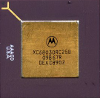
I can’t remember what cells I used when I did the duo battery years ago, but if I am not mistaken, it was simply tabbed NiMh AAs. I soldered them together myself, which turned out to be a mistake, as the heat damages the cells (it was my first attempt, followed closely by a 540c battery). The proper way is a quick, more or less instantaneous weld. Unless you have the equipment, it’s unrealistic to think you can do this yourself. So buying battery packs that are already made up and making minimal modifications by adding the fuses etc to duplicate what you find in the battery once opened seems to me the way to go, as has been suggested. That’s how I would go about it today. It’s what I’ve done more recently with an eMate, for instance, and that works well.
Counterintuitively, low capacity cells are better to use in such applications than high; they’ll be a) cheaper, and b) more closely matched to the originals. There weren’t 2500ma AA cells in the 90s.
Counterintuitively, low capacity cells are better to use in such applications than high; they’ll be a) cheaper, and b) more closely matched to the originals. There weren’t 2500ma AA cells in the 90s.
plus the preassembled packs with not have heat damage from soldering, Is there a specific regular care routine for NiMH batteries that extends their life?I can’t remember what cells I used when I did the duo battery years ago, but if I am not mistaken, it was simply tabbed NiMh AAs. I soldered them together myself, which turned out to be a mistake, as the heat damages the cells (it was my first attempt, followed closely by a 540c battery). The proper way is a quick, more or less instantaneous weld. Unless you have the equipment, it’s unrealistic to think you can do this yourself. So buying battery packs that are already made up and making minimal modifications by adding the fuses etc to duplicate what you find in the battery once opened seems to me the way to go, as has been suggested. That’s how I would go about it today. It’s what I’ve done more recently with an eMate, for instance, and that works well.
Counterintuitively, low capacity cells are better to use in such applications than high; they’ll be a) cheaper, and b) more closely matched to the originals. There weren’t 2500ma AA cells in the 90s.
Tabs require spot welding, soldering is a no-no. If using higher capacity cells than those in the Duo packs, they won't charge any more fully than the originals, yielding the same performance. It's the little electronic bits inside the packs limiting charging level. The electronics in the High Capacity BTI Packs are made for fully charging cells up to higher limits inside the Duos.
If you want to forgo in-Duo charging, you can use about anything that gives you the required voltage on the output tabs. Remove the charging Tabs or installing diodes so power flows only into the Duo, but blocks the Duo from charging the hybrid pack may work?
I'm trying to remember a similar situation: the 5300 had NiMH packs. The 3400 came out with a physically compatible, higher capacity LiIon pack that some used in the 5300? Couldn't charge them in the 5300, you needed an external 3400 charger if I'm remembering correctly? Dunno, that's what's rattling around somewhere in my head ATM.
That pack looks handy, but are you thinking of setting a pair up for in-Duo charging?
If you want to forgo in-Duo charging, you can use about anything that gives you the required voltage on the output tabs. Remove the charging Tabs or installing diodes so power flows only into the Duo, but blocks the Duo from charging the hybrid pack may work?
I'm trying to remember a similar situation: the 5300 had NiMH packs. The 3400 came out with a physically compatible, higher capacity LiIon pack that some used in the 5300? Couldn't charge them in the 5300, you needed an external 3400 charger if I'm remembering correctly? Dunno, that's what's rattling around somewhere in my head ATM.
That pack looks handy, but are you thinking of setting a pair up for in-Duo charging?
I am yes, It seems that the barrel connector could be snipped and the pack could be wired into the original battery housing, I don't see much that would stand in the way of this working, however I have a very knowledge of electrical engineeringTabs require spot welding, soldering is a no-no. If using higher capacity cells than those in the Duo packs, they won't charge any more fully than the originals, yielding the same performance. It's the little electronic bits inside the packs limiting charging level. The electronics in the High Capacity BTI Packs are made for fully charging cells up to higher limits inside the Duos.
If you want to forgo in-Duo charging, you can use about anything that gives you the required voltage on the output tabs. Remove the charging Tabs or installing diodes so power flows only into the Duo, but blocks the Duo from charging the hybrid pack may work?
I'm trying to remember a similar situation: the 5300 had NiMH packs. The 3400 came out with a physically compatible, higher capacity LiIon pack that some used in the 5300? Couldn't charge them in the 5300, you needed an external 3400 charger if I'm remembering correctly? Dunno, that's what's rattling around somewhere in my head ATM.
That pack looks handy, but are you thinking of setting a pair up for in-Duo charging?
You and I both lack that kind of expertise. However, I'd check the old thread to see if the locations of the Duo bat's charging bits fit between those very handy barrel connector wires! If not, and external charger could work out?
I'm not quite sure what you mean by fit between but the dimensions seem correct and it would certainly be easy to wire up, I might pull the trigger on a packYou and I both lack that kind of expertise. However, I'd check the old thread to see if the locations of the Duo bat's charging bits fit between those very handy barrel connector wires! If not, and external charger could work out?
Similar threads

- Replies
- 11
- Views
- 4K

- Replies
- 77
- Views
- 12K


- Replies
- 16
- Views
- 3K

