DayStar PowerCard 601 and upgrading the L2 Cache to 1MB?

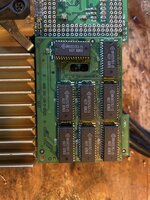
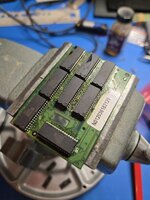
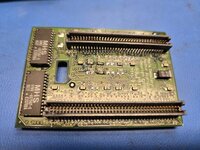
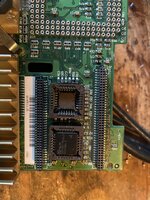
So I was looking at the L2 cache card and noticed that it had 32 pads for each chip, but was using only 28 of them for 32x8 (256k).

The original chip on there is: https://www.datasheetarchive.com/pd...516765643adf153033d176e&type=O&term=KM68257BJ x8

Looking at the pads, I see they are all connected (except pin 1 which is NC) and do match for example 128kx8 (1mb) :


Where as CE2 is suppose to be high (which is the original VCC for the 256k chip, so that's fine). All of the other pins are actually connected to each other and going to the connector.

Seeing how there is no 32 pin 256k chip afaik, maybe they were planning on upgrading the cache later own the road?

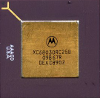
I actually tried replacing all of them with the 128kx8 chips an of course got the death gong. So my guess is the GAL at the bottom is controlling it some how? Luckily the gal itself was unlocked, so I dumped it. I have attached the gal. (Btw I'm aware the MC88915TFN133 isn't there, I just took it out)

Any thoughts?
 

Attachments

  • Photo May 29, 6 13 02 PM.jpg
    Photo May 29, 6 13 02 PM.jpg
    2 MB · Views: 74
  • Photo May 29, 6 12 56 PM.jpg
    Photo May 29, 6 12 56 PM.jpg
    1.9 MB · Views: 75
  • u21-daystar.zip
    u21-daystar.zip
    977 bytes · Views: 9
I am thinking of trying this same upgrade! Ha! Even ordered the same 128Kx8 chips.

My GAL chip isn't socketed but I did notice that there are some R positions underneath the cache board with 0 ohm resistors across them. I'm guessing that the cache chip has to have a jumper setting change to make the GAL know what to do. There aren't a lot of available pins on those GAL so it must handle only address and control lines.

These aren't fast-page or anything like that so it shouldn't matter but it should be noted that the row/column address lines do move around a bit between the 32k and 128k chips.

It's also possible that they built the cache card with the plans to do a 1MB option but never actually implemented it in the GAL.

Do you still have the cache card with 1MB on it or did you revert back to 256k?
 
That will 100% be the path I take. The new cache chips are in and will be swapped out, possibly end of the month. Gotta see when I get the courage to do it!

I also now have a set of soldering tweezers so swapping the 0-ohm resistors will be a cinch. Last bit of research I need to do is make sure that the address lines do, in fact, lead back to the cache controller. It's unlikely but possible that they don't as this board was never even advertised with a 1MB option.

Best I can tell there are 5 pairs for the resistor settings. That means, at most, 31 different configs to try.
 
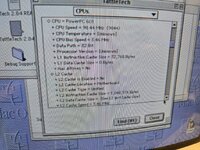
Tried the chip swap and, surprisingly, didn't even get the death gong?

I also tried every combination of resistors I could on the bottom and got zero out of the machine.

@hyperneogeo you are certain you got a death gong out of it?
 
SUCCESS!!!

So, on the older non-Daystar branded 66MHz models they didn't run the highest 2 address lines correctly. When you add the cache chips that utilize those pads you end up with weird stuff like address lines connected to input-only GAL pins and one of them doesn't go anywhere on the actual PowerCard.

If, however, you find yourself in possession of a Daystar branded version from later they did appear to run the lines correctly and with just a few resistor changes underneath after the swap it works a charm. Thanks to a fellow user here I got my hands on the 100MHz version of the card and got the 1MB memory swap done.
20251113_083356.jpg
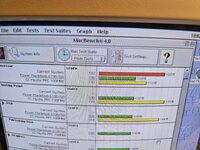
It won't let me overclock to 133MHz anymore with this done but it is about 50 points faster with 1MB than it was with the card at 133MHz which was 146 so whatever. I'm going to try soft475 and see if I can get any more speed out of it but haven't managed that yet. There are unpopulated decoupling parts underneath that I might try to fill in and see if it helps.
20251113_083226.jpg
20251111_112747.jpg20251113_082945.jpg
Those are the chips I used but they appear to be restricted availability now.

So yeah, it works! I apparently also need to go back and re-solder those quick resistor moves I made...

The benchmark does paint what I feel would be an accurate picture too. It's much snappier and Diablo is up to very passable frame rates where even with 133MHz it didn't.
 
It was just the settings resistors on the bottom. Two of them connect to the two unused address lines on the tag ram and the third one tells the power card that it is a 1MB module instead of a 256K.

Isn't the turbo 601 already 1MB?
 
It was just the settings resistors on the bottom. Two of them connect to the two unused address lines on the tag ram and the third one tells the power card that it is a 1MB module instead of a 256K.

Isn't the turbo 601 already 1MB?
Figured as much. The size config resistor for the 601 worry me a little as that'll be rather nonobvious on the Turbo 601. To answer your question though every one I've seen has had 256K onboard, rather obvious to tell since there's the free pads next to the SRAM.
 
Back
Top