Follow along with the video below to see how to install our site as a web app on your home screen.
Note: This feature may not be available in some browsers.
Hello MLAers! We've re-enabled auto-approval for accounts. If you are still waiting on account approval, please check this thread for more information.
Add like 10-100nF caps from TxD+ to GND (serial) and TxD- to GND (serial). Don't see why that wouldn't work, unless the PIC power consumption is > 1 mA
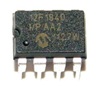
So, a few iterations later, I have some firmware for the PIC12F1501 that's about as densely packed as I can get it. Besides generating the clock and both RxD+ and RxD- (so no RS422 IC is required), it does 2x oversampling and has a 512-position lookup table that can be selected by a jumper or switch, which can be used to apply a function to the samples before they're sent to the Mac.
Having done that, I've just realized that the PIC16F1704 (datasheet) has dual op amps built in. @demik if the characteristics of the op amps are acceptable, we might be able to make this a one-chip solution, possibly even with stereo support...
I wrote some firmware this morning for the 1704, it uses a fixed-length loop that gets the clock in the ballpark (359.2 kHz, says the scope) if not as accurate as the 1501 with its NCO. Like the 1501 firmware, it also does 2x oversampling and has a LUT in case some manner of compensation is necessary for the internal op amps - plus it supports stereo and can probably work unmodified on the 1703, the 1704's smaller sibling that cuts out some unneeded hardware. It'd be really cool to get this to be a workable one-chip solution, with only external passives and connectors necessary.
A device for sound input (over the serial port) that predates the introduction of native sound input capability on Macs, capable of delivering 8-bit samples at 22 kHz.
This site uses cookies to help personalise content, tailor your experience and to keep you logged in if you register.
By continuing to use this site, you are consenting to our use of cookies.