• Hello MLAers! We've re-enabled auto-approval for accounts. If you are still waiting on account approval, please check this thread for more information.

Artetech Intermedia Disk Controller - what's that?

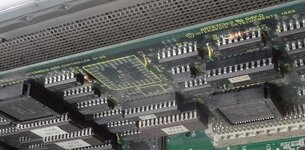
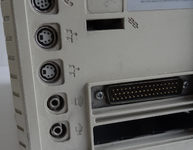
I just saw a Quadra 700 auction on eBay Germany and the unit contains a SCSI card. But I have not found a lot about. It has a DB50 external connector and no internal connector at all. That would hint at a fast-SCSI 10mb/sec interface...

Does anyone have more infos?
 

Attachments

  • Artetech Intermedia.jpg
    Artetech Intermedia.jpg
    132.7 KB · Views: 28
You'll need a better look at the card to identify the chip set. From there you can stare at datasheets and get an idea of what this card can do
 
I've never heard of it, but this is somehow related. The card in the picture also has ARTETCH-2 on the silkscreen and the eeprom stickers are the same style.

The author seems to like sharing information and there is an email address on the home page...

Edit: This seems to be the same guy, in case the email address is defunct: https://uk.linkedin.com/in/michael-cotgrove-a5a8ba11
 
Last edited:
Unfortunately, no way to see more. It was an eBay auction 😉

any chance of a link to the auction? that photo doesn't show the connector, and that's important because:


Oh that site is very useful, tells us exactly what's going on here, I suspect. The "disk controller board" on that page is a floppy controller board for data interchange for typesetting bureaux, see: https://www.cnwrecovery.co.uk/intermedia/imformats.pdf

While the photo is too blurry to see chip numbers, the card on that site does not have a 50-pin connector but a 34-pin connector, which is pretty diagnostic of shugart-style floppy interfaces. Two possibilities for the mac card: either OP mis-saw and it was actually 34 not 50 pins (easy to do, I've done it myself), or it is a 50 pin connector and it's for 8" floppy drives.

What do people think?


Attachments

  • Bildschirmfoto 2025-08-03 um 13.02.08.png
    Bildschirmfoto 2025-08-03 um 13.02.08.png
    1.4 MB · Views: 9
I wonder what value a 1989 Nubus Controller for 8" floppies had for a Quadra 700 when even the venerable Apple II from a decade earlier already used 5.25" floppies

I'd recommend reading the website that @lobust linked, which contains quite a lot of the history of the company. This was apparently a product for design/print bureaux, to allow them to deal with text and floppy disks from all the weird computers and word processors that their authors might be using. If you read the link I posted earlier to the list of formats that the PC version of what is probably this card supports, you will note a number of 8" formats, and I don't know why that would be surprising at this time? Think of it like a proto-greaseweazle, or something.

That website mentions that the thing that plugged into the card, at least the version they're discussing, was a box with multiple drives in it, which might also account for the larger number of pins. Either way, all evidence points away from this being a SCSI card.
 
It is an InterMedia floppy disk controller board for the Mac. This version was called InterMac and developed largely by request of Linotype. They wished to sell their software based on the Mac, but with the ability to read older style floppy disks of both 5.25" and 3.5". The controller board would read the Apple DOS 3.2 and DOS 3.3 5.25" GCR disks. Similar boards were developed for PC, PS/2 and early on (pre 1987) S100 Bus.

It has nothing to do with SCSI

The connector at the back is 50 way and went to a flat 50 way ribbon cable. The cable was based on the 50 way 8" disk interface, but with changes to that it could be used with drives of any size, within an InterMedia case. Thus could include 8", 3" and even the Apple super drive to handle the 800KB variable speed 3.5" GCR disks reliably. However, the controller board could read many Apple 3.5" GCR disks reasonably reliably, but with at times raised error rate.

The software was written with a CommonView library so code was 99% in common with the main Windows version. Care was taken within the code as the Motorola and Intel use different Endian for storing numbers. The final code was made fully compatible with both platforms

 
Back
Top