• Hello MLAers! We've re-enabled auto-approval for accounts. If you are still waiting on account approval, please check this thread for more information.

Another 25 Years?

Mac128

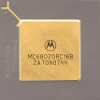
68020
We all know the aging early Compacts are prone to leaky capacitors which are all guaranteed to fail and need replacing as they near the quarter century mark. Indeed that is one expected future repair that is likely never to be problematic, especially if one has the necessary soldering skills.

But what about the chips? While the analogue board is mostly off-the-shelf parts, not likely to become unavailable anytime soon (or at least a suitable replacement), the digital board seems a more worrisome item.

Do the IC chips have a specific lifespan? How long can they be expected to last in functional order? When or if they do fail, will they be easily replaceable? Particularly problematic are the custom ICs like the ROM & IWM.

As I ponder these details I am left with the overall thought: will these vintage compacts last another 25 years?

 
yes, I was thinking about this ... and the best idea was that selling this working computers NOW, would make only sence. :p

 
I think someone will start making replacement analog boards someday for those with limited solder skills. Sort of like how they make parts that can be used for other old equipment (cars, record players, etc).

The chips, well, I don't know. I keep a few extra mobos on hand just in case.

 
Motorola rates their microprocessors at a lifespan of 10 years at 105 degrees C. Since most people don't run their computers 24/7, let alone at a constant workload, I think it's safe to say that they'll last a while. Old chips like those used in the original Mac may last for much longer, as they're cool-running and relatively simple, especially when compared with a Pentium 4.

 
there must be ways of storing the digital boards in such a way that the y can literally last "forever". If they're store in a temperature of let's say 20 degrees in a vacuum, wouldn't that preserve them?

 
What, me worry?

Slowly, slowly, the charge on the floating gates of the EPROM (SE/30 Video ROM) is leaking away. A backup of the ROM contents would be good. A very small fraction of devices would fail in the 20 year design life originally targeted by Intel (described in Electronics, Aug 14, 1980, pp 132-141).

The metal vapor deposits inside the blown fuse area of the PALs can react with trace moisture and electric fields to regrow back a blown bit.

The plating on the sockets is porous, and chlorine and other reactive chemicals reaching the base metal can cause an insulating mushroom shaped corrosion product to grow out thru the pores and lift the socket spring contact away from the DIP IC lead.

The molded plastic IC encapsulant material, although much improved over the earlier materials of the 1970's, still is slightly permeable to water vapor. This in itself is not a problem unless the penetrating water vapor combines with trapped contaminants at the die surface at a vulnerable spot like metallization or oxide cracks, where corrosion will proceed.

The molded encapsulant has the leadframe, die and wirebonds in compression. With each thermal cycle associated with both ordinary use and with adverse storage conditions, the cyclic mechanical stress can cause crack propagation, eventually causing leakage paths for contaminants along the leadframe, lifted wirebonds, and cracks in the die and die attach propagating inwards from the scribe lines.

Similarly, the base lead seals of the CRT are under stress which varies with extremes of environmental thermal cycles. Cracks can propagate inwards destroying the vacuum seal, this is how tubes can go bad in storage and end up with that all white getter material suddenly.

When in use, the electrons are tearing away at the thin metallization of the ICs, the so-called electromigration effect. Usually not an issue for STTL and CMOS, but can happen if power metal has crack that reduces effective cross section.

The insulation of the magnet wire in the yoke and flyback is crazing particularly at the points of minimum bend radius. If adjacent turn insulation cracks nearly align and impregnation is porous, the electric field will assist moisture and contaminants in gradually creating first a leak then a shorted turn.

In the fabrication of the fiberglass strands for the multilayer PC board, a bubble occasionally occurs within a glass strand, which when drawn becomes a tube. During the fabrication of the PCB via holes are drilled and then the board is immersed for plated thru hole fabrication. If plating chemicals are trapped in a hollow fiber running between any two vias of dissimilar potential, this sets the stage for later development of conductive filaments between vias as electric field and available moisture combines to create via shorts mischief deep within the glass epoxy board material itself.

Twenty years is a long time for complex electronics to continue working. Many failure modes exist (more than the above) and will happen to the logic parts in the next twenty. And, I fear that the newer current hot running chips with lead free solder will be worse still. For the antique 30-40 year old electronic test instruments I collect and maintain, most but not all have failed at least once in the last 15 years requiring my diagnosis and repair of substrates, transistors, diodes, resistors and caps. If you are really paranoid, store your spares in the dark packed with dessicant and dry nitrogen at moderate and constant temperature. A vacuum could work too but will further speed up the dry out of any aluminum electrolytic caps and cause some additional evaporation of disk lubricants. Plastic cabinet spares would probably benefit from being bagged in a manner that avoids bag contact with paint (to avoid stains) but excludes light, oxygen and ozone. However I'm not up to being this rigorous, I would rather look for newer stuff to collect when time finally claims the oldest stuff in my collection.


 
Last edited by a moderator:
I think of Macs as being a wee bit like cars. If they are looked after, not thrashed but still used regularly, maintained and kept in good atmospheric conditions then they will last a lifetime.

Although...

Given that silicon chips haven't been around for very long, (on the scale of things), it is hard to put an average life expectancy on them at the present time.

 
Bravo! Wally. As you so convincingly point out, Joe Bftsplk is always with us, not easily avoided, and seldom predictable in which of multiple possibilities will be realized. So why worry? Just look at the ceiling and think of England ...

Analogue audio gear that I built from the board stock upwards, 30 years ago, with discrete components and SSI chips, is still working flawlessly—even the filter caps—but if it fails, it will not owe me anything. So with our old Macs.

de

 
It seems like most everything digital is replaceable with FPGA and PAL chips.

Most of the new DIY/homebuilt versions of old hardware (Apple I, ALTAIR, Amiga) that aren't faithful replicas, use FPGA and the like to replace many components and circuit board traces all at once. At some point, a Mobo replacement for old compact macs might be just a chip (or two) on a board with the proper connectors wired to it.

Bit rot to the programmed silicon chips would be my guess as to the biggest threat, but I'm no engineer nor fortuneteller.

 
Much as we've seen hardware replicates of the Apple I, we will probably see replicates of the Apple II and eventually Macintosh, although such a replication will probably require some way to insert the copyrighted ROM chips.

 
I'd like to see Apple think about making vintage parts for us folks again. I know it will never happen, but look at Volvo. You can still get parts for your 1960s Volvos at the dealer. They even advertise their old parts--I got a postcard from the local Volvo shop not long ago with an old 240 on it, it had something to do with service for your "older" Volvo (though by Volvo standards, a 1996 850 is NOT old--especially one with not quite 68K miles on it).

Yes, it's close to 68000. Isn't that a magical number here?

 
will these vintage compacts last another 25 years?
If one replaces leaky electrolytics as they fail, I would say "probably, yes." The floppy drives will eventually die due to head damage if used too much (or cleaned too much), but of course such could be repaired with new heads. I suspect the next likely-to-fail parts would be the flyback and CRT.

But the chips on the logic board... Because they all run cool even without heatsinks, and they are all low voltage parts, they'd probably last 50, 75, maybe even 100 years.

Let's all promise to report back here in 25 years to report our success, okay? [:D] ]'>

 
Well, I'm keeping an Apple II+ around because I know that it will be my only functional link to the past one day. Computers like the Amiga and Macintosh have too many custom chips or ephemeral parts. Most of the components are socketed, which makes servicing easier (desoldering n-pin components where n > 2 is tricky). I also have a guide or two that discusses what signals I should see from the various components, and what to do if the signal is different. Though I still have to learn how to use a book as sophisticated as that.

Let's all promise to report back here in 25 years to report our success, okay?
As long as it doesn't take a 2.5 THz giga-core system with an exabyte of RAM to load the website. ;)

 
although such a replication will probably require some way to insert the copyrighted ROM chips.

When is the copyright on the Orginal Macintosh ROMs up? For some reason I am think that the copyright is good for only 25 years.

--Edit, a quick shows that it is 95 years after publication. That is just ridiculous.

I also checked Apple registered the copyright on the Macintosh ROMs in 1984 and an update in 1985.

http://cocatalog.loc.gov/cgi-bin/Pwebrecon.cgi?v1=302&ti=301,302&SC=Author&SA=Apple%20Computer%2C%20Inc%2E&PID=25790&SEQ=20071209102215&SID=15

http://cocatalog.loc.gov/cgi-bin/Pwebrecon.cgi?v1=303&ti=301,303&SC=Author&SA=Apple%20Computer%2C%20Inc%2E&PID=25790&SEQ=20071209102215&SID=15

 
I get a feeling that they will eventually reform some of the copyrights as pertaining to computers and related equipment (software, etc). The industry is still young and the DMCA is young too...only 9 years. 9 years is infantile in the world of legislature, if you think about it. It was revised in November 2006 and I think as old computers fade more into obscurity there will eventually come a time when something is done with it.

I'm not saying it will happen, but if vintage computers take off like vintage automobiles at some point there may be some lobbying for reform.

I would suggest that an initial copyright on software would last for 12 years. It would be renewable in incraments of 6 years, which could be done up to three times. This way you can never have anything lasting beyond 30 years, since almost nobody uses computers from 30 years ago for productive work. Just my two cents on what I'd suggest if they had a poll on the subject today.

 
Perhaps I'm being a little bit cynical here, but I don't think that copyright reform is going to come from the government. Governments listen best to the people who have the loudest voices. In order to have a loud voice you have to have enough people devoted to your cause and/or a great deal of money to back you up.

I think that we will see copyright reform from the bottom up. Businesses originally sought a lawless internet because they wanted to be free from the burden of regulation, taxation, international borders, phone company interference, and a whole lot of other things. Thankfully, this also serves the interests of the small-guy to some degree. Sometimes those interests serve themselves illicity, but sometimes it does so legally. In the process we have seen the redefiniton of copyright through open source/free software, the free dissemination of public domain works as public domain works, the creative commons, and so forth. As time goes on these models will develop to the point where creators can make a living off of them (and business can make money) in a reliable manner.

So I think that's the only way that we will see change. It won't help Mac collectors, but companies like Apple belong to the establishment and the establishment wants to maintain their position. Unfortunately, they do so through protectionist tactics.

 
Back
Top