


Ambrosia Software legacy continues with Decoder Ring

From what I can tell, the Mac (only?) version of DecoderRing is an Intel-native application that runs under Rosetta on Apple Silicon Macs. I wonder what will happen when we lose access to Rosetta given this news:
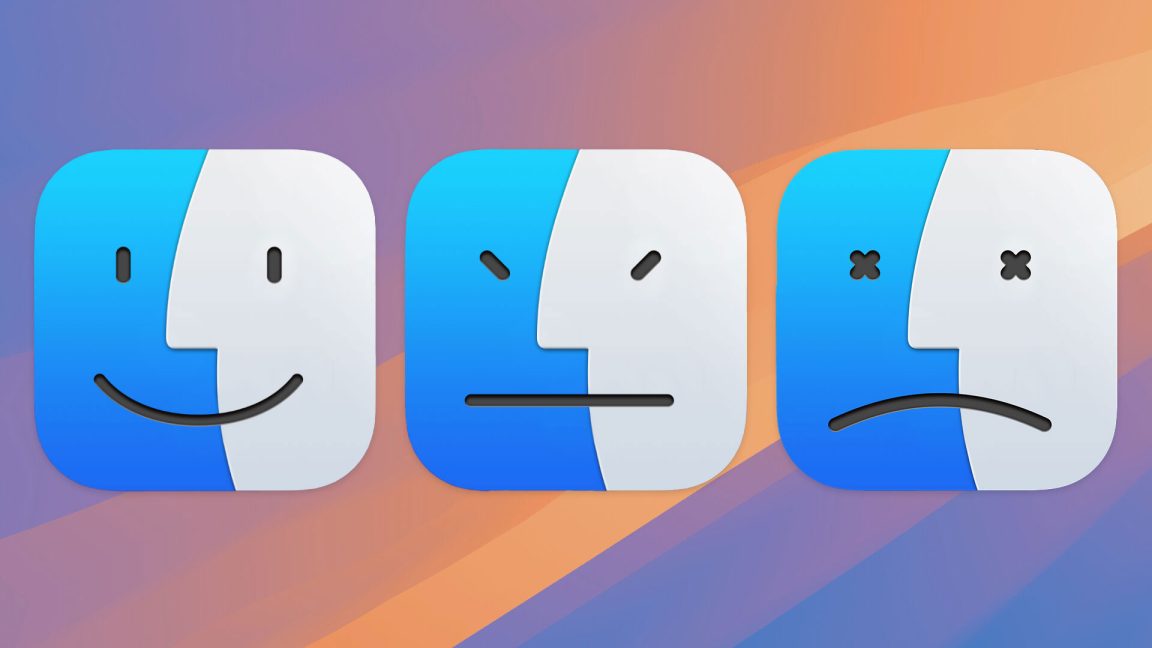
I don't really get Apple's stupid dumping of models that are only a few years old.

With some careful hacking, Windows 10 can run on almost anything dating back to the original Core2 Duos, and 32-bit versions of 8.1 can run on early P4s (I can prove it, too, because I've run it on my Northwood-based P4 PC).

Granted, Windows is a bloated mess, but jeez, if they can maintain backwards compatibility to the degree they do while still managing to support new hardware and software, why can't Apple?

Of course, all my griping won't change the situation.

However, a thought just occurred to me: What will happen when the first generation or two of AS Macs lose support? They're not like Intel Macs that can easily run Windows or Linux as more up to date alternatives, although, as I understand, there's a sort of half-baked Windows for ARM that is semi-compatible with AS, and there's at least a couple experimental Linux distros, so it's not entirely hopeless.

Hopefully this situation will improve in the future, preferably before it becomes a problem.

c
 
However, a thought just occurred to me: What will happen when the first generation or two of AS Macs lose support? They're not like Intel Macs that can easily run Windows or Linux as more up to date alternatives, although, as I understand, there's a sort of half-baked Windows for ARM that is semi-compatible with AS, and there's at least a couple experimental Linux distros, so it's not entirely hopeless.
They'll run Asahi Linux.

The bigger question in my mind is this: what will happen when the first generation of AS Macs have their built-in root certificates expire? AFAIK, they can't install updates without a valid root cert.

If they can boot to recovery, possibly the date can be rolled back and then Asahi Linux installed, but is that possible? Anyone willing to crank their date forward 25 years and see what breaks?
 
FYI, in February, 2026 Apple unexpectedly released a security update for OSX Catalina to address expired security certificates. This means most Macs that were released in 2012 can still be used in 2026. Here’s a link to the article from MacUser https://macuser.org.uk/2026/02/09/macos-catalina-10-15-8-update/
Yes; this is a slightly different issue: since the final release of OS X 10.6 (so, the start of pure Intel-based Mac OSes that use the App Store and iCloud), Apple has signed the OS installers and updaters. Once those certificates expire (10 years?), you need to roll your date back in order to run them. From time to time, Apple has refreshed the certificates in older OS versions as they approach expiration, with the exception for some reason of OS X 10.9.

The problem with AS Macs is that they use a completely different architecture; Intel Macs come with baked in Apple EFI (and more recent ones with a TPM) from where you can load any OS you want; a Microsoft-style "Secure Boot" was never enabled.

With AS Macs, cryptographic keys are stored in the secure enclave, and then the boot ROM contains Apple's public keys used to validate other firmware components and the verified boot process. Each firmware and software component, including the iBoot and kernel extensions, must be signed with a valid (non-expired) certificate in the certificate chain. Unlike with Secure Boot, this can't be disabled.

The boot process therefore relies on Apple's online infrastructure for certificate verification. If the computer is offline and the boot key has expired, the computer won't boot. At all. And as cryptographic key formats progress, older Macs will become incompatible with the newer formats, just like we've seen with older web browsers and the modern web.
 
Back
Top
