
You are using an out of date browser. It may not display this or other websites correctly.
You should upgrade or use an alternative browser.
You should upgrade or use an alternative browser.
5 boards to have a crack at
- Thread starter falen5
- Start date

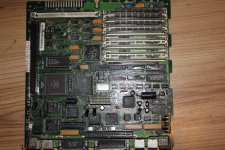
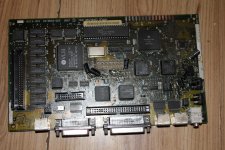
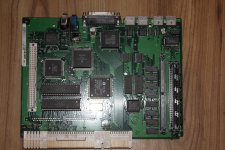
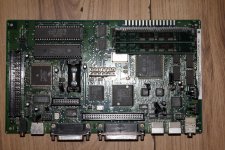




If you think that they are weird, don't touch with a soldering iron. Just write about the boards as they are.


these are not my boards. they belong to rollermanz.
he says that he put the color classic into an oven to dry it after washing and it caught on fire in the oven
looks like it was plugged in to me
-
the pictures show the boards as I got them.
-
im trying to get some of them working again..........but right now I am working on one of the se/30 boards and ive just discovered that some of the chips have been swapped from one boards to the other.
-
rollermanz....................the 2 se/30 boards....................did you swap any chips from one board to another ?
he says that he put the color classic into an oven to dry it after washing and it caught on fire in the oven
looks like it was plugged in to me
-
the pictures show the boards as I got them.
-
im trying to get some of them working again..........but right now I am working on one of the se/30 boards and ive just discovered that some of the chips have been swapped from one boards to the other.
-
rollermanz....................the 2 se/30 boards....................did you swap any chips from one board to another ?


The only board that looks anywhere near feasible, is the last one. The rest, Well.... RIP.
hey techknight - yep.. have to agree
-
theres chips , crystals, transistors missing, chips swapped...........all the boards are totally covered in a thick brown goo. I think he used a plumbers flux at the start but he got better as he went. Looks like the classic 2 was the last board
-
im working on one of the se/30 - just replaced 2 of the chips by the battery - uj2 f258 and uj3 f258. Do you know what they do.....there are 6 of them, all the same
-
theres chips , crystals, transistors missing, chips swapped...........all the boards are totally covered in a thick brown goo. I think he used a plumbers flux at the start but he got better as he went. Looks like the classic 2 was the last board
-
im working on one of the se/30 - just replaced 2 of the chips by the battery - uj2 f258 and uj3 f258. Do you know what they do.....there are 6 of them, all the same

both se/30's are dead.
-
the first due to an acid lead around the battery. All the solder on the pins from the rom connector is rotten, loads of via's. Feck it , you could spend all dam year on it
-
second board looked good....at first. No acid leak.
-
started replacing the chips missing until I got to ue8.
-
ue8 is missing...........along with over 10 of its pads.....not only that but most of the traces from those pads. 2 of the pads are still there, hanging on the end of the trace that is just hanging in space.
-
looks like the ue8 was torn off the board
-
such a pity.
-
will have a go at the classic 2 tomorrow - looks like no acid leak and no missing parts.
-
the first due to an acid lead around the battery. All the solder on the pins from the rom connector is rotten, loads of via's. Feck it , you could spend all dam year on it
-
second board looked good....at first. No acid leak.
-
started replacing the chips missing until I got to ue8.
-
ue8 is missing...........along with over 10 of its pads.....not only that but most of the traces from those pads. 2 of the pads are still there, hanging on the end of the trace that is just hanging in space.
-
looks like the ue8 was torn off the board
-
such a pity.
-
will have a go at the classic 2 tomorrow - looks like no acid leak and no missing parts.
Last edited by a moderator:

the 74F258s are the RAM muxes. If these are missing/broken/rotten/bad, you will get the slow chimes of death.-
im working on one of the se/30 - just replaced 2 of the chips by the battery - uj2 f258 and uj3 f258. Do you know what they do.....there are 6 of them, all the same
No chimes means the ROM is broken to the CPU, and those vias underneath the battery connect ROM/RAMMUX to CPU.
that's just what I found techknight - all the pins from the rom holder are all blackened and the solder is a dark grey...rotton.On 3 pins it was almost completely gone. I resoldered those. All the via's around the battery are all dark grey and 'flakey'
is there any way to renew the solder in a via and make it good again?
Ive tried pressing soldering tip into each via, small amount of force, and turn clockwise and anti clockwise. Sometimes it forces shiny solder to the surface.....sometimes it does not. Don't know if it is making things worse.
I imagine the only fix is to meter every connection and then bridge any broken ones.........that would take allot of time and still might not work.
is solder in this condition destroyed , as in non conductive. Fresh new solder will not melt into it, even with flux. It does not want to stick to copper or anything.
Is there any other alternative. There must be a way to remove this bad solder and replace it with new solder
-
thoes dam batteries have allot to answer for!!
is there any way to renew the solder in a via and make it good again?
Ive tried pressing soldering tip into each via, small amount of force, and turn clockwise and anti clockwise. Sometimes it forces shiny solder to the surface.....sometimes it does not. Don't know if it is making things worse.
I imagine the only fix is to meter every connection and then bridge any broken ones.........that would take allot of time and still might not work.
is solder in this condition destroyed , as in non conductive. Fresh new solder will not melt into it, even with flux. It does not want to stick to copper or anything.
Is there any other alternative. There must be a way to remove this bad solder and replace it with new solder
-
thoes dam batteries have allot to answer for!!
You cant really fix the via. the SE/30 uses a multi-layer board, and the traces back to the CPU is run in the middle layer. you cant see them.
So, Sometimes you can stick a small thin piece of wire through the via, and tack it to the traces on both sides, snipping the wire off at the joint. IF... and only IF... that via still has a good connection back to the cpu.
If not, then you stick a piece of wire through as I explained above, soldering it to both sides of traces, but leave the wire in tact and run it back to the CPU.
So, Sometimes you can stick a small thin piece of wire through the via, and tack it to the traces on both sides, snipping the wire off at the joint. IF... and only IF... that via still has a good connection back to the cpu.
If not, then you stick a piece of wire through as I explained above, soldering it to both sides of traces, but leave the wire in tact and run it back to the CPU.
theres 3 layers.................darn.....did not know that. thought it was just 2
-
and each via is a connection point between all 3 layers?...........that just makes them more prone to any kind of acid leak damage..............no wonder the se30 board has wrecked my head way more than any other mac
-
come to think of it..............it makes sense now. I was looking at some via's (the 7 just next to the rom slot) on one side of the board they have no traces leading away from them. on the other only 3 have traces heading to the rom slot. I thought the other 4 were not used as I saw no traces on either side of the board. From what you just explained it makes more sense now.
-
makes more sense.............but my head hurts more now.
-
I got a different se30 working last year by melting pins into vias. It was on the ue8. I used the wire from new caps. hold it on the via, heat it , and it slowly sank into the via. snipped off the wire to the right length and bent it to reach the pin of the ue8. soldered it directly onto the pin. Think I had to do 5 to restore the display.
-
out of curiosity is there a diagram of the hidden layer anywhere.
-
cheers techknight
-
and each via is a connection point between all 3 layers?...........that just makes them more prone to any kind of acid leak damage..............no wonder the se30 board has wrecked my head way more than any other mac
-
come to think of it..............it makes sense now. I was looking at some via's (the 7 just next to the rom slot) on one side of the board they have no traces leading away from them. on the other only 3 have traces heading to the rom slot. I thought the other 4 were not used as I saw no traces on either side of the board. From what you just explained it makes more sense now.
-
makes more sense.............but my head hurts more now.
-
I got a different se30 working last year by melting pins into vias. It was on the ue8. I used the wire from new caps. hold it on the via, heat it , and it slowly sank into the via. snipped off the wire to the right length and bent it to reach the pin of the ue8. soldered it directly onto the pin. Think I had to do 5 to restore the display.
-
out of curiosity is there a diagram of the hidden layer anywhere.
-
cheers techknight
No, its 4 layers. But the inner two layers share VCC/Ground/Traces.
Yes, the vias are connecting all 4 layers. BUT, there is an annular ring gap on the layers that dont intersect the via.
Try working on modern boards. They are 6+ layers, and have hidden vias. Vias between layers that dont protrude to the top and bottom.
As far as diagram, Nope. you will have to follow the schematic.
BTW, all mac logic boards are at least 4 layers.
The reason they decided to run traces inner layer, is so they didnt have to weave the traces top-bottom-top-bottom alongside the traces that already are on the top and bottom. This is basically to prevent race conditions that occur when you do that alot.
On modern super speed systems, notice the traces between processors/RAM/ROM are meandered. look like squiggly S. This is keep all the trace "lengths" identical between all pin connections to one another. For this very reason.
on modern high speed systems, thats a requirement. You would need an advanced cad package like Altium or something of the like, and the autorouter do to that for you
if you do it manually, well, good luck. lol.
Trust me, ive ran down battery damaged SE/30 boards and got them running again, I feel your pain.
Yes, the vias are connecting all 4 layers. BUT, there is an annular ring gap on the layers that dont intersect the via.
Try working on modern boards. They are 6+ layers, and have hidden vias. Vias between layers that dont protrude to the top and bottom.
As far as diagram, Nope. you will have to follow the schematic.
BTW, all mac logic boards are at least 4 layers.
The reason they decided to run traces inner layer, is so they didnt have to weave the traces top-bottom-top-bottom alongside the traces that already are on the top and bottom. This is basically to prevent race conditions that occur when you do that alot.
On modern super speed systems, notice the traces between processors/RAM/ROM are meandered. look like squiggly S. This is keep all the trace "lengths" identical between all pin connections to one another. For this very reason.
on modern high speed systems, thats a requirement. You would need an advanced cad package like Altium or something of the like, and the autorouter do to that for you
if you do it manually, well, good luck. lol.
Trust me, ive ran down battery damaged SE/30 boards and got them running again, I feel your pain.
Last edited by a moderator:
Similar threads


- Replies
- 24
- Views
- 2K

