Need to find another one the cheapest way possible. Thanks for any help.



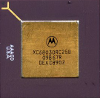
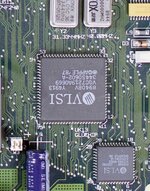
The GLUE is only in the II, IIx, IIcx, SE/30 and a certain variant of the LaserWriter II.
Sure yours is damaged? This is the most valuable part on the logic board! (Or why are you asking?)
The GLU is a very different chip and not compatible.
absolutely not sure but it's my best theory at the moment because it had a good deal of corrosion when it came off the bombed board. Pins were OK and it cleaned up ok. Wouldn't hurt to have another if I can pick up a iici or whatever relatively cheap.iisi i think. are you SURE your glu is busted?
absolutely not sure but it's my best theory at the moment because it had a good deal of corrosion when it came off the bombed board. Pins were OK and it cleaned up ok. Wouldn't hurt to have another if I can pick up a iici or whatever relatively cheap.
that is excellent to know. Thank you for that info.It’s very hard to kill a Glue chip…
I’ve lifted one off a heavily bombed board and after cleaning the pins it worked fine.
I’ve used lots of hot air to move them around and it’s been fine.
I’ve also installed one rotated 90 degrees off and it still worked after correcting my mistake.
In the latter situation I was convinced I’d damaged the chip but it turned out not to be the case and to this day it lives on providing much needed vintage happiness.
So I’d suspect it’s fine.
I could be wrong.
But it’s probably fine.
General Logic Unit? Seems you're correct. Says GLUE on the SE/30 silkscreening. What does the E stand for ?The GLUE is only in the II, IIx, IIcx, SE/30 and a certain variant of the LaserWriter II.
Sure yours is damaged? This is the most valuable part on the logic board! (Or why are you asking?)
The GLU is a very different chip and not compatible.

It's normal to pronounce "GLU" as Glue, so people use the stylings interchangeably.General Logic Unit? Seems you're correct. Says GLUE on the SE/30 silkscreening. What does the E stand for ?
It's normal to pronounce "GLU" as Glue, so people use the stylings interchangeably.
Glue Logic is a common thing in computers, not just macs, and it is, once again, also written as Glue by some people, GLU by others. Its the GLU(e) that holds everything together.
Apple does the same with DAV and DAVE (Digital Audio / Video I think?) - some documentation says DAV, some says DAVE.
The 344S number should tell you if something is the same part shouldn't it? I think even compatible chips with different generations have a different 244Sxxxx number, so if it is the same, it is exactly the sameHopefully we can clear up the confusion between Glue and Glu that @robin-fo alluded to?


CroissantKing, torturer of glue chips! Have you considered a career in destructive testing?It’s very hard to kill a Glue chip…
I’ve lifted one off a heavily bombed board and after cleaning the pins it worked fine.
I’ve used lots of hot air to move them around and it’s been fine.
I’ve also installed one rotated 90 degrees off and it still worked after correcting my mistake.
In the latter situation I was convinced I’d damaged the chip but it turned out not to be the case and to this day it lives on providing much needed vintage happiness.
So I’d suspect it’s fine.
I could be wrong.
But it’s probably fine.


To be fair the first one wasn’t my faultCroissantKing, torturer of glue chips! Have you considered a career in destructive testing?

To be honest, a lot of the time their functionality is fairly well documented by published apple literature, when you go back that far.GLUe and assorted ASICs are old tech with much larger/thicker inner workings than later tech. They should be vulnerable to scraping/reverse engineering attacks, no? Can Apple's custom silicon disassembled and recreated in this manner with today's tech or in the near future?
If the Mac IIsi Glu is infact compatible for your Mac SE/30, I have a couple Mac IIsi that I don't want. They need a recap but no corrosion.
It‘s NOT! The IIsi has the MDU instead.If the Mac IIsi Glu is infact compatible for your Mac SE/30
Neanderthaler hacking approach appeals to me. "Well documented" and Apple Literature seem mutually exclusive in docs of that era. Building a NuBus Card was "well documented" in DCaDftMF, with several examples given, but none in complete form save for the "NuBus Test Card."To be honest, a lot of the time their functionality is fairly well documented by published apple literature, when you go back that far.
Well, it's a start :Neanderthaler hacking approach appeals to me. "Well documented" and Apple Literature seem mutually exclusive in docs of that era. Building a NuBus Card was "well documented" in DCaDftMF, with several examples given, but none in complete form save for the "NuBus Test Card."